

Advanced LED LCD Screen Manufacturing: Techniques, Standards, and Industry Insights
In the rapidly evolving landscape of display technologies, LED LCD screens have emerged as a pivotal element across multiple sectors, from consumer electronics to industrial applications and digital signage. As a professional LED display engineer with extensive experience in manufacturing, I will provide an in-depth exploration of advanced LED LCD screen manufacturing processes, key technical parameters, industry standards, and practical insights that underscore the latest advancements and quality assurance benchmarks in this domain.
Fundamentals of LED LCD Technology
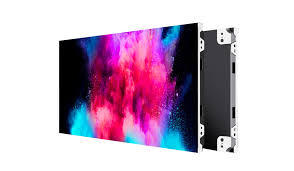
An LED LCD screen integrates Light Emitting Diodes (LEDs) as a backlight source for Liquid Crystal Displays (LCD), enhancing brightness, energy efficiency, contrast, and lifespan compared to traditional Cold Cathode Fluorescent Lamp (CCFL) backlit LCDs. The technology leverages LCD’s ability to control light modulation via liquid crystals paired with the dynamic range and efficiency of LED backlighting.
The fundamental composition involves multiple layers: the liquid crystal layer sandwiched between two polarizing filters, aligned glass substrates with color filters, and an LED backlight panel. Modern LED backlights utilize either edge-lit or direct-lit arrays, influencing design thickness, uniformity, and cost.
Key Technical Parameters
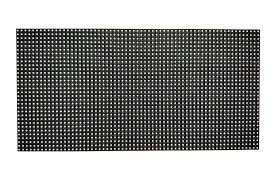
1. Pixel Pitch and Resolution: The pixel pitch – the distance between the centers of two adjacent pixels – governs image sharpness. For LED LCD screens, pixel pitches range from 0.9mm (fine pitch) to over 10mm for large-scale displays. High-resolution applications require pixel pitches below 1.5mm, enabling Full HD, 4K, or higher resolutions according to International Telecommunication Union (ITU) standards (ITU-R BT.2100).
2. Brightness and Contrast Ratio: Typical indoor LED LCDs offer brightness levels from 300 to 1000 nits, whereas advanced models for outdoor use can exceed 2500 nits for visibility under direct sunlight. Contrast ratio – the luminance ratio between the brightest white and darkest black – usually exceeds 1000:1 in LED LCD panels, delivering sharp and vibrant visuals crucial for professional usage.
3. Color Gamut and Accuracy: Modern LED LCD screens support wide color gamuts, including sRGB, Adobe RGB, and DCI-P3, ensuring rich color reproduction. Color accuracy is commonly measured with Delta E values less than 2, which is essential for image-critical environments such as medical imaging and broadcast.
4. Response Time and Refresh Rate: Response time, the interval a pixel takes to change state, has improved to less than 8 ms in contemporary LED LCDs, minimizing motion blur. Refresh rates of 60Hz to 240Hz are standard, catering to diverse applications from consumer video to industrial monitoring.
5. Power Consumption and Thermal Management: LED backlighting significantly reduces power draw compared to CCFLs, with power efficiencies typically around 20-30 lumens per watt. Effective heat dissipation engineering, including passive dissipators and active cooling, extends device longevity and maintains consistent performance.
Manufacturing Process Overview
The production of high-quality LED LCDs involves several precise, controlled stages:
- Substrate Preparation and Cleaning: Indium Tin Oxide (ITO) coated glass substrates undergo stringent cleaning to ensure contaminant-free surfaces, critical for uniform liquid crystal alignment.
- Thin Film Transistor (TFT) Array Fabrication: TFT arrays, typically amorphous silicon (a-Si) or In-Plane Switching (IPS) variants for superior viewing angles, are fabricated using photolithography and chemical vapor deposition, achieving pixel control and switching efficiency.
- Liquid Crystal Injection: Precise alignment via rubbing or photoalignment techniques ensures liquid crystal molecules orient properly between substrates. The cell gap typically ranges from 3 to 5 micrometers, maintained by calibrated spacers.
- Backlight Assembly: LED modules are integrated either edge-lit with light guides or direct-lit with arrays of LEDs behind the LCD panel. Design choices affect uniformity and thickness—edge-lit allows slimmer displays, while direct-lit offers superior brightness uniformity.
- Assembly and Encapsulation: The complete panel is assembled with polarizers, color filters, diffusion films, and protective glass. Encapsulation preserves component integrity under varying environmental conditions.
- Quality Testing and Calibration: Each panel undergoes rigorous Optical and Electrical Testing (OET) including luminance uniformity, color calibration using spectroradiometers, and reliability assessments per International Electrotechnical Commission (IEC) standards like IEC 61966-2-1 for color management.
Industry Standards and Certifications
Adherence to international standards ensures product reliability and compatibility:
- IEC 62368-1: Safety requirements for audio/video and information technology equipment.
- ISO 9241-307: Specific to ergonomic requirements for electronic visual displays.
- RoHS and REACH: Environmental directives restricting hazardous materials.
- Energy Star: Defines power efficiency benchmarks for electronic devices.
Industrial players like Samsung, LG Display, and BOE demonstrate compliance with these standards, emphasizing their importance in global markets.
Challenges and Innovations in LED LCD Manufacturing
Quality control consistency remains a challenge due to microscopic variations in materials and assembly. Innovations such as quantum dot enhancement films and mini-LED backlighting offer improved color performance and contrast beyond conventional LEDs.
Furthermore, artificial intelligence (AI) integrated optical inspection systems enhance defect detection during manufacturing. Adaptive manufacturing techniques using machine learning optimize production yield and reduce waste.
Case Study: Enhancing Brightness Uniformity in Large-Scale LED LCD Displays
A project involving a 120-inch LED LCD videowall employed direct-lit LED arrays with local dimming zones to achieve uniform brightness over 700 nits while maintaining a contrast ratio exceeding 5000:1. Advanced diffusers and light guide plates manufactured with micro-structured surfaces achieved luminance uniformity above 95%, complying with SMPTE RP 431-2 standards for visual display uniformity.
Future Outlook
The LED LCD manufacturing industry is transitioning towards hybrid technologies combining OLED and MicroLED elements to overcome inherent LCD limitations. Enhanced manufacturing automation, environmentally sustainable materials, and ultra-high resolution panels are poised to define the next decade.
As consumer and professional demands evolve, manufacturers must continuously innovate to balance cost, performance, and environmental impact, ensuring LED LCD screens remain a versatile and trusted display technology.
By integrating rigorous engineering practices, compliance with international standards, and leveraging advanced manufacturing techniques, LED LCD screen production sustains its essential role in modern display technology. This comprehensive overview highlights the importance of detailed control over technical parameters and a deep understanding of materials science to produce displays that meet the highest performance and quality benchmarks.













