

Advanced Manufacturing Techniques and Quality Control in LED LCD Screen Production
In the rapidly evolving world of display technology, LED LCD screens have become pivotal in delivering high-definition visuals across a multitude of applications, from consumer electronics to professional displays. The manufacturing of these screens requires a meticulously engineered process to achieve superior quality, longevity, and performance. Drawing on over a decade of industry experience and adhering to international standards such as ISO 9001 and UL certification, this article explores the critical facets of LED LCD screen production, focusing on advanced manufacturing techniques, stringent quality control, and practical parameters that define product excellence.
The core component of an LED LCD screen is the liquid crystal display panel, which relies on the alignment and manipulation of liquid crystal molecules to modulate light from the backlight unit, predominantly composed of LEDs. The transition from traditional cold cathode fluorescent lamps (CCFL) to LEDs has markedly improved energy efficiency, brightness uniformity, and lifespan. Modern LED backlight units utilize edge-lit or direct-lit configurations, with the latter offering enhanced local dimming capabilities vital for high contrast ratios and dynamic range.
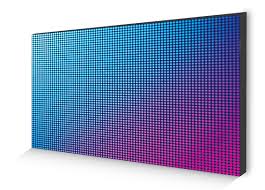
One fundamental technical parameter in manufacturing is the pixel pitch, measured in millimeters (mm), defining the distance between the centers of two adjacent pixels. Lower pixel pitch (e.g., 0.7mm to 1.2mm) is essential for close-viewing applications such as smartphones and laptops, whereas larger pixel pitches suit large-format displays like digital billboards. Achieving the precise placement of sub-pixels – the red, green, and blue components – requires state-of-the-art photolithography and laser etching equipment to ensure sharpness and color accuracy.
The manufacturing workflow encompasses several critical stages: substrate preparation, thin-film transistor (TFT) deposition, color filter application, liquid crystal filling, sealing, and module assembly. TFT arrays made primarily from amorphous silicon or low-temperature polysilicon control the electric field across the liquid crystals, with the latter offering faster switching speeds and higher resolutions. Throughout these steps, maintaining a contamination-free environment is non-negotiable; cleanroom conditions classified at ISO Class 5 or better reduce particulate interference that could compromise pixel integrity.
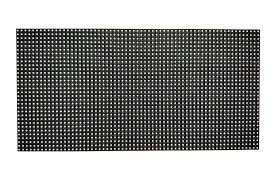
Quality control (QC) protocols are integral to certifying screen performance and reliability. Automated Optical Inspection (AOI) systems detect defects such as dead pixels, mura (uneven brightness), and chromatic aberrations. Spectroradiometric testing measures luminance, color gamut, and gamma values, confirming adherence to standards like sRGB and DCI-P3 color spaces. Moreover, endurance testing under accelerated thermal and humidity cycles verifies the screen's resistance to environmental stress, a crucial factor for outdoor installations.
Energy consumption and heat dissipation are practical considerations influencing design and longevity. LED backlight units are optimized through precise driver circuitry and pulse-width modulation (PWM) techniques to minimize flicker and power draw while maintaining brightness levels upwards of 500 nits for indoor screens and several thousand nits for outdoor displays. Thermal management solutions, including heat sinks and thermally conductive substrates, prevent performance degradation caused by excessive temperatures.
Recent innovations in manufacturing also include the integration of quantum dot technology and mini-LED backlighting, which enhance color purity and increase local dimming zones exponentially, providing deeper blacks and richer color reproduction. These advances demand refinements in assembly techniques and additional QC metrics, reinforcing the need for continuous investment in R&D and advanced machinery.
In summary, producing high-quality LED LCD screens is a complex interplay of precision engineering, standardized practices, and rigorous testing. Industry-leading manufacturers leverage automation, robust quality assurance, and cutting-edge materials science to meet the diverse demands of global markets. By understanding and optimizing each technical parameter and manufacturing step, the industry ensures that end products not only deliver exceptional visual experiences but also maintain durability and energy efficiency — hallmarks of modern display technology excellence.













