

Advances and Practical Applications of LED LCD Screen Manufacturing Technology
In the evolving landscape of display technology, LED LCD screens have emerged as a dominant solution, combining the benefits of liquid crystal displays (LCD) with the enhanced backlighting of light-emitting diodes (LED). As a professional LED display engineer with extensive experience in manufacturing, this article explores the technological advancements, practical applications, advantages, challenges, and emerging trends in LED LCD screen manufacturing, offering a comprehensive insight into this critical industry sector.
Technical Foundations and Manufacturing Process
LED LCD panels utilize an LCD matrix for pixel-level image formation, while LEDs serve as the backlight source. This synergy affords superior luminance, energy efficiency, and color accuracy compared to traditional cold cathode fluorescent lamp (CCFL)-based LCDs.
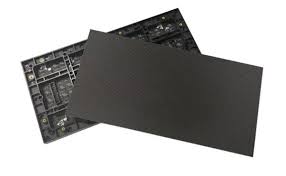
Key technical parameters include:
- Resolution: Commonly from Full HD (1920x1080) to 8K UHD (7680x4320), addressing diverse use cases from consumer electronics to professional-grade displays.
- Brightness: Typically ranges between 250 to 1500 cd/m² (nits), with HDR-capable models exceeding 1000 nits to enhance dynamic range.
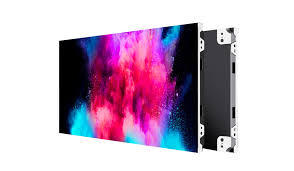
- Contrast Ratio: Modern LED LCDs achieve ratios exceeding 3000:1, with local dimming technology improving perceived contrast.
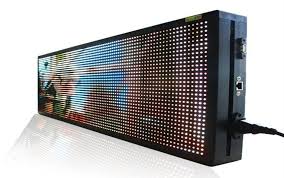
- Color Gamut: Utilizes LED backlights with improved phosphor compositions, enabling coverage of wide color spaces such as DCI-P3 or Adobe RGB.
- Response Time: Varies from 1 ms for gaming monitors to 8 ms for general use displays, balancing speed and image clarity.
Manufacturing precision is paramount, with quality control focused on LED uniformity, panel alignment, and optical layer integrity. Adoption of In-Plane Switching (IPS) and Vertical Alignment (VA) technologies allows manufacturers to tailor viewing angles and contrast performance to application demands.
Practical Applications
LED LCD technology finds extensive applications across multiple sectors:
- Consumer Electronics: Televisions, laptops, and smartphones utilize LED LCDs for their energy efficiency, brightness, and thin form factor.
- Commercial Signage and Digital Billboards: Large-format LED LCDs enable vivid, daylight-visible advertisements with high reliability and longevity.
- Medical Imaging: Demanding accurate color reproduction and uniformity, medical-grade LED LCD screens support diagnostic precision.
- Industrial and Military Displays: Ruggedized LED LCDs provide enhanced visibility under harsh environments and maintain performance over wide temperature ranges.
- Automotive Displays: Instrument clusters, infotainment systems, and HUDs benefit from LED LCD’s slim design and agility under variable lighting conditions.
Advantages of LED LCD Over Alternative Technologies
Compared with OLED and traditional CCFL-backlit LCDs, LED LCD offers several advantages:
- Energy Efficiency: LEDs consume less power and generate lower heat, improving system reliability and reducing cooling requirements.
- Longevity and Durability: LEDs exhibit longer lifespans (up to 100,000 hours), with reduced risk of burn-in compared to OLEDs.
- Cost-Effectiveness: Mature manufacturing processes and high yields have driven down the cost of LED backlit panels, making them accessible across market segments.
- Environmental Sustainability: LED backlighting reduces mercury use compared to CCFLs, aligning with RoHS and WEEE directives.
Common Manufacturing Challenges and Solutions
Despite their advantages, LED LCDs present several manufacturing and operational challenges:
- Backlight Uniformity: Achieving uniform brightness across large panels requires precise LED placement and diffusing layers. Advanced simulation and quality control mitigate non-uniformity (“hot spots”).
- Color Shift and Viewing Angle Limitations: Certain LCD panel types exhibit color and contrast shifts at oblique viewing angles. Solutions include IPS technology and quantum dot enhancement films.
- Thermal Management: LED arrays generate localized heat; effective thermal design involving heat sinks and conductive materials is essential to maintain performance and longevity.
- Response Time and Motion Blur: Traditional LCD response speeds can cause ghosting effects, addressed by overdrive circuits and improved liquid crystal formulations.
Emerging Trends and Innovations
Recent advances in LED LCD manufacturing technology indicate ongoing evolution:
- Mini-LED and Micro-LED Backlighting: Miniaturized LED arrays with thousands of dimming zones enable superior contrast via local dimming, approaching OLED-like picture quality.
- Quantum Dot Enhancement Layers (QDEL): Incorporation of quantum dots enhances luminance and color accuracy while reducing power consumption.
- Flexible and Transparent LED LCDs: Development in flexible substrates and transparent LCD panels expand application potential in wearable devices and augmented reality.
- AI-Driven Manufacturing: Integration of machine learning algorithms optimizes defect detection and calibration processes, improving yield and reducing production costs.
Conclusion
LED LCD screen manufacturing stands at the intersection of mature technology and rapid innovation. Its widespread application across consumer, professional, and industrial fields underscores its versatility and relevance. Advances in mini-LED backlighting, quantum dot technology, and manufacturing automation continue to enhance performance metrics such as brightness, color fidelity, and energy efficiency. Addressing manufacturing challenges through precision engineering and quality control remains essential to sustaining this technology’s growth and competitiveness.
For engineers and manufacturers, keeping pace with these trends and standards such as IEC 62368 for safety and ISO 9241 for ergonomic display design will ensure that LED LCD technology continues to meet global demands for high-quality, reliable visual solutions.
References:
- International Electrotechnical Commission (IEC) 62368-1: Audio/video, information and communication technology equipment – Safety requirements.
- Society for Information Display (SID): Display Industry Yearbook 2023.
- U.S. Department of Energy, Solid-State Lighting Program: LED Technologies Fact Sheet, 2022.
- “Mini-LED and Micro-LED: Next-Generation Display Technologies,” Journal of Display Technology, IEEE, 2023.













