

TFT Technology Innovations: How TFT Displays Shine Brighter in Modern Applications
Thin-Film Transistor (TFT) technology has been at the forefront of display innovation for decades, enabling high-resolution screens with vibrant colors and fast response times. As the global demand for superior visual quality escalates across smartphones, televisions, automotive dashboards, and industrial monitors, TFT displays continue to evolve, “shining brighter” both figuratively and literally. This article explores the recent advancements in TFT technology that enhance brightness, efficiency, and overall visual performance, drawing from industry standards, technical parameters, and practical applications.
Understanding TFT Technology and Brightness Factors
TFT LCDs operate by integrating thin-film transistors as switching elements for each pixel, providing precise control over liquid crystal orientation. Brightness in TFT displays is typically measured in nits (cd/m²), indicating luminance reflecting the intensity of emitted light. Several core factors influence brightness:
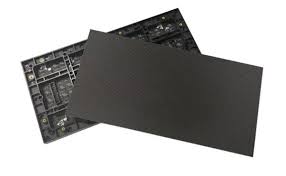
- Backlight Technology: Most TFT LCDs use LED backlights, where LED type, arrangement, and driving current determine brightness. Modern displays utilize high-brightness LEDs or mini-LED arrays to boost luminance while maintaining power efficiency.
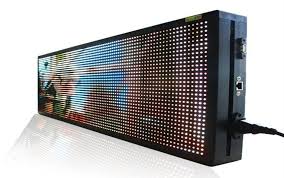
- Liquid Crystal Material and Cell Gap: The properties of the liquid crystal material and the cell gap (distance between glass substrates) affect light transmission efficiency. Optimized materials with faster response times and wider viewing angles contribute to enhanced brightness perception.
- Optical Films and Polarizers: The deployment of multi-layer optical films, including brightness enhancement films (BEF) and circular polarizers, amplifies the transmission of backlight through the panel, increasing on-screen luminance without additional power draw.
Innovations Boosting TFT Display Brightness
1. Mini-LED Backlighting
Mini-LED technology marks a significant leap forward. Instead of a few large LEDs, thousands of tiny LEDs form the backlight, offering:
- Peak brightness levels exceeding 1000 nits for HDR content, compared to traditional LED backlights ranging from 300 to 500 nits.
- Improved local dimming, enabling higher contrast ratios and darker blacks alongside brighter whites.
According to the Society for Information Display (SID), mini-LED-equipped TFT LCDs can achieve up to 1500 nits peak brightness in professional-grade monitors (SID Display Week 2023).
2. Quantum Dot Enhancement Films (QDEF)
Quantum dots are semiconductor nanocrystals that convert blue LED light into highly pure, narrow-spectrum red and green light, significantly broadening the color gamut and intensifying brightness.
- QDEF layers integrated within TFT LCD stacks increase luminance efficiency by approximately 30%, as verified by Nanosys, a quantum dot leader.
- Wide Color Gamut (WCG) standards such as DCI-P3 and Rec. 2020 are more readily achievable, fulfilling demanding video and cinema applications.
3. Advanced Liquid Crystal Materials and Alignment
Emerging ferroelectric and polymer-stabilized liquid crystals exhibit faster switching speeds and higher transmittance, contributing to brighter displays. Combining these with optimized cell gaps (typically between 3 to 5 microns) maximizes light throughput.
4. Improved Polarizer Technology
Standard polarizers absorb a significant proportion of backlight, reducing luminance. The adoption of reflective and transflective polarizers, with high efficiency and low absorption, enhances light utilization, increasing brightness by up to 20%.
Technical Parameters to Consider
Modern TFT displays designed for high brightness specify:
- Luminance: 800 to 1500 nits for outdoor and HDR applications.
- Contrast Ratio: ≥ 1000:1, critical for perceived brightness and clarity.
- Response Time: ≤ 8 ms to maintain color integrity at high luminance.
- Color Gamut: ≥ 90% DCI-P3 for vivid color reproduction.
- Viewing Angle: ≥ 178°, maintaining brightness uniformity across horizontal and vertical angles.
Industry Applications Driving Brightness Innovation
- Automotive Displays: Raised ambient light requires TFT displays to reach over 1000 nits luminance to ensure readability under direct sunlight. The implementation of mini-LED backlights and robust optical films supports safety-critical visibility.
- Outdoor Digital Signage: Displays need to sustain brightness between 2500 and 5000 nits, pushing TFT LCD innovation towards hybrid designs using transflective technology and enhanced backlight modules.
- Mobile Devices: Battery efficiency constraints make brightness optimization crucial. Dynamic backlight control paired with QDEF and power-efficient liquid crystals provides bright displays with prolonged battery life.
Reliability and Durability Considerations
High brightness often correlates with increased heat generation, challenging TFT panel durability. Industry-standard solutions include:
- Thermal management systems integrating heat sinks and spreaders.
- Use of high thermal conductivity materials in substrate and encapsulation.
- Complying with IEC 62368 and MIL-STD-810G standards for operational stability under varied climates.
Conclusion
The continuous evolution of TFT display technology demonstrates how “shine brighter” translates into real-world enhancements. By integrating mini-LED backlights, quantum dot films, advanced liquid crystals, and efficient optical components, TFT displays reach new heights in brightness, color accuracy, and energy efficiency. These improvements not only address growing consumer demands but also enable expanded applications across automotive, industrial, and outdoor sectors. Understanding and leveraging these advancements empowers engineers and manufacturers to deliver displays that perform exceptionally in the most challenging environments.
References
- Society for Information Display (SID) Display Week, 2023.
- Nanosys Quantum Dot White Paper, 2022.
- IEC 62368-1 Safety Standard for Audio/Video Products, 2021.
- MIL-STD-810G Environmental Engineering Considerations and Laboratory Tests, Department of Defense, 2008.
- “Advanced TFT LCD Technologies” in Journal of Display Technology, IEEE, 2022.













