

Advances and Best Practices in LED Display Manufacturing: Ensuring Quality and Performance
The LED display industry has witnessed remarkable growth over the past decade, driven by advancements in technology, evolving market demands, and enhanced manufacturing techniques. As a professional LED display engineer with extensive experience in design, production, and quality assurance, this article aims to provide a comprehensive overview of the critical factors influencing LED display manufacturing, emphasizing technical parameters, manufacturing processes, and industry standards that ensure both high performance and longevity.
Understanding the Core Components of LED Displays
At its essence, an LED display comprises thousands to millions of individual LED pixels, arranged in a matrix to produce vivid images and videos. The performance of an LED display is primarily determined by key technical parameters such as pixel pitch, brightness, color accuracy, refresh rate, and contrast ratio.
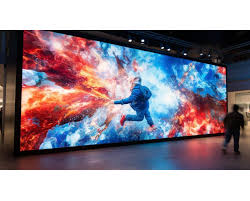
- Pixel Pitch: Defined as the distance from the center of one LED cluster to the next, pixel pitch is measured in millimeters (mm). A smaller pixel pitch (e.g., 1.2mm to 2.5mm) generally equates to higher resolution and better image clarity, especially for close viewing distances, making it ideal for indoor displays. Larger pixel pitches (e.g., 8mm and above) suit outdoor applications where viewing distances are longer.
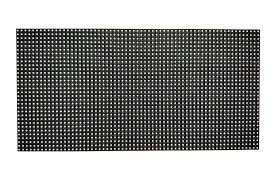
- Brightness and Contrast Ratio: Brightness levels, measured in nits (cd/m²), determine display visibility under varying ambient light conditions. Outdoor displays typically require brightness levels exceeding 5,000 nits to counteract sunlight glare, while indoor displays operate efficiently at 800 to 1,200 nits. High contrast ratios (above 3,000:1) ensure sharp image quality and rich color depth.
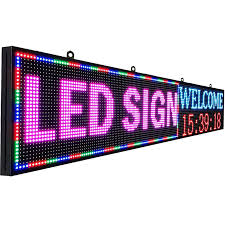
- Color Accuracy and Calibration: Consistent color reproduction is vital. Professional-grade LED displays use advanced calibration techniques such as color temperature correction (commonly targeting 6500K), gamma correction, and individual LED binning to achieve uniformity and natural colors across the entire panel.
- Refresh Rate and Gray Scale: The refresh rate, typically 1920Hz or higher for high-end installations, reduces flickering and accommodates smooth video playback, especially important for broadcast and live events. Gray scale levels, often coded in 14 to 16 bits per color channel, contribute to color depth and gradient smoothness.
Manufacturing Processes: From Raw Materials to Final Assembly
The manufacture of high-quality LED displays demands precision throughout the entire supply chain. Key considerations include sourcing premium LED chips (commonly SMD or COB types), using high-quality PCB substrates with good thermal conductivity, and applying advanced soldering technologies like reflow soldering with strict temperature control.
- Module Fabrication: Modules are the modular building blocks of LED displays. During module fabrication, LEDs are mounted on PCBs, and components like IC drivers and resistors are soldered with a focus on uniform signal transmission and power delivery. Automated optical inspection (AOI) is employed to verify correct component placement and detect visual defects.
- Testing and Quality Control: Rigorous testing protocols — including burn-in tests (often 72 hours at elevated temperatures), environmental testing (humidity, temperature cycling), and electrical tests — are essential to identify early failures and enhance reliability. Testing must conform to industry standards such as IEC 62368 for safety and IEC 61000 for electromagnetic compatibility.
- Panel Assembly and Calibration: After module production, panels are assembled with robust mechanical frameworks designed to withstand environmental stresses (wind, moisture, vibration). Precision alignment tools ensure optimal pixel registration and front-surface flatness. Post-assembly calibration using infrared remote control systems and software fine-tunes brightness and color balance.
Complying with Industry Standards and Certifications
Compliance with international standards enhances credibility and market acceptance. The display industry commonly refers to standards set by organizations including:
- IEC (International Electrotechnical Commission): Ensures safety, electromagnetic compatibility, and environmental regulations are met.
- RoHS (Restriction of Hazardous Substances): Guarantees that materials used comply with environmental regulations, restricting lead, mercury, cadmium, and other hazardous substances.
- CE and FCC Certifications: For products destined to the European and US markets, these certifications are mandatory to ensure electrical safety and RF emission limits.
Emerging Trends and Innovations
Recent developments such as MicroLED technology promise unparalleled pixel density, superior brightness, and energy efficiency. Additionally, the integration of AI-driven calibration systems and advanced thermal management solutions are further elevating product durability and image consistency.
In the manufacturing domain, Industry 4.0 concepts—incorporating IoT devices and real-time data analytics—are driving predictive maintenance and process optimization, reducing downtime, and improving yield.
Conclusion
Achieving excellence in LED display manufacturing demands a blend of sophisticated technology, rigorous quality control, and adherence to global standards. Manufacturers must focus on optimizing technical parameters like pixel pitch, brightness, and refresh rate while ensuring robust processes from raw material sourcing to final calibration. As the market evolves, staying abreast of emerging technologies and maintaining strict compliance with industry norms are indispensable for delivering high-quality LED displays that meet international expectations for durability and performance.
References
1. IEC 62368-1: Audio/video, information and communication technology equipment - Safety requirements.
2. RoHS Directive 2011/65/EU on the restriction of hazardous substances.
3. International Display Workshops Proceedings, "Best Practices in LED Display Manufacturing," 2023.
4. CIE 1931 Colorimetry Standards for Color Accuracy in LED Displays.













