

Advanced Technologies and Best Practices in LED Display Manufacturing for Enhanced Performance and Reliability
In the rapidly evolving landscape of display technology, LED (Light Emitting Diode) displays have emerged as an indispensable solution for a wide range of applications, from digital signage and broadcasting to large-scale video walls and indoor/outdoor advertising. The manufacturing of LED displays demands a rigorous focus on quality, reliability, and performance to meet the diverse requirements of global users. This article provides an in-depth, technically rich overview of advanced manufacturing technologies, critical parameters, and industry best practices that define high-performance LED displays today.
Introduction
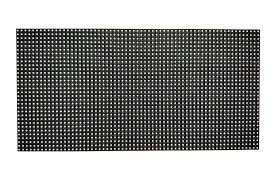
LED display technology has significantly progressed due to innovations in semiconductor materials, miniaturization of components, and enhanced manufacturing processes. The core attributes that influence the overall quality of an LED display include color accuracy, brightness, contrast ratio, viewing angle, pixel pitch, and energy efficiency. These attributes are tightly coupled with the manufacturing methodologies, component quality, and assembly precision.
Main Body
1. LED Chip and Module Manufacturing
At the heart of LED displays is the LED chip, typically made of GaN (Gallium Nitride) or InGaN (Indium Gallium Nitride) materials, which produce high brightness and efficient blue and green light emissions. Advances in epitaxial growth methods such as MOCVD (Metal-Organic Chemical Vapor Deposition) enable consistent chip quality and improved luminous efficiency. According to the International Electronics Manufacturing Initiative (iNEMI), ensuring uniformity in chip size and brightness across wafers is crucial to reduce display inconsistencies and dead pixels.
The drive for smaller pixel pitches—now as fine as 0.7mm for indoor applications—requires precise die bonding and wire bonding techniques. Automated pick-and-place machines with high positional accuracy (±5µm) are employed to assemble LED chips onto PCB (Printed Circuit Board) modules to maximize resolution and minimize defects.
2. PCB and Circuit Design
The PCB serves not only as the physical platform but also the electrical backbone for LED arrays. Material selection for PCBs is critical; high-frequency materials such as Rogers RO4350B or FR4 substrates with optimized copper thickness (1oz to 2oz) ensure effective heat dissipation and signal integrity. Circuit engineers focus on minimizing parasitic resistance and inductance to optimize PWM (Pulse Width Modulation) dimming, which significantly improves grayscale linearity and color reproduction.
Thermal management strategies include integrating thermal vias and heat sinks directly beneath LED arrays. Industry-standard thermal interface materials (TIMs) with thermal conductivity over 1.5W/m·K enhance heat transfer from LEDs during operation, prolonging lifespan.
3. Drive Electronics and Control Systems
LED displays rely on sophisticated IC drivers and control boards to manage color calibration, refresh rates, and fault diagnostics. Current-generation LED driver ICs from manufacturers like Texas Instruments and Macroblock support high grayscale levels (up to 16 bits per color channel) and refresh rates of 3840Hz or higher, imperative for flicker-free viewing on camera-based broadcasting.
Integration of intelligent control systems with embedded microcontrollers permits real-time monitoring of brightness, temperature, and LED lifespan, essential for predictive maintenance. Industry-standard protocols such as SPI (Serial Peripheral Interface) and I2C allow seamless communication between display modules and central processors.
4. Assembly and Quality Assurance
Reliable assembly processes integrate automated soldering (SMT – Surface Mount Technology) and testing lines employing AOI (Automated Optical Inspection) and EL (Electroluminescence) testing for early fault detection. The implementation of Six Sigma quality control methodologies and ISO 9001:2015 standards in LED display factories guarantees consistent product performance and reduced return rates.
Environmental testing per IEC 60068 standards, including vibration, thermal shock, and humidity exposure, validate the robustness of LED display units for harsh outdoor conditions. Research published by the Society for Information Display (SID) highlights that rigorous environmental qualification improves operational lifespan by 20-30%.
5. Emerging Trends: Mini-LED, Micro-LED, and Flexible Displays
The cutting-edge in LED display manufacturing involves Mini-LED and Micro-LED technologies, offering ultra-high resolutions and greater contrast ratios by deploying smaller LED clusters and self-emissive pixels, respectively. These advances demand ultra-precise manufacturing tools such as wafer-level mass transfer robots and laser lift-off processes. Additionally, flexible LED panels utilize bendable substrates like polyimide, enabling innovative form factors for wearable and foldable displays.
Conclusion
The manufacture of high-performance LED displays is a complex interplay of advanced semiconductor technology, precision assembly, thermal and electrical engineering, and stringent quality assurance protocols. Staying abreast with evolving industry standards such as those set by the International Electrotechnical Commission (IEC) and continuously adopting automation and intelligent systems in production lines is essential for delivering displays that meet the expectations of international markets.
By integrating state-of-the-art materials, innovative manufacturing techniques, and comprehensive testing frameworks, LED display manufacturers can achieve optimal brightness, color fidelity, durability, and energy efficiency. This not only boosts user experience but also ensures the sustainable advancement of LED display technology in a highly competitive landscape.
References:
- International Electronics Manufacturing Initiative (iNEMI) White Papers
- IEC 60068 Environmental Testing Standards
- Texas Instruments LED Driver IC Datasheets
- Society for Information Display (SID) Technical Digest
- ISO 9001:2015 Quality Management Systems













