

Advancements and Technical Insights in LED Display Manufacturing
The LED display industry has undergone significant transformations in recent years, driven by rapid technological advancements and evolving market demands. As a professional LED display engineer with extensive industry experience, I aim to provide a comprehensive overview of the latest developments in LED display manufacturing, emphasizing critical technical parameters, manufacturing processes, and application trends. This article will help professionals, manufacturers, and end-users gain a deeper understanding of the current state and future direction of LED displays.
Introduction
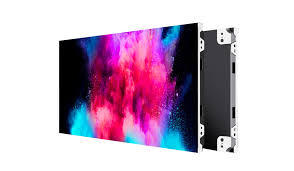
LED (Light Emitting Diode) displays have emerged as a leading technology in both commercial and industrial sectors due to their superior brightness, energy efficiency, and flexible form factors. From small digital signage to massive outdoor stadium screens, the scalability and reliability of LED technology continue to expand its applications worldwide. According to the International Electrotechnical Commission (IEC 62717 standard), LED displays are expected to meet stringent criteria in color reproduction, durability, and energy consumption, which directly influence their performance and lifecycle.
Main Body
1. Core Technologies and Innovations
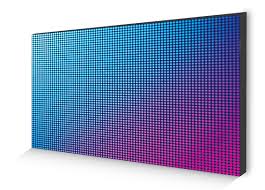
Modern LED displays utilize Surface-Mount Device (SMD) LEDs, which integrate multiple diodes within a single package, offering enhanced pixel density and uniform light distribution. Typical pixel pitches range from 0.9mm to over 20mm, reflecting their intended use cases—fine-pitch for indoor close-viewing environments and coarse-pitch for outdoor long-distance displays. Industry research from the Society for Information Display (SID) emphasizes pixel pitch as a critical determinant of image resolution and overall visual experience.
Advanced technologies such as Mini-LED and Micro-LED are pushing the boundaries further. Micro-LED displays feature individual microscopic diodes, enabling superior contrast ratios (>1,000,000:1), brightness levels exceeding 10,000 cd/m², and longer operational lifetimes compared to traditional LCD and OLED panels. The integration of intelligent driving ICs and real-time calibration algorithms allows for dynamic brightness adjustment, color uniformity correction, and energy optimization—a necessity as per the ANSI/IES RP-27.4-19 standard.
2. Manufacturing Processes and Quality Assurance
High-precision manufacturing processes are essential to ensure consistency and reliability of LED displays. The production workflow includes wafer fabrication, die sorting, LED binning for color and brightness uniformity, PCB assembly, and module integration. Automated Optical Inspection (AOI) systems are implemented extensively to detect defects during assembly, ensuring that the pixel failure rate remains below 0.0001%, as recommended by industry best practices.
Thermal management is another crucial aspect. Efficient heat dissipation mechanisms, such as aluminum heat sinks and thermal interface materials, protect LEDs from thermal degradation. Excess heat can reduce luminous efficacy and accelerate color shift over time. According to studies published by the Journal of the Society for Information Display, optimal thermal design can extend LED module lifespans from 50,000 to over 100,000 operational hours.
3. Performance Parameters and Industry Standards
Key technical parameters for LED displays include brightness, contrast ratio, color gamut, viewing angle, refresh rate, and power consumption.
- Brightness: Indoor displays usually exhibit brightness levels around 600-1,000 cd/m², while outdoor displays require 4,000-10,000 cd/m² to withstand daylight visibility.
- Contrast Ratio: High dynamic contrast ratios (>10,000:1) are essential for vivid image quality.
- Color Gamut: Displays compliant with Rec. 709 or DCI-P3 color spaces offer superior color accuracy, which is critical in broadcast and advertising sectors.
- Refresh Rate: Refresh rates of 1,920 Hz or higher minimize flicker, especially in high-frame-rate applications such as live sports broadcasting.
- Power Consumption: Energy-efficient modules comply with IEC 62087 standards, balancing luminous output with minimized wattage per square meter.
4. Application Trends and Market Dynamics
The demand for high-resolution, energy-efficient LED displays is rising globally. Urbanization and smart city developments promote LED digital signage for public transportation, advertising, and information dissemination. Furthermore, the COVID-19 pandemic has accelerated the demand for transparent and flexible LED displays in retail and healthcare sectors to enable touchless interactions and digital engagement.
Sustainability is also translating into material innovation. Manufacturers are increasingly adopting lead-free soldering techniques and recyclable components to meet the RoHS directive and global environmental benchmarks.
Conclusion
LED display manufacturing today stands at the confluence of cutting-edge technology and rigorous industry standards. Enhancements in micro-LED technology, sophisticated manufacturing processes, and adherence to international performance criteria position LED displays as the preferred medium across diverse applications. Continuous innovation combined with practical engineering solutions will further bolster the reliability, visual quality, and energy efficiency of LED displays, ensuring their prominent role in the future of digital visualization.
For professionals and users investing in LED display technology, understanding these technical insights and standards will aid in making informed decisions and optimizing the performance of LED display solutions.
References:
- IEC 62717: LED Modules for General Lighting — Performance Requirements
- ANSI/IES RP-27.4-19: Recommended Practice for LED Lighting
- Society for Information Display (SID) Journal Papers
- IEC 62087: Methods of Measurement for the Power Consumption of Audio, Video and Related Equipment
- RoHS Directive (2011/65/EU)













