

Optimizing LED Display Bars for Superior Visual Performance and Durability
LED display bars have become integral components in today’s visual communication systems, providing vibrant, scalable, and energy-efficient solutions for a broad spectrum of applications ranging from commercial advertising to public information systems. As a professional LED display engineer with extensive experience in the design and manufacturing of LED and LCD screens, I will discuss the critical technical parameters, material selections, and best practices to optimize LED display bars, ensuring their superior visual performance and long-term reliability.
Understanding LED Display Bar Architecture
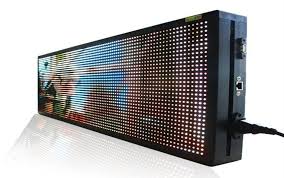
An LED display bar typically comprises a linear arrangement of LED modules mounted on a printed circuit board (PCB). These bars are modular by nature, enabling flexible assembly into larger displays or integrated into interactive kiosks or architectural designs. Key technical parameters to consider during manufacturing include pixel pitch, brightness, color accuracy, refresh rate, and viewing angle.
- Pixel Pitch: Pixel pitch—the center-to-center distance between adjacent LED pixels—directly influences resolution and viewing distance. For applications such as retail digital signage or outdoor scoreboards, pixel pitches typically range from 1.5 mm to 10 mm, balancing fine image detail with visibility at distance.
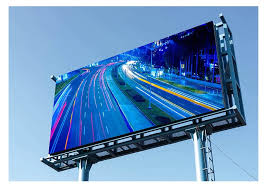
- Brightness and Contrast: LED bars must provide adequate luminance, often exceeding 1000 cd/m² for indoor use and up to 5000 cd/m² or more for outdoor installations to combat sunlight glare. Achieving high contrast ratios is critical, employing technologies such as dynamic dimming and black LED chips to enhance depth and clarity.
- Color Accuracy and Uniformity: Deploying high-quality RGB LEDs and precise color calibration ensures faithful reproduction of the full color spectrum. Standards such as Rec. 709 for HDTV or DCI-P3 for cinema highlight the stringent color requirements. Uniform PCB trace layouts and consistent current driving schemes reduce color shifts and brightness discrepancies.
- Refresh Rate & Response Time: A refresh rate above 1920 Hz is recommended to eliminate flicker, particularly important for display bars used in media production or live broadcasting environments. Fast response times of less than 10 microseconds support smooth motion rendering without ghosting.
Material and Manufacturing Considerations
Durability and longevity are pivotal for LED display bars, especially when installed outdoors or in high-use scenarios.
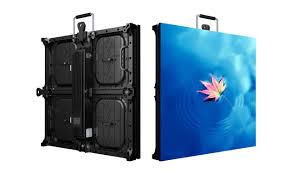
- LED Chip Selection: Utilizing LEDs from reputable manufacturers such as Cree, Nichia, or Osram ensures consistent luminance and lifespan exceeding 100,000 hours under standard operating conditions.
- Thermal Management: Effective heat dissipation is essential. Aluminium substrates combined with active cooling solutions help maintain operational temperatures below 60°C, thereby extending LED longevity and preserving color fidelity.
- Protective Coatings: Conformal coatings and IP-rated housings (IP65 or higher) shield against moisture, dust, and mechanical impact, critical for maintaining performance in challenging environments.
- Driver IC Performance: High-efficiency driver ICs with integrated PWM dimming control provide stable current and voltage to each LED, minimizing flicker and power consumption.
Installation and Calibration Best Practices
Ensuring optimal alignment and connection during installation greatly influences the display’s visual uniformity. Utilizing precision fixtures and calibration tools, including spectroradiometers for color calibration and photometers for brightness uniformity, achieves a harmonious image across all connected LED display bars.
Case Studies and Industry Standards
The integration of LED display bars into large-scale stadium displays illustrates practical application insights. For instance, major stadiums adopt display bars with pixel pitch around 4mm and brightness exceeding 5000 cd/m² to ensure visibility under daylight conditions. Compliance with IEC 62368-1 for safety and IEC 60529 for ingress protection guarantees reliable performance and operator safety.
Conclusion
LED display bars represent a versatile and scalable solution for modern digital displays. Optimizing their design through careful consideration of pixel pitch, brightness, color accuracy, thermal management, and robust materials leads to exceptional visual performance and operational reliability. As standards evolve and LED technology advances, ongoing research and adherence to best practices will continue to define the benchmark for high-quality LED display bar manufacturing.













