

Advanced Insights into LED Display Manufacturing: Technologies, Standards, and Practical Applications
The field of LED display manufacturing has seen significant advancements over the past decade, driven by rapid technological progress, evolving consumer demands, and stricter industry standards. As a professional engineer working extensively in LED and LCD screen production, I intend to offer a thorough analysis of the critical aspects that determine the quality, performance, and reliability of LED displays from a manufacturing perspective.
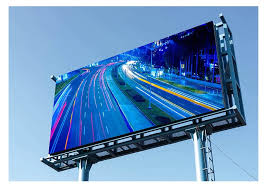
At the core of LED display technology lies the Light Emitting Diode (LED) itself, which fundamentally differs from traditional LCDs by using self-illuminating diodes to produce images with superior brightness, contrast ratios, and viewing angles. Modern LED displays range from indoor fine-pitch LED screens with pixel pitches as low as 0.9 mm to large-format outdoor LED video walls with pixel pitches spanning multiple millimeters, depending on intended use cases.
Key Technical Parameters and Manufacturing Considerations
The most pivotal parameters in LED display manufacturing include pixel pitch, brightness, refresh rate, color gamut, and viewing angle:
- Pixel Pitch: This defines the distance between adjacent pixel centers and directly affects the resolution and viewing distance. For example, ultra-fine pixel pitch LED displays of P0.9 to P1.5 mm are optimal for close viewing environments like control rooms and broadcast studios. Larger pitches (e.g., P4 to P10 mm) cater to outdoor advertising and stadium displays where viewers are further away.
- Brightness: Measured in nits (cd/m²), typical indoor LED displays deliver brightness ranging from 800 to 1,200 nits, while outdoor displays require values exceeding 5,000 nits to combat sunlight glare. Advances in LED chip technology, such as the introduction of high-efficiency sapphire substrates and quantum dot enhancements, have improved luminous efficacy significantly.
- Refresh Rate: To ensure flicker-free images and accommodate high-definition video content, a refresh rate of at least 1920 Hz is standard for professional indoor LED displays. Higher refresh rates improve image quality for broadcast applications, particularly for slow-motion and zoom footage.
- Color Gamut and Calibration: Manufacturing processes now emphasize precise color calibration and uniformity. Utilizing 14-bit or higher gamma correction enables deeper color rendition and reduces banding. Calibration systems compliant with industry standards like the International Electrotechnical Commission (IEC) 62804 help maintain chromatic consistency over time.
- Viewing Angle: Modern LED displays achieve wide horizontal and vertical viewing angles (typically ≥160°), essential for public information boards and large-scale commercial installations.
Manufacturing Process and Quality Control
Producing high-quality LED displays demands rigorous process control encompassing chip fabrication, die bonding, PCB mounting, encapsulation, and optical calibration. Die sorting based on forward voltage and luminous intensity is critical to ensuring uniform brightness across the panel. Surface Mount Technology (SMT) machines equipped with high precision placement improve pixel alignment tolerance, minimizing defects.
Encapsulation using silicone or polyurethane layers protects LEDs from environmental factors such as moisture, dust, and ultraviolet radiation while maintaining optical clarity. Advanced optical lens designs optimize light distribution to achieve uniform luminance and prevent color shifting.
Stringent testing is mandated by international industry standards such as ANSI/CTA-2065-2020 for display performance and durability. Tests assessing thermal stability, shock resistance, and color stability under prolonged usage scenarios help guarantee product longevity and reliability.
Practical Applications and Case Studies
In practical terms, leading manufacturers integrate these technical and procedural advances into diverse sectors—from outdoor digital signage and sports stadium screens to medical imaging displays and cockpit instrumentation panels.
A notable case study is the deployment of a P1.2 mm indoor LED display system in a financial trading floor, where high resolution combined with rapid refresh rates enhances real-time data visualization critical for traders. Another example involves a stadium LED video wall with over 10,000 nits peak brightness, designed to operate efficiently under direct sunlight and withstand extreme weather conditions without performance degradation.
Future Trends
Looking forward, developments such as MicroLED and MiniLED promise further breakthroughs in pixel density, energy efficiency, and lifespan. Integration with AI-powered calibration and IoT connectivity enhances dynamic display management for adaptive brightness and content optimization.
In summary, LED display manufacturing is a multidimensional discipline that synthesizes semiconductor technology, optical engineering, and quality control to meet increasingly sophisticated requirements. Staying abreast of standards such as IEC and ANSI while embracing innovations ensures that manufacturers can produce displays that deliver exceptional visual experiences, robust performance, and sustainable operation worldwide.













