

Advanced Insights into LED Display Manufacturing: Technologies, Standards, and Applications
The LED display industry has witnessed remarkable advancements over the past decades, driven by innovations in semiconductor technology, materials engineering, and manufacturing processes. As a professional engineer deeply involved in LED and LCD screen manufacturing, this article aims to provide an authoritative overview of contemporary LED display technologies, their key manufacturing parameters, essential industry standards, and real-world applications. By synthesizing technical details, case studies, and current standards, this article serves as a comprehensive resource for engineers, manufacturers, and industry stakeholders worldwide.
Introduction
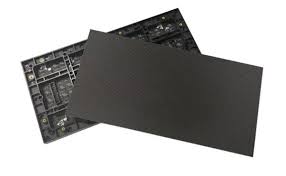
Light Emitting Diode (LED) displays have become ubiquitous across diverse sectors including digital signage, broadcasting, transportation, and consumer electronics due to their superior brightness, energy efficiency, and flexible form factors. Unlike traditional LCD displays, LED displays utilize electroluminescent semiconductors to produce light directly, enabling thinner panels and higher contrast ratios. Recent innovations, such as Mini-LED and Micro-LED technologies, have further pushed the boundaries of display quality and performance.
This article examines the technical intricacies of LED manufacturing processes, important performance parameters, relevant quality standards like ANSI/IES RP-27 and IEC 62368-1, and practical considerations for deployment.
Main Body
1. LED Display Technologies and Manufacturing Process
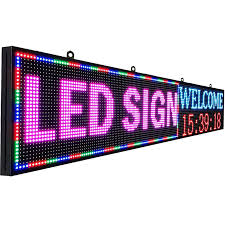
LED displays generally come in two main types: direct-view LED (DV-LED) and LED-backlit LCD. DV-LED consists of arrays of discrete LED pixels that emit light directly, while LED-backlit LCDs use LEDs as a backlight source for liquid crystal panels.
- Direct-View LED: These displays are comprised of millions of tiny LEDs organized into pixels with Red, Green, and Blue sub-pixels. Manufacturing precision is critical here — the placement accuracy must be within a few microns to achieve high resolution. Manufacturing processes include sapphire substrate growth, LED epitaxial layer deposition via Metal-Organic Chemical Vapor Deposition (MOCVD), wafer dicing, die bonding, and phosphor coating for white light generation.
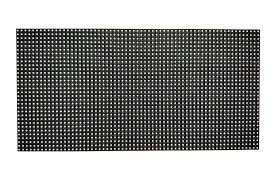
- Mini-LED and Micro-LED: These offer even smaller LED chips (typically<100 microns for Mini-LED and<50 microns for Micro-LED). These require advanced transfer and bonding techniques such as laser lift-off and mass transfer using elastomeric stamps to facilitate assembly on display substrates. The enhanced pixel density enables HDR displays with higher dynamic contrast ratios (up to 1,000,000:1 and beyond).
2. Key Technical Parameters
- Luminance and Brightness: Typical DV-LED displays achieve luminance levels between 800 - 1,500 nits for indoor use, while outdoor displays require up to 6,000 nits or more for sunlight legibility.
- Contrast Ratio: Thanks to per-pixel light emission control, LED displays can deliver infinite contrast ratios, significantly surpassing LCDs which are limited by backlight leakage.
- Color Gamut: State-of-the-art LED displays achieve up to 140% of the standard sRGB color gamut and meet DCI-P3 standards for cinema-grade color accuracy.
- Refresh Rate: High refresh rates above 120 Hz are common, minimizing motion blur and flicker, making LED displays ideal for video walls and broadcasting.
- Viewing Angle: DV-LED offers broad viewing angles typically above 160°, ensuring consistent image quality.
3. Industry Standards and Quality Control
Quality assurance in LED display manufacturing is governed by multiple standards, including:
- IEC 62368-1: Safety requirements for audio/video, information and communication technology equipment.
- ANSI/IES RP-27: Recommended practice for lighting quality and visual performance of LED displays.
- RoHS and REACH compliance: Ensuring environmental safety by limiting hazardous materials in manufacturing.
- ISO 9001 Quality Management: Applied across manufacturing processes to assure repeatability and yield.
Companies integrate automated optical inspection (AOI), photometric testing chambers, and environmental stress screening (ESS) to ensure product reliability and durability, especially for outdoor installations subjected to high humidity, temperature fluctuations, and UV exposure.
4. Applications and Case Studies
The versatility of LED display technology finds applications in:
- Outdoor advertising and stadium displays: High brightness and weather resistance make LED ideal for these use cases.
- Retail and transportation: Providing dynamic information with crisp visuals.
- Broadcast studios: Offering critical color accuracy and smooth video playback.
- Medical imaging and aerospace: Mini-LED and Micro-LED enable precision displays for diagnostic and cockpit instrumentation.
A notable case study is the deployment of Samsung’s “The Wall” Micro-LED display in premium commercial installations, demonstrating ultra-high resolution with modular scalability and improved power efficiency — a testimony to current manufacturing and integration excellence.
Conclusion
The LED display manufacturing industry exemplifies a complex blend of advanced semiconductor fabrication, precision assembly, and rigorous quality control, enabling displays with superior brightness, color accuracy, and durability. Innovations such as Mini-LED and Micro-LED push technological boundaries further, delivering unprecedented image quality and operational efficiency.
Understanding critical parameters like luminance, contrast, and color gamut alongside compliance with global technical standards is vital for manufacturers and engineers aiming to meet diverse application needs. As global demand for immersive and efficient displays continues to rise, continuous improvements in materials science, transfer technology, and process automation will shape the future of LED display manufacturing.
By integrating these insights and adhering to stringent quality practices, the LED display industry remains poised to deliver impactful visual experiences worldwide.













