

Advanced Techniques and Quality Standards in LED LCD Screen Manufacturing
In the dynamic field of display technology, LED LCD screens have become a cornerstone due to their exceptional brightness, contrast ratios, and energy efficiency. Manufacturing these screens demands rigorous adherence to established industrial practices, sophisticated materials engineering, and stringent quality control protocols to ensure optimal performance and longevity. This article delves into advanced techniques and quality standards that underpin the manufacturing of LED LCD panels, offering insights valuable to engineers, manufacturers, and technology integrators worldwide.
Understanding LED LCD Screen Architecture
An LED LCD screen is essentially a conventional liquid crystal display (LCD) panel illuminated by light-emitting diodes (LEDs) positioned either at the edges (Edge-lit) or directly behind the LCD matrix (Direct-lit or Full-array). The LEDs serve as backlight sources, enabling superior brightness levels — often exceeding 1000 nits in high-end models — and supporting wide color gamuts such as DCI-P3 or Adobe RGB, critical for professional-grade imaging.
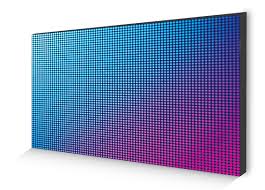
The construction begins with the glass substrates sandwiching the liquid crystal layer. The TFT (Thin Film Transistor) array is integral here, defining each pixel's operation with transistors controlling voltage application precisely. Post assembly, the backlighting system is integrated, consisting of LED arrays embedded with diffusers and light guides to ensure uniform luminance.
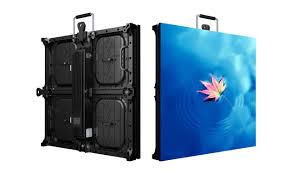
Key Manufacturing Parameters
1. Display Resolution and Pixel Pitch: Modern LED LCD screens often range from Full HD (1920 x 1080 pixels) through 4K (3840 x 2160 pixels) resolutions. Pixel pitch — the center-to-center distance between pixels — typically spans 0.2 mm to 0.4 mm for most consumer models, balancing detail and manufacturing cost.
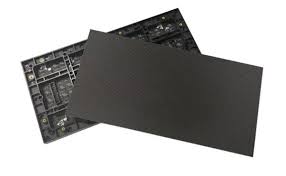
2. Color Accuracy and Calibration: Achieving precise color reproduction involves multi-point calibration using spectrophotometers and colorimeters compliant with CIE 1931 standards. Advanced factories utilize robotic calibration systems to minimize human error and optimize delta-E values below 2, ensuring hues are faithfully represented.
3. Backlight Uniformity and Brightness Control: Uniformity across the panel is critical. The manufacturing process employs high-precision diffusers and quantum dot enhancement films, which improve color saturation and brightness uniformity. Advanced dimming techniques like local dimming zones (sometimes exceeding 100 zones in premium models) reduce halo effects and enhance contrast ratios, often above 100,000:1.
4. Thermal Management: LED arrays generate heat, which can degrade luminance and color fidelity. Efficient thermal dissipation through integrated heatsinks and temperature sensors monitored by embedded firmware helps maintain operational stability over long periods.
Quality Assurance Protocols
Manufacturers incorporate multiple testing stages in alignment with IEC 62368-1, a safety standard for audio/video equipment, ensuring reliability and consumer safety. These include:
- Burn-in Testing: Continuous operation at maximum brightness for 72 hours to detect early failures.
- Moisture and Dust Resistance: Complying with IP ratings where applicable, to prevent ingress that could compromise electrical components.
- Mechanical Stress Testing: Evaluating resistance to flexing and vibration to simulate transport and installation conditions.
Innovations Enhancing LED LCD Manufacturing
Recent developments have centered around mini-LED technology, integrating thousands of tiny LEDs to achieve finer local dimming and superior HDR output. Case studies demonstrate that mini-LED arrays can deliver up to 1000 nits peak brightness with local dimming zones exceeding 2000, dramatically improving perceived image quality. Additionally, the adoption of AI-based defect detection systems during the assembly process increases yield rates by identifying microscopic anomalies invisible to human inspectors.
Quantum dot layers integrated into LCD panels have revolutionized color gamut and energy efficiency. These nanocrystal semiconductor particles convert backlight wavelengths precisely, enabling displays to reach 90-100% coverage of the DCI-P3 color space, a benchmark for cinema-quality imaging.
Global Industry Standards and Environmental Compliance
Leading manufacturers adhere to ISO 9001 for quality management and ISO 14001 for environmental management. Compliance with RoHS and REACH directives ensures toxic substances are minimized in the manufacturing process, aligning with global trends toward sustainable electronics production.
Conclusion
Successful LED LCD screen manufacturing hinges on meticulous control over optical, electrical, thermal, and mechanical parameters. From pixel-level transistor integration to the macro scale of backlight design, consistent advancements in materials, calibration, and quality assurance are pushing the boundaries of display performance. Manufacturers investing in innovation while complying with international standards are primed to meet growing market demands spanning consumer electronics, professional monitors, and large-format digital signage.
By adhering to rigorous production protocols and incorporating emerging technologies such as mini-LED backlighting and AI-driven inspection, the industry continues to enhance LED LCD screen quality, reliability, and visual impact. This holistic approach ensures end-users globally enjoy immersive, accurate, and robust display experiences.













