

Advanced LED LCD Screen Manufacturing: Technology, Applications, and Industry Insights
The LED LCD display industry stands at a pivotal junction of innovation and practical application, driven by evolving consumer demands and technological advancements. As a seasoned engineer specializing in LED LCD screen manufacturing, I bring a comprehensive overview encompassing the core technologies, practical applications, advantages, common challenges, and the latest industry trends shaping the landscape of display solutions worldwide.
Technical Parameters and Manufacturing Processes
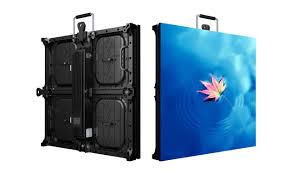
LED LCD displays utilize Light Emitting Diode (LED) backlighting combined with Liquid Crystal Display (LCD) technology to achieve superior image quality and energy efficiency. Typically, such screens operate with 6-bit or 8-bit color depth per channel, translating to 262K to 16.7 million color variations. The backlight can be configured as edge-lit or direct-lit, with direct LED zones providing superior local dimming and contrast ratio improvements—often exceeding 3000:1 in high-end models.
Key manufacturing parameters include:
- Panel Resolution: Ranges from Full HD (1920×1080) to 8K (7680×4320) dependending on application
- Brightness: Commonly between 250 to over 1500 nits, critical for both indoor and outdoor visibility
- Contrast Ratio: Enhanced by Full Array Local Dimming (FALD) technology in premium products
- Color Gamut: Coverage extending beyond sRGB to Adobe RGB or DCI-P3 standards for professional-grade displays
- Response Time: As low as 1ms in gaming-centric LED LCDs to reduce motion blur
Manufacturing combines thin-film transistor (TFT) LCD panels with precision LED backlighting arrays, followed by rigorous calibration involving color accuracy, uniformity, and quality control per international standards such as ISO 13406-2 (Pixel Defect Classification).
Practical Applications Across Industries
LED LCD displays dominate in multiple sectors due to their versatility:
- Consumer Electronics: Televisions, laptops, monitors, and smartphones increasingly leverage LED LCDs for balanced cost, color accuracy, and energy efficiency. TV manufacturers now produce QLED (Quantum Dot LED) variants for improved color volume.
- Industrial & Medical Displays: High brightness and color fidelity are essential for diagnostic imaging and control room monitors. Compliance with standards like IEC 60601-1 for medical devices ensures display safety and performance.
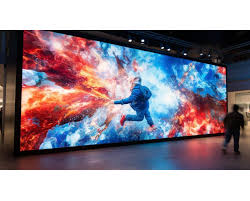
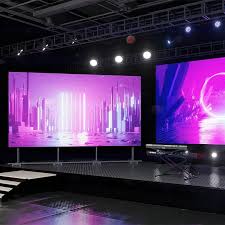
- Public Information & Digital Signage: Outdoor LED LCD displays deliver visibility under direct sunlight with brightness levels exceeding 2000 nits and enhanced durability to withstand harsh environments.
- Automotive Displays: Instrument clusters and infotainment panels rely on LED LCD technology tailored for temperature resilience (-40 to +85°C) and vibration resistance.
- Gaming and eSports: Ultra-fast refresh rates (120Hz and above) combined with minimal response times provide competitive edge for players.
Advantages of LED LCD Technology
- Energy Efficiency: LED backlighting consumes 30-50% less power than traditional CCFL systems, contributing to longer device runtime and reduced environmental impact.
- Slim Form Factor: The thinness of LED backlights enables sleek device designs without compromising display performance.
- Improved Color and Brightness: Enhanced by quantum dot layers and local dimming technologies, modern LED LCDs offer vivid, accurate images suitable for both casual and professional use.
- Longer Lifespan and Reliability: LEDs have extended longevity often exceeding 50,000 operational hours.
- Cost-effectiveness: While technologies like OLED offer superior black levels, LED LCDs maintain leadership due to scalability and lower production costs.
Common Manufacturing Challenges and Industry Solutions
Despite its advantages, LED LCD manufacturing faces challenges:
- Backlight Uniformity: Achieving even luminance across large panels is complex. Solutions include multi-zone local dimming and diffuser optimization.
- Color Shift at Wide Viewing Angles: Inherent to LCDs, this is mitigated by using In-Plane Switching (IPS) panels or Advanced Fringe Field Switching (AFFS) techniques.
- Thermal Management: LED arrays generate heat that can reduce efficiency and lifespan. Employing efficient heat sinks, thermal interface materials, and advanced PCB design is critical.
- Pixel Defects and Image Retention: Rigorous defect screening and applying compensation algorithms help maintain display integrity.
- Manufacturing Yield and Scaling: Consistency in mass production is supported by automated optical inspection (AOI) and inline testing systems conforming to JIS or IPC standards.
Latest Industry Trends and Future Directions
Current trends are revolutionizing the LED LCD landscape:
- Mini-LED and Micro-LED Backlighting: Mini-LED technology incorporates thousands of small LEDs to produce precise local dimming and higher contrast ratios, bridging the gap between traditional LED LCDs and OLEDs. This is rapidly gaining adoption in premium TVs, laptops, and tablets. Micro-LED promises even higher brightness and efficiency, but manufacturing scalability remains a challenge.
- Quantum Dot Enhancement: Quantum Dot films integrated within LED backlights facilitate wider color gamuts (>90% DCI-P3) and improved luminous efficacy.
- Flexible and Curved Displays: Progress in substrate materials and panel assembly enables new form factors enhancing user ergonomics and aesthetic appeal.
- 4K and 8K Resolution Proliferation: Driven by content availability and increased consumer appetite for ultra-high definition, manufacturing process control for pixel density and uniformity is critical.
- AI-Driven Calibration and Quality Control: Machine learning algorithms now optimize display parameters in real-time to enhance user experience and reduce factory defects.
In conclusion, the LED LCD screen manufacturing sector is evolving with a focus on integrating emerging technologies while addressing fundamental production challenges. The fusion of advanced LED backlighting techniques, refined materials, and precision engineering continues to expand the capabilities and applications of LED LCD displays globally, reinforcing their status as a versatile and efficient display solution in diverse industries.
References:
- International Electrotechnical Commission (IEC) Standards
- ISO 13406-2: Protection of Displays – Pixel Defect Classification
- Society for Information Display (SID) Technical Digest
- “LED Backlighting Technologies for LCD Displays,” Journal of Display Technology, 2023
- Industry reports from DisplaySearch and IHS Markit (2024)













