

Advances and Best Practices in LED Display Manufacturing: A Comprehensive Guide for Industry Professionals
The LED display industry has experienced remarkable growth over the past decade, driven by advances in semiconductor technology, material sciences, and manufacturing processes. As of 2024, LED displays have become an indispensable visual solution across a broad spectrum of applications, from consumer electronics and public information boards to large-scale outdoor advertising and high-end broadcast studios. This article delivers an authoritative, comprehensive overview of current best practices, technical parameters, and the latest advances in LED display manufacturing, underscoring the critical factors that impact product quality, reliability, and cost-effectiveness.
1. Introduction to LED Displays and Their Market Relevance
Light Emitting Diode (LED) displays use semiconductor diodes to emit light when electrically stimulated, converting electrical energy directly into visible light with high efficiency and brightness. The ever-increasing demand for high-resolution, high-brightness, and power-efficient displays has propelled LED technology to the forefront, especially in outdoor digital signage, stadium screens, retail advertising, and large venue video wall applications.
According to the International Electrotechnical Commission (IEC) standards IEC 60825-1:2014 for safety of laser products and IEC 62087 for measuring LED display power consumption and brightness, manufacturers emphasize compliance to ensure safe and standardized products. Industry reports by AVIXA and IHS Markit project the global LED display market to exceed USD 15 billion by 2025, reflecting ongoing investment in research and development and deployment.
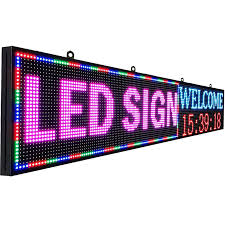
2. Understanding Key Technical Parameters in LED Display Manufacturing
Manufacturing high-quality LED displays requires meticulous control over several critical parameters:
- Pixel Pitch: Defined as the distance from the center of one pixel to the center of the adjacent pixel, pixel pitch significantly impacts display resolution and viewing distance. Common pixel pitch ranges are 0.9mm for fine-pitch indoor displays, 1.5-2.5mm for indoor signage, and 3-10mm or more for outdoor installations. The choice of pixel pitch depends on viewing environment and application.
- Brightness (cd/m² or nits): Brightness levels vary depending on location. Indoor displays typically require 600-1200 nits, while outdoor displays demand greater than 5000 nits to combat sunlight glare. Calibration is essential to maintain optimal luminance and uniformity.
- Refresh Rate (Hz): For smooth motion rendering and flicker-free images, LED displays used in broadcast and live events must support refresh rates of 3840Hz and above, often reaching up to 7680Hz. Low refresh rates can cause visual artifacts and viewer discomfort.
- Color Accuracy and Gamut: Advances in LED binning and phosphor technology have improved color consistency. Modern displays aim for Rec. 709 and Rec. 2020 color spaces, with high Color Rendering Index (CRI) values above 80-90 to ensure faithful color reproduction.
- Viewing Angle (°): Wider viewing angles, often exceeding 140° horizontally and vertically, are achieved through innovative lens designs and LED encapsulants, ensuring visibility from diverse positions without color shift or brightness falloff.
3. Manufacturing Processes and Quality Control
The manufacturing of LED displays encompasses several sophisticated processes:
- LED Chip Selection and Binning: Selection of chips based on brightness, color wavelength, forward voltage, and binning tolerances ensures uniformity across the panel. Automated systems sort LEDs to minimize variance in color temperature and intensity, vital for visual consistency.
- PCB Design and Assembly: High-density printed circuit boards (PCBs) with multilayer substrates provide the electrical foundation. Controlled impedance and thermal management through copper pathways enhance reliability and reduce electromagnetic interference.
- Module Assembly: An LED display is constructed from multiple modules (typically 320x160mm or 256x128mm). Precision placement machines handle SMT (Surface Mount Technology) and COB (Chip on Board) techniques to mount LEDs and drivers with tolerances within microns.
- Soldering and Inspection: Automated optical inspection (AOI) and X-ray inspection detect solder joint defects and misaligned LEDs. Quality assurance protocols conform to IPC-A-610 standards for electronic assemblies ensure defect-free modules.
- Encapsulation and Potting: Modules are encapsulated with UV-resistant silicone or epoxy to protect LED dies from moisture, dust, and mechanical damage. This step directly influences the longevity of the display, often guaranteeing 50,000+ hours of continuous operation.
4. Thermal Management and Power Efficiency
Efficient heat dissipation is a fundamental challenge in LED display manufacturing. Excess heat reduces LED lifespan, causes color shifts, and diminishes brightness. Manufacturers incorporate several design practices:
- Heatsinks and Thermal Pads: Aluminum or copper-based heatsinks with optimized fin geometry maximize surface area for convection. Thermal interface materials (TIM) bridge heat transfer between components.
- Active Cooling Solutions: Large outdoor displays may integrate forced-air cooling or liquid cooling mechanisms to maintain stable operating temperatures.
- Power Supply and Driver IC Selection: High-efficiency Mean Well or Inventronics power supplies coupled with constant-current LED drivers regulate voltage and current, improving lifespan and preventing flicker.
5. Compliance, Environmental Standards, and Certification
Modern LED displays must comply with international safety and environmental regulations:
- RoHS (Restriction of Hazardous Substances Directive) compliance ensures elimination of lead, mercury, cadmium, and other toxic elements.
- REACH (Registration, Evaluation, Authorization, and Restriction of Chemicals) mandates safe chemical use in materials.
- IP Rating (Ingress Protection) for dust and water resistance; IP65 to IP67 grades are standard for outdoor models.
- UL Certification for safety reliability and CE marking for European market acceptance.
- Environmental Testing includes temperature cycling, humidity resistance, vibration and shock tests according to MIL-STD-810G or equivalent standards.
6. Innovations Driving the Future of LED Display Manufacturing
Recent advances reshaping the industry include:
- Micro-LED and Mini-LED Technologies: Micro-LEDs (<100μm) enable ultra-high-resolution and enhanced contrast with lower power consumption, ideal for premium displays and AR/VR applications.
- Flexible and Transparent LED Displays: Using flexible PCB substrates and transparent encapsulants, new form factors allow LED displays on curved surfaces or glass windows, expanding architectural integration possibilities.
- AI-Driven Calibration and Maintenance: Embedded sensors and AI software systems automatically calibrate brightness and color uniformity in real-time, minimizing manual intervention and prolonging panel life.
- Sustainable Manufacturing Practices: Industry leaders adopt circular economy principles by recycling components, reducing waste, and optimizing energy consumption during production and operation.
7. Case Studies and Industry Benchmarks
A leading global LED manufacturer integrated automated optical inspection and AI-powered binning technology, reducing defective pixel rates by 35% and enhancing production throughput by 20%. Another case in stadium LED wall installation demonstrated that selecting a high refresh rate (7680Hz) and >7000 nits brightness ensured seamless broadcast quality and outdoor visibility in direct sunlight.
Conclusion
Manufacturing LED displays is a complex interplay of semiconductor physics, precision engineering, and stringent quality controls. Meeting evolving market demands requires continuous innovation, adherence to international standards, and meticulous attention to every phase—from LED chip selection and PCB design to thermal management and environmental compliance. As material technology advances and new production methodologies emerge, professionals in the LED display industry can anticipate higher-definition, more durable, and energy-efficient displays that will transform visual communications worldwide.
References:
- International Electrotechnical Commission (IEC) Standards: IEC 60825-1, IEC 62087
- IPC-A-610 Acceptability of Electronic Assemblies
- AVIXA Display Market Reports 2023
- IHS Markit LED and Display Market Forecast 2024
- MIL-STD-810G Environmental Testing Guidelines













