

Advanced LED Display Technology and Manufacturing Insights for High-Performance Screens
In the contemporary landscape of digital display technologies, LED (Light Emitting Diode) displays have solidified their position as the cornerstone of high-performance, energy-efficient, and versatile visual solutions. Understanding the intricate process of LED screen manufacturing and the pivotal technical parameters is essential for industry professionals seeking to optimize product quality, durability, and visual impact.
LED Display Technology Overview
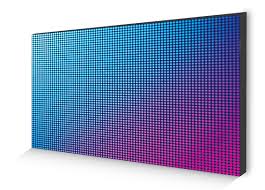
LED displays utilize arrays of light-emitting diodes arranged in pixels to deliver crisp, vibrant, and bright images. Unlike traditional LCD panels reliant on backlighting, LEDs are self-emitting, meaning each diode independently produces light, contributing to higher contrast ratios and enhanced color accuracy. This characteristic benefits applications ranging from indoor digital signage to expansive outdoor billboards.
Key Technical Parameters
1. Pixel Pitch
Pixel pitch, measured in millimeters (mm), denotes the distance between the centers of two adjacent pixels. A smaller pixel pitch correlates with higher resolution and enhanced image clarity, crucial for close-viewing environments such as retail displays and control rooms. Common pixel pitch sizes range from 0.9mm for fine-pitch indoor displays to over 20mm for large-scale outdoor screens. According to the International Electrotechnical Commission (IEC 62717), precision in pixel pitch significantly affects image uniformity and fidelity.
2. Brightness and Contrast
Brightness levels, quantified in nits (cd/m²), directly impact readability under varying ambient light conditions. Outdoor LED screens typically require luminance greater than 5,000 nits to combat sunlight glare, while indoor screens operate efficiently around 800 to 1,500 nits. Contrast ratio – the luminance of the brightest white to the darkest black – is a critical factor influencing image depth and visual comfort. High contrast ratios (>3,000:1) are attainable through advanced LED driver technology and precise calibration strategies.
3. Refresh Rate
The refresh rate, expressed in Hertz (Hz), represents the number of times per second the display updates its image. Higher refresh rates (≥ 3,840 Hz) minimize flickering, improving video quality and reducing eye strain, a necessity for broadcast and live event applications.
4. Color Accuracy and Gamut
Accurate color reproduction is imperative in professional settings such as medical imaging or digital art. Modern LED screens achieve wide color gamuts exceeding 90% of the NTSC color space, delivering vibrant and realistic images. Incorporating color calibration tools and adhering to standards like ITU-R BT.2020 ensures consistent color performance.
Manufacturing Process Insights
The manufacturing of LED displays involves several critical stages:
- LED Chip Fabrication: Utilizing III-V semiconductor materials (such as GaN-based compounds), LEDs are fabricated on sapphire or silicon carbide substrates. Precision epitaxial growth methods like Metal-Organic Chemical Vapor Deposition (MOCVD) enable uniform diode properties, essential for consistent brightness and color output.
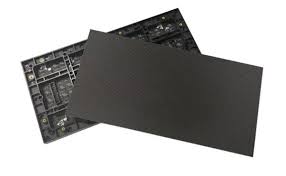
- Module Assembly: Individual LED chips are encapsulated and mounted onto printed circuit boards (PCB) forming pixel units. The quality of soldering and epoxy resin encapsulation influences mechanical stability and environmental protection against moisture and dust, in alignment with IP ratings (Ingress Protection).
- Panel Integration and Calibration: Modules are assembled into panels, ensuring electrical and optical uniformity. Sophisticated calibration techniques such as gamma correction, temperature compensation, and automated color tuning are implemented to refine display performance.
- Quality Control and Testing: Adherence to industry standards like IEC 62087 and Energy Star ensures that units meet power efficiency and environmental compliance. Rigorous testing procedures include thermal cycling, vibration resistance, and luminance uniformity assessments.
Practical Applications and Industry Case Studies
A notable example is the deployment of ultra-fine pixel pitch LED walls in control centers for transportation networks, where detail fidelity and real-time refresh rates are critical for operational safety. Companies like Samsung and Leyard integrate AI-based calibration processes to maintain optimal performance over long equipment lifecycles.
In outdoor settings, LED displays serve as dynamic billboards with robust mechanical structures capable of withstanding harsh weather conditions, often complying with standards such as IEC 60529 for water and dust resistance. Temporary event displays employ lightweight and modular designs to facilitate assembly efficiency and transportability.
Future Trends and Innovations
Emerging developments in Micro-LED technology promise superior brightness, longer lifespan, and lower power consumption compared to traditional LED displays. Additionally, integration with IoT enables remote monitoring and adaptive brightness control based on environmental parameters, enhancing energy efficiency.
Quantum dot enhancements and flexible LED panels also open new frontiers in display form factors, offering curved and foldable screens with unprecedented image properties.
Conclusion
Mastering LED display manufacturing integrates deep technical knowledge across semiconductor physics, precision mechanical assembly, and advanced calibration techniques. By adhering to international standards and leveraging cutting-edge innovations, manufacturers can deliver LED displays that meet the exacting demands of diverse global markets, ensuring superior performance, durability, and visual brilliance.
For industry professionals, staying abreast of these technical parameters and manufacturing insights is fundamental to driving continual improvements and fostering innovation within the LED display domain.













