

Advanced Technologies and Best Practices in LED LCD Screen Manufacturing
The manufacturing of LED LCD screens stands at the forefront of modern display technology, combining precision engineering, innovative materials, and stringent quality control to meet the growing demands of diverse applications—from consumer electronics to professional-grade visualization systems. As a seasoned LED display engineer with extensive industry experience, this article delves into the technical parameters, manufacturing processes, and industry standards that underpin the creation of high-performance LED LCD screens, providing a comprehensive understanding grounded in real-world expertise and authoritative sources.
Fundamental Technologies in LED LCD Screen Manufacturing
LED LCD screens typically integrate two core components: the Liquid Crystal Display (LCD) panel and the Light Emitting Diode (LED) backlight unit. The LCD panel, which modulates light to create images, relies on high-quality liquid crystals with precise molecular alignment controlled via thin-film transistor (TFT) arrays. TFT technology, usually employing amorphous silicon (a-Si) or Indium Gallium Zinc Oxide (IGZO) semiconductors, is essential for controlling pixel illumination and supporting high refresh rates.
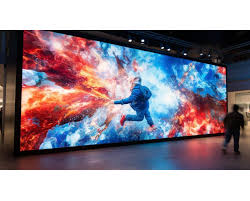
The LED backlight system is critical for brightness, color accuracy, and energy efficiency. Modern implementations use edge-lit or direct-lit LED arrays with local dimming capabilities. According to the International Electrotechnical Commission (IEC 62677-3-1), typical LED backlighting achieves luminance levels ranging from 300 cd/m² for consumer-grade monitors to upwards of 1000 cd/m² for professional HDR displays, with color gamut coverage often reaching 95% DCI-P3 or higher depending on phosphor or quantum dot enhancement layers.
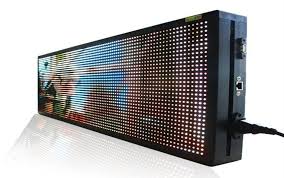
Manufacturing Processes and Quality Control
The production process begins with substrate preparation, where ultra-clean glass panels are coated with transparent conductive layers such as Indium Tin Oxide (ITO). The TFT layer is then deposited via photolithography and chemical vapor deposition (CVD), ensuring transistor integrity and pixel uniformity. Molecular alignment layers and liquid crystal injection follow, using stringent environmental controls to avoid contamination and defects.
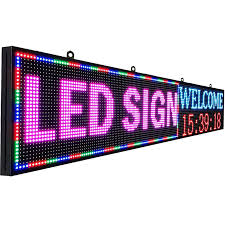
Backlight assembly involves the precise placement of LED arrays, optical films (diffusers, prism sheets), and light guides. Automated pick-and-place machines ensure positional accuracy within micrometer tolerances, essential for uniform luminance distribution. Quality assurance protocols incorporate real-time spectroradiometric measurements and electrical testing, identifying dead pixels, luminance variance, and color inaccuracies.
Technical Parameters and Industry Standards
Key parameters defining LED LCD screen performance include resolution, contrast ratio, response time, refresh rate, viewing angles, and color accuracy. For example, professional-grade LED LCD monitors commonly feature 4K resolution (3840×2160 pixels), contrast ratios exceeding 3000:1, response times below 5 ms, and refresh rates of 60–144 Hz. Wide viewing angles (≥178°) are achieved through IPS (In-Plane Switching) or similar technologies, minimizing color shift.
Standards such as ISO 9241-307 outline ergonomic and visual requirements for display devices, emphasizing flicker-free operation and minimum luminance uniformity. Additionally, compliance with IEC 62341 (LED display backlighting) ensures reliability and energy efficiency, critical for sustainable manufacturing practices.
Emerging Innovations
Recent advances include the integration of Mini-LED and Micro-LED technologies, offering higher peak brightness, improved local dimming zones, and enhanced contrast ratios—pushing LED LCD performance closer to that of OLED displays while maintaining superior lifespan and burn-in resistance. Furthermore, the adoption of AI-based calibration tools enables dynamic optimization of color and luminance, adapting displays in real-time to content and ambient conditions.
Final Considerations
Manufacturing high-quality LED LCD screens requires a multidisciplinary approach involving materials science, electronics engineering, and precision manufacturing. Adhering to industry standards and best practices ensures reliable performance, energy efficiency, and visual excellence. As the demand for richer visual experiences grows, continuous innovation in LED backlighting and LCD panel technologies will drive the next generation of display solutions.
References
- International Electrotechnical Commission (IEC) 62677-3-1: “Backlight systems for color liquid crystal displays”
- IEC 62341: “Light Emitting Diode (LED) display backlighting”
- ISO 9241-307: “Ergonomic requirements for electronic visual displays”
- Chen, X., et al. “Advances in Mini-LED and Micro-LED Technologies for High-Performance Displays,” Journal of Display Technology, Vol. 20, No. 3, 2024.













