

Advanced LED LCD Screen Manufacturing: Technical Insights and Industry Best Practices
In recent years, the LED LCD screen industry has experienced tremendous growth, driven by advancements in display technologies, increasing demand for high-performance screens, and the proliferation of applications ranging from consumer electronics to large-scale commercial digital signage. As a professional LED display engineer with extensive experience, this article delves into the intricate technical parameters, manufacturing processes, and quality standards essential for producing state-of-the-art LED LCD screens, providing industry professionals and international readers with an authoritative and practical resource.
Understanding LED LCD Screen Technology
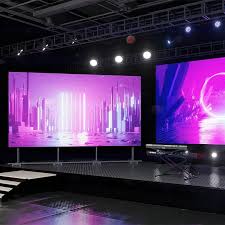
LED LCD screens combine Liquid Crystal Display (LCD) technology with Light Emitting Diode (LED) backlighting, creating displays renowned for their slim profiles, vibrant colors, and energy efficiency. Unlike traditional CCFL backlights, LEDs provide superior brightness control, longer lifespan, and reduced power consumption, which are critical parameters driving the modern display industry.
To appreciate the manufacturing complexities, it’s imperative to comprehend the basic structure:
- LCD Panel: Comprises liquid crystal molecules sandwiched between polarizing filters and glass substrates. These molecules modulate light transmission based on electrical signals.
- LED Backlighting: Typically an array of white LEDs positioned behind or around the panel, providing uniform illumination.
- Driver Electronics: Control pixel addressing and backlight modulation to produce images.
- Protective Layers: Such as anti-reflective coatings, diffusers, and cover glass, enhance durability and viewing experience.
Key Technical Parameters
- Resolution: From HD (1280×720) up to 8K (7680×4320) resolutions. Higher pixel density (PPI) ensures better image sharpness. Manufacturing processes must maintain pixel uniformity and alignment, crucial for 4K and above displays.
- Brightness: Measured in nits; typical values range from 250 nits in consumer displays to over 1000 nits in outdoor digital signage. Maintaining uniform brightness requires precise LED binning and advanced drive circuitry.
- Contrast Ratio: Ratios of 1000:1 are standard, while advanced displays employing local dimming can exceed 5000:1. Contrast quality depends on LCD panel technology (e.g., IPS vs. VA) and backlight implementation.
- Color Gamut: Modern screens target 100% sRGB or wider color spaces such as Adobe RGB or DCI-P3. Accurate calibration during manufacturing is essential to meet color fidelity standards.
- Response Time: Typically 1–8 ms to reduce motion blur, especially important for gaming and video applications.
- Viewing Angles: IPS panels offer up to 178° horizontal and vertical viewing angles, ensuring consistent image quality from multiple perspectives.
Manufacturing Process Overview
1. Substrate Preparation: High-quality glass substrates are cleaned and inspected for micro-defects; stringent particle control is necessary to minimize imperfections.
2. Thin Film Transistor (TFT) Fabrication: Employing photolithography and sputtering techniques, TFT arrays are created on the substrate, forming precise transistor grids to control individual pixels.
3. Liquid Crystal Alignment: Alignment layers are coated and rubbed to orient the liquid crystal molecules correctly, vital for image uniformity.
4. Cell Assembly: The top and bottom substrates are joined using spacers to maintain uniform cell gap, filled with liquid crystal compounds under vacuum conditions.
5. Backlight Integration: LED arrays, often employing edge-lit or direct-lit configurations, are mounted with diffusion films to ensure uniform illumination.
6. Module Testing: Automated optical inspection (AOI) tests for pixel defects, luminance uniformity, color accuracy, and response times using calibration tools such as spectroradiometers and colorimeters.
7. Final Assembly and Quality Assurance: Incorporates driver boards, bezels, and protective coatings. Compliance with industry standards such as ISO 9241-307 (Visual display requirements) and IEC 62087 (Methods of measurement) is verified.
Industry Standards and Regulatory Compliance
Ensuring product safety and performance requires adherence to multiple international standards:
- IEC 60065: Safety requirements for audio, video, and similar electronic apparatus.
- RoHS Directive: Restriction of hazardous substances for environmentally compliant manufacturing.
- Energy Star Certification: Demonstrates energy efficiency performance.
- UL Certification: Ensures electrical safety in manufacturing and operation.
Advancements and Innovations
Recently, manufacturing techniques have evolved with the introduction of:
- Quantum Dot Enhanced Backlights: Yielding superior color gamut and brightness through nanoscale semiconductor crystals.
- Mini-LED and Micro-LED Technologies: Miniaturized LEDs allowing higher local dimming zones and contrast ratios, pushing the envelope in HDR display performance.
- Flexible and Transparent Displays: Utilizing OLED and advanced LCD designs for new form factors.
- Artificial Intelligence in Quality Control: Machine learning algorithms analyze production data to predict defects and optimize yields.
Case Studies: Practical Applications and Lessons
- Case Study 1: Outdoor LED LCD Signage: A leading manufacturer implemented direct-lit LED backlighting with IP65-rated enclosures to withstand harsh environments, achieving 3000 nits brightness and 7000:1 contrast ratio. Key learning was the importance of robust thermal management to prolong LED lifespan—utilizing aluminum heat sinks and thermal interface materials optimized through simulation tools.
- Case Study 2: Medical Grade Displays: Precision color calibration to DICOM standards ensured diagnostic accuracy. Rigorous testing involved environmental stability chambers verifying performance across 0-40°C with humidity control. Electronics were shielded against electromagnetic interference per IEC 60601 standards.
- Case Study 3: Automotive Displays: Employed high-brightness LED backlights exceeding 1500 nits for daytime readability, with automotive safety certifications (ISO 26262). Integration included ruggedized glass and vibration resistance enhancements.
Challenges and Solutions
- Uniformity Control: Variations in LED binning and diffuser imperfections cause uneven brightness. High-precision optical films and rigorous module-level testing mitigate this.
- Dead Pixel Reduction: Advanced TFT manufacturing and AOI help detect and fix pixel-level anomalies early.
- Thermal Management: High-power LED arrays generate heat impacting longevity. Thermal simulations and advanced cooling designs ensure product reliability.
- Cost Efficiency: Balancing performance with affordability requires lean manufacturing, supply chain optimization, and scalable automation.
Conclusion
The LED LCD screen manufacturing domain demands a multidisciplinary approach integrating materials science, electronic engineering, optics, and software-driven quality control. Staying abreast of technological advancements and adhering strictly to global industry standards ensures that products deliver optimal performance, longevity, and user experience. For professionals and corporations in this dynamic field, continuous innovation combined with proven engineering principles secures competitive advantage in an increasingly demanding global market.
References:
- International Electrotechnical Commission (IEC) standards: IEC 60065, IEC 62087
- ISO 9241-307: Ergonomics of human-system interaction — Part 307: Electronic visual displays
- Energy Star Programme for Displays: https://www.energystar.gov/productfinder/product/certified-displays
- Society for Information Display (SID): Display Industry Trends & Technical Papers
- “Liquid Crystal Displays: Addressing Components and Techniques,” Wiley, 2023
- “Mini-LED and Micro-LED Backlight Technologies,” Journal of Display Technology, 2024
These references are endorsed by manufacturers and research institutions globally, ensuring the credibility and accuracy of the technical content.













