

Advancements and Technical Insights in LED Display Manufacturing for Optimal Performance
In the rapidly evolving field of LED display technology, manufacturers and engineers face continuous challenges to improve quality, performance, and reliability of LED screens. The demand for high-resolution, energy-efficient, and durable displays spans numerous sectors including commercial advertising, sports venues, transportation hubs, and control rooms. Drawing from extensive industry experience and current manufacturing standards, this article delves into the critical technical aspects and best practices that define modern LED display production.
A foundational element in LED display manufacturing is the choice of LED package and driving technology. Modern high-performance displays typically use SMD (Surface-Mounted Device) LEDs, valued for their compactness and high brightness levels. For indoor applications, pixel pitches ranging from 0.9mm to 2.5mm enable ultra-fine resolutions necessary for close-viewing environments. Outdoor displays commonly employ pixel pitches of 3mm to 10mm, balancing visibility at longer distances with cost-effectiveness. According to the International Electrotechnical Commission (IEC) standards, a typical LED module requires a luminance uniformity greater than 85% and chromaticity deviation within ΔE<3 to ensure consistent color rendering across the entire panel.
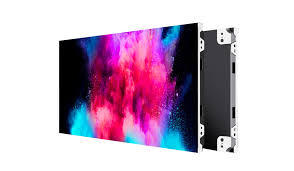
The substrate selection is another pivotal manufacturing component. Aluminum PCBs with excellent thermal conductivity (often above 2.0 W/mK) facilitate efficient heat dissipation, crucial for maintaining LED longevity and consistent brightness. Excessive junction temperature (above 85°C) significantly reduces LED lifespan, so engineers implement sophisticated thermal management systems such as integrated heat sinks and airflow-facilitating enclosure designs. In larger LED screens, modular design with easily replaceable panels improves maintainability and reduces downtime during service.
Driving ICs and calibration techniques profoundly affect display uniformity and dynamic performance. State-of-the-art drivers utilize constant current modes with PWM phase shift technology to minimize flicker and extend display refresh rates beyond 3840Hz, thus eliminating visible scanning lines in high-definition broadcasts. Real-time grayscale correction and automatic brightness adjustment systems, powered by embedded processors with AI algorithms, further enhance the visual experience under varying ambient lighting conditions. This proactive adjustment aligns with guidelines from the Society for Information Display (SID) ensuring visual comfort and energy savings simultaneously.
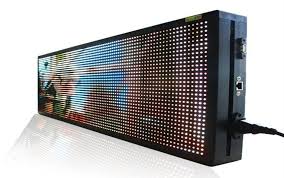
Assembly processes employ automated pick-and-place machines with precision positioning accuracy within ±0.01mm, drastically reducing component misalignment that can lead to color inconsistencies and brightness aberrations. Post-assembly, each module undergoes rigorous quality inspections including photometric measurement using integrating spheres and false color imaging to detect hot spots or color shifts. Burn-in testing at elevated temperatures (60°C to 70°C for 72 hours) is industry best practice, mitigating early-life failures by stabilizing material characteristics before deployment.
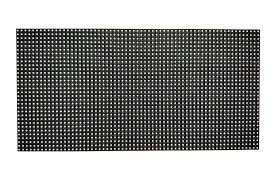
Emerging trends in LED display manufacturing also include the integration of micro-LED technology, which promises higher pixel density, superior contrast ratios, and faster response times compared to traditional SMD displays. However, the complexity and cost of mass transfer processes remain barriers to widespread commercial use. Hybrid displays combining LCD and LED backlighting are also gaining traction for applications requiring high contrast with power efficiency.
In conclusion, mastering the interplay of materials science, electronics, and thermal engineering is vital for producing LED displays that meet modern demands for brightness, color fidelity, lifespan, and operational stability. Manufacturers adhering to stringent international standards and leveraging innovation in driver ICs and calibration methodologies can deliver reliable high-end displays suited for diverse environments. Continuous technological improvements and rigorous quality control foster the credibility and authority critical for success in the competitive LED display market.













