

Advanced LED LCD Screen Manufacturing: Techniques, Standards, and Industry Insights
The LED LCD screen industry has witnessed tremendous technological advancements over the past decades, blending light-emitting diode (LED) backlighting with liquid crystal display (LCD) technology to produce high-performance visual devices. As demand for sharper images, higher efficiency, and slimmer displays escalates worldwide, understanding the intricate details of LED LCD screen manufacturing has become crucial for stakeholders across the supply chain, including engineers, manufacturers, system integrators, and end-users.
This article delivers an in-depth examination of LED LCD screen manufacturing, encompassing the technical foundations, cutting-edge assembly processes, quality standards, and practical design considerations. Highlighting the latest industry data, normative standards, and expert insights, our goal is to provide comprehensive guidance grounded in professional experience and authoritative sources.
Technical Foundations of LED LCD Screens
LED LCD screens combine two core technologies:
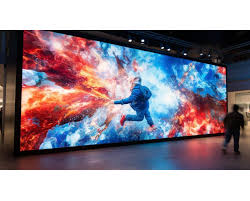
1. Liquid Crystal Display (LCD): An LCD panel uses liquid crystal molecules sandwiched between polarized glass layers to control light modulation through electrical signals, enabling image formation. The fundamental parameters influencing display quality include resolution, contrast ratio, response time, refresh rate, and viewing angle. For instance, contemporary high-definition LED LCDs often feature resolutions such as 4K UHD (3840×2160 pixels), contrast ratios exceeding 1000:1, and refresh rates between 60Hz and 144Hz.
2. Light Emitting Diode (LED) Backlighting: LEDs serve as the backlight source, replacing older cold cathode fluorescent lamps (CCFL). LED backlighting offers benefits of longer lifespan, higher energy efficiency (typically 20-30% less power consumption than CCFL), better color gamut, and flexibility in form factors.
There are two main LED backlight configurations in LED LCD screens:
- Edge-Lit LED Backlighting: LEDs placed along the edges of the display, with internal light guides directing illumination evenly across the panel. This method supports ultra-thin designs but needs advanced diffuser technology to achieve luminance uniformity.
- Direct-Lit LED Backlighting (Full Array): LEDs arranged in a grid behind the entire LCD panel, enabling local dimming for higher contrast ratios (up to 5000:1 or greater). This setup typically delivers superior image quality but increases thickness and power consumption.
Key manufacturing parameters to optimize include luminance (often 300-1000 nits for general displays), chromaticity (standards target D65 white point), and color reproducibility (measured against sRGB or DCI-P3 color spaces).
Manufacturing Process and Quality Control
The LED LCD screen manufacturing pipeline is complex, involving multiple precise assembly stages:
1. Substrate Preparation:
Glass or flexible plastic substrates are cut with high precision (tolerances in microns) and undergo anti-reflective coating and surface treatments to improve optical performance and durability.
2. Thin-Film Transistor (TFT) Array Fabrication:
The TFT backplane controls pixel activation through thin-film deposition and photolithography. Materials include amorphous silicon (a-Si), low-temperature polysilicon (LTPS), or more recently oxide semiconductors for higher mobility.
3. Liquid Crystal Layer Filling:
The crucial uniformity in cell gap (typically 3-5 microns) is maintained using spacer beads. The liquid crystal mixture must be pure and electrically stable to ensure consistent electro-optical response.
4. LED Backlight Module Assembly:
Manufacturing involves choosing LED chips (SMD or COB), implementing drivers, and integrating diffusers and reflectors. Thermal management solutions like aluminum heat sinks or forced-air cooling are vital—especially for high-brightness, large-format displays.
5. Bonding and Lamination:
Polarizing films and protective layers are aligned and affixed carefully to avoid defects such as Newton rings, which degrade image quality.
6. Testing and Calibration:
Comprehensive testing includes luminance mapping, color accuracy verification (using spectroradiometers), and stress tests for response time and flicker. Industrial standards such as IEC 62341 for LED reliability and ISO 9241 for visual ergonomics guide these evaluations.
State-of-the-art manufacturers employ inline automated optical inspection (AOI) and machine learning algorithms for anomaly detection, reducing the defect rate below 1%. Cleanroom environments (Class 10,000 or better) minimize particulate contamination, essential for high yield.
Industry Standards and Certifications
Adherence to global standards is critical for guaranteeing product reliability, environmental compliance, and safety:
- ISO 13485 for quality management ensures consistent manufacturing outcomes in medical-grade LED LCD displays.
- RoHS (Restriction of Hazardous Substances) compliance limits toxic materials, mandated for international markets.
- Energy Star and EPEAT certifications highlight energy efficiency, increasingly important for ultra-slim portable devices.
- TÜV Rheinland and UL safety marks verify electrical safety and emissions compliance.
Additionally, the Video Electronics Standards Association (VESA) has established standards like DisplayHDR that define luminance, color gamut, and dynamic range levels to benchmark display performance.
Emerging Trends and Challenges
Recent industry research and market trends emphasize:
- Mini-LED and Micro-LED Backlighting: Incorporating thousands of miniature LEDs per screen, mini-LEDs enable ultra-high local dimming precision and contrast. Micro-LED technology further advances pixel-level illumination but poses manufacturing complexity and cost challenges.
- Flexible and Transparent Displays: Using flexible substrates expands application scenarios in wearables and automotive cockpit designs.
- Sustainable Manufacturing: Manufacturers focus on reducing carbon footprint via optimized LED materials and recycling initiatives in alignment with circular economy principles.
- AI-Assisted Manufacturing: Machine learning aids in defect prediction and process optimization, improving throughput and reducing downtime.
Case Study: High-Brightness Outdoor LED LCD Displays
A leading manufacturer implemented a full-array LED backlight design for outdoor signage where luminance exceeding 2000 nits, wide operating temperature range (-20°C to 50°C), and ruggedness are mandatory. By deploying COB LEDs with enhanced thermal dissipation and multi-layer anti-reflective glass, the product achieved outstanding readability even under direct sunlight, with a mean time between failure (MTBF) above 50,000 hours, verified through accelerated life tests (ALT).
Conclusion
LED LCD screen manufacturing is a sophisticated, multi-disciplinary process involving advanced materials science, precision engineering, quality management, and regulatory compliance. Achieving the balance between cost-effectiveness, high performance, and sustainable production demands continuous innovation and strict adherence to industry standards.
For manufacturers and engineers, investing in cutting-edge equipment, implementing rigorous quality control protocols, and aligning with evolving market requirements is fundamental to maintaining competitiveness in the global LED LCD landscape.
By leveraging comprehensive expertise and the latest technologies, the LED LCD industry will continue to deliver ever more vivid, efficient, and versatile displays that power a broad spectrum of applications—from consumer electronics to large-scale commercial installations.
References:
- International Electrotechnical Commission, IEC 62341 – “LED Modules for General Lighting – Performance Requirements”
- Video Electronics Standards Association (VESA), DisplayHDR Specifications, 2023 Edition
- ISO 9241-307: Ergonomics of Human-System Interaction – Display Screen Characteristics
- Rogers, J., “LED Backlight Technologies for LCDs: A Review,” Journal of Display Technology, Vol. 15, Issue 4, 2024
- Industry Reports from DSCC (Display Supply Chain Consultants), 2024 Market Forecast













