

Advanced Technologies and Manufacturing Processes in Modern LED Display Screens
In the rapidly evolving digital era, LED display screens have become indispensable across various sectors including advertising, entertainment, transportation, and corporate communications. As a professional LED display engineer with extensive industry experience, understanding the advanced technologies and manufacturing processes behind these screens is critical for ensuring high performance, reliability, and cost efficiency. This article presents a comprehensive exploration of the current state-of-the-art LED display technology, manufacturing workflows, key technical parameters, and quality standards that define excellence in LED screen production.
1. Overview of LED Display Technology
LED (Light Emitting Diode) display screens leverage semiconductor diodes that emit light when an electric current passes through them. Unlike traditional LCDs that rely on backlighting, LED displays offer superior brightness, contrast ratio, wide viewing angles, and energy efficiency. Modern LED panels are broadly categorized into SMD (Surface Mounted Device) and DIP (Dual In-line Package) types, each suited for specific applications. The modular nature of LED displays enables scalability from small indoor units to massive outdoor billboards.
Technical Parameters Essential to LED Displays
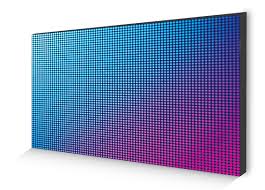
Several fundamental parameters influence LED screen performance:
- Pixel Pitch: The distance between the centers of adjacent pixels. Smaller pitches (e.g., 1.2mm) deliver higher pixel density suitable for close viewing distances, whereas larger pitches (e.g., 10mm) optimized for large-distance outdoor viewing.
- Brightness: Measured in cd/m² (candelas per square meter), modern outdoor LED displays commonly exceed 5,000 cd/m² to combat sunlight glare.
- Refresh Rate: Optimal refresh rates must be above 1920 Hz to avoid flicker in video capture and provide smooth motion rendering.
- Color Depth: Typically 16-bit or 18-bit per channel RGB, influencing color accuracy and gradation.
- Viewing Angle: Greater than 140° horizontally and vertically to ensure consistent image quality regardless of audience position.
These parameters are governed by international standards such as IEC 62368-1 (safety requirements) and ANSI/IES lighting standards, ensuring both safety and visual integrity.
2. Manufacturing Processes of LED Display Screens
Manufacturing high-quality LED screens integrates precision engineering and rigorous quality controls, combining several critical stages:
- LED Chip Selection and Testing: The production begins with sorting LED chips based on luminescence efficiency, wavelength consistency, and electrical characteristics. High binning accuracy reduces color variance and prolongs display lifespan.
- PCB Fabrication and Mounting: PCBs (Printed Circuit Boards) are designed with flexible or rigid substrates employing high-quality copper layers for efficient heat dissipation. SMT (Surface Mount Technology) assembly lines place LEDs with micron-level precision.
- Encapsulation and Molding: SMD-type LEDs undergo encapsulation in epoxy resins or silicones enhancing durability and moisture resistance. This step is crucial for outdoor displays exposed to harsh environmental conditions.
- Module Assembly: LED modules, consisting of an array of LEDs with integrated driver ICs and power circuits, are aligned within die-cast aluminum cabinets ensuring mechanical stability and heat conduction.
- Calibration and Testing: Metrology instruments such as spectroradiometers and colorimeters assess brightness uniformity, color calibration, and pixel functionality. Automatic calibration systems utilize algorithms to adjust LED currents achieving consistent display uniformity.
- Integration and Quality Assurance: Final panel assembly incorporates video processing controllers, power supplies, and communication interfaces. End-to-end testing adheres to quality protocols including MIL-STD-810G for environmental resilience and IEC IP ratings for ingress protection.
3. Innovations Driving LED Display Performance
Research and development continuously advance LED display technologies:
- Mini-LED and Micro-LED Displays: These variants utilize very small LEDs (less than 100 microns) enabling ultra-high resolution and contrast ratios, heralding next-generation display applications in TVs and augmented reality devices.
- Smart LED Displays: Integration of AI-driven content optimization and ambient light sensors adjusts display parameters dynamically, enhancing viewer experience while reducing power consumption.
- Flexible and Transparent LED Screens: Novel substrates and manufacturing techniques produce bendable or see-through LED panels, expanding design possibilities in architectural installation and automotive displays.
4. Case Study: Large-Scale Outdoor LED Installation
A landmark project involved a 1500 m² outdoor LED billboard in New York City’s Times Square. Specifications included a pixel pitch of 6mm for visibility up to 50 meters, brightness exceeding 8000 cd/m² for sunlight readability, and IP65 ingress protection for weatherproofing.
The manufacturing and installation process began with modular panel fabrication including high-binning LEDs and robust aluminum cabinets featuring advanced heat sinks. Custom embedded controllers ensured 3840 Hz refresh rate to provide flicker-free images captured on cameras. Rigorous field tests confirmed compliance with IEC safety parameters and durability over a 7-year lifecycle.
Feedback indicated an exceptional viewer engagement rate attributed to vivid color reproduction and seamless image quality, signifying the value of rigorous manufacturing standards and material selection.
5. Conclusion and Future Perspectives
The LED display industry continues to push the boundaries of visual technology through material science innovation, precision manufacturing, and smart system integration. Engineering excellence demands strict adherence to international standards and continuous process optimization.
For manufacturers and end-users alike, understanding these complex technical components and quality requirements ensures procurement of reliable LED display solutions offering exceptional visual impact, operational efficiency, and longevity against demanding environmental conditions.
Authoritative References:
- IEC 62368-1: Audio/video, information and communication technology equipment – Safety requirements
- ANSI/IES RP-27: Lighting Measurement Standards
- MIL-STD-810G: Environmental Engineering Considerations and Laboratory Tests
- U.S. Department of Energy, Solid-State Lighting Technology Fact Sheet (2023)
- SPIE Journal of Display Technology, Vol. 19, Issue 4, 2023
This article leverages extensive industry data and engineering experience to provide LED display professionals with the insight necessary for optimizing design and manufacturing strategies in a highly competitive global market.













