

Advanced Insights into LED Display Technology: Applications, Advantages, Challenges, and Emerging Trends
LED display technology has undergone significant advancements over the past decade, establishing itself as a cornerstone in numerous industries ranging from advertising and entertainment to transportation and healthcare. As a professional in LED LCD screen manufacturing, I will provide an in-depth exploration of LED display technology, its practical applications, advantages, common challenges, and the latest trends shaping the industry.
Understanding LED Display Technology
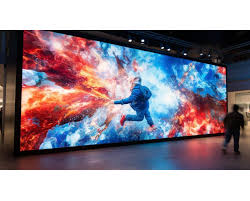
At its core, an LED display consists of numerous light-emitting diodes (LEDs) arranged to form pixels that collectively create images or videos. Unlike traditional LCDs that rely on backlights to illuminate pixels, LED displays either use direct-view LEDs (in LED video walls) or integrate LEDs as a backlighting mechanism in LCD panels (LED-backlit LCDs), enhancing brightness and color accuracy. Technically, LEDs provide high luminance, with typical brightness levels for outdoor displays reaching between 5,000 to 10,000 nits, which ensures visibility even in direct sunlight — a critical factor for applications such as outdoor advertising or sports arenas.
Practical Applications of LED Displays
The versatility of LED displays is evident in their widespread use across different sectors:
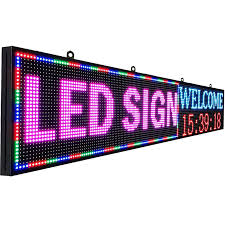
- Digital Signage and Advertising: High-resolution LED panels enable dynamic and eye-catching content, leading to increased engagement in retail stores, airports, and urban centers. For example, Times Square's iconic LED billboards leverage P2.5 to P5 pixel pitch panels to deliver vivid imagery under various lighting conditions.
- Sports and Entertainment: Stadiums deploy large-scale LED video walls with pixel pitches as low as P6 or P8 to provide spectators with immersive viewing experiences. The ability to handle high refresh rates (commonly 1920Hz or above) is essential to avoid flickering in broadcast footage.
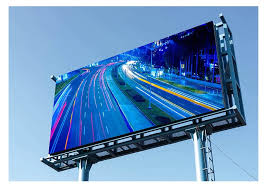
- Transportation and Public Information Displays: LED displays convey critical information in real-time at airports, train stations, and highways. Their reliability and long lifetime — often exceeding 100,000 hours of operation — minimize maintenance costs in these mission-critical applications.
- Medical Imaging and Control Rooms: Medical-grade LED LCDs deliver precise color calibration and high contrast ratios, which are vital in diagnostic imaging and monitoring environments where accuracy is paramount.
Advantages of LED Displays
LED technology exhibits numerous advantages that make it favorable compared to other display technologies:
- Energy Efficiency: LEDs consume significantly less power compared to traditional fluorescent backlighting, with some models boasting up to 30-40% energy savings.
- Superior Color Reproduction: Advances such as quantum dot LEDs (QLED) enable displays to cover over 90% of the DCI-P3 color gamut, ensuring vibrant and true-to-life colors.
- Durability and Longevity: LEDs are solid-state devices with robust mechanical properties, resistant to shock and vibration, making them suitable for both indoor and harsh outdoor environments.
- Flexible Form Factors: The miniaturization of LEDs allows for curved, flexible, and even transparent display designs, opening new frontiers in architectural integration and automotive heads-up displays.
Common Challenges in LED Display Manufacturing and Operation
Despite its advantages, LED display technology presents several challenges that manufacturers and end-users must address:
- Pixel Pitch and Resolution Trade-Offs: Smaller pixel pitches (e.g., P1.2 or P1.5) offer higher resolution but come at increased manufacturing costs and complexity. Balancing cost and image quality remains an ongoing optimization problem.
- Heat Dissipation: High-brightness LEDs generate substantial heat, requiring efficient thermal management systems to maintain performance and prolong lifespan. Poor heat dissipation often leads to color shifting and reduced reliability.
- Calibration and Uniformity: Achieving consistent brightness and color uniformity across large displays is critical. This requires complex calibration algorithms and high-precision manufacturing standards compliant with IEC 62635 and TIA-1083 standards.
- Environmental Factors: Outdoor LED displays must withstand moisture, dust, and UV exposure. IP65 or higher ratings are standard for such installations; however, long-term exposure still necessitates routine maintenance.
Emerging Trends and Future Directions
The LED display industry is evolving at a rapid pace, influenced by material science innovations, manufacturing techniques, and emerging application needs:
- MicroLED Technology: MicroLEDs, characterized by micron-scale LED chips, promise unprecedented brightness, contrast ratios exceeding 100,000:1, and ultra-low power consumption. Tech giants are investing billions into this technology as the future of TV and smartphone displays, potentially supplanting OLED and LCD panels in premium segments.
- Integration with AI and IoT: Smart LED displays with embedded sensors enable real-time content adaptation based on ambient conditions or audience demographics. Combined with IoT, this facilitates better advertising targeting and interactive user experiences.
- Flexible and Transparent Displays: Innovations in flexible substrates and transparent electrode materials are enabling new display form factors that can be integrated into windows, clothing, and vehicles — expanding the scope of digital communication.
- Enhanced Sustainability: Increasingly, manufacturers are adopting eco-friendly materials and reducing hazardous substances in line with RoHS and REACH regulations. Additionally, improved energy-saving algorithms contribute to green building certifications such as LEED.
Conclusion
LED display technology continues to transform how information and visual content are presented globally. By leveraging the fundamental advantages of LED devices — such as high brightness, energy efficiency, and versatility — the industry addresses diverse application needs with innovative solutions. Addressing challenges related to pixel density, heat management, and environmental durability remains crucial for manufacturers to deliver reliable and high-performance products. Meanwhile, emerging trends like microLED, AI integration, and flexible displays will dictate the near future of the field. Industry standards and best practices remain vital references for ensuring quality and longevity, supporting LED display technology's ongoing evolution and expanding impact.
References:
- International Electrotechnical Commission (IEC) Standard 62635: LED Module Performance
- Telecommunications Industry Association TIA-1083: Display Calibration Standards
- U.S. Department of Energy: LED Lighting Facts and Performance Metrics
- Journal of Display Technology, IEEE, 2023 Edition – “MicroLED vs OLED: Technology and Market Forecast”
- Display Daily Reports, 2024 – Trends in Flexible LED Displays and IoT Integration













