

Advanced LED Display Technologies: Practical Applications, Common Challenges, and Emerging Trends
In the rapidly evolving field of visual display technologies, LED (Light Emitting Diode) displays have established themselves as an indispensable component for a wide array of applications—from commercial advertising to large-scale public information systems and cutting-edge entertainment venues. As a professional LED display engineer with extensive industry experience, this article explores the practical applications, inherent advantages, common issues, and emerging trends shaping the future of LED displays, supported by technical parameters and industry standards.
Practical Applications of LED Displays
LED displays are widely utilized across multiple sectors due to their modularity, brightness, and scalability. Some of the most prevalent applications include:
1. Outdoor Advertising and Digital Signage: Outdoor LED displays must comply with high luminance thresholds, typically in the range of 5,000 to 6,500 nits, to overcome sunlight interference. The IP65/IP67-rated weatherproofing standard is critical to withstand rain, dust, and extreme temperatures as defined by IEC 60529.
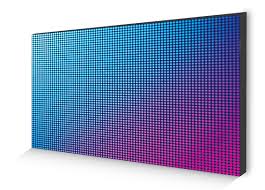
2. Broadcast and Control Rooms: Indoor LEDs with fine pixel pitches (≤1.5mm) enable ultra-high-resolution images, essential for broadcast studios where detail integrity and color accuracy adherence to Rec. 709 or Rec. 2020 standards are crucial.
3. Sporting Arenas and Entertainment Venues: High refresh rates (≥3,840 Hz) reduce flicker for high-speed recordings. Wide viewing angles (>140°) and color uniformity ensure optimal spectator experience.
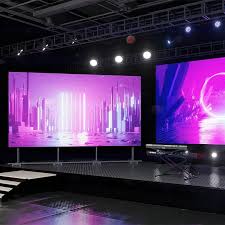
4. Retail and Corporate Displays: Interactive LED walls and transparent LED displays enhance engagement through dynamic content delivery combined with architectural integration.
Advantages of LED Displays Over Other Technologies
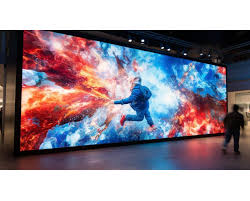
LED displays surpass traditional LCD panels and projection systems in multiple respects:
- Brightness and Contrast: Capable of peak brightness levels exceeding 6,000 nits and contrast ratios above 5,000:1, resulting in superior visibility even in direct sunlight.
- Energy Efficiency: With light emission efficiency improvements reaching up to 150 lm/W, LED modules consume less power relative to comparable display sizes.
- Durability and Longevity: High-quality LEDs offer service life exceeding 100,000 hours, significantly reducing maintenance costs.
- Scalability and Flexibility: Modular panels allow for virtually unlimited screen sizes and shapes.
- Fast Response Time: Sub-millisecond response times reduce motion blur, ideal for dynamic video content.
Common Challenges and Troubleshooting
Despite their robustness, LED displays can face several issues that require careful engineering mitigation:
- Pixel Failure and Color Degradation: Dead or stuck pixels often arise from component-level defects or voltage irregularities. Conformal coatings and strict quality control per IPC-A-610 standards help reduce such defects.
- Thermal Management: LED modules operating continuously generate heat. Efficient heat dissipation systems including aluminum substrates and advanced heat sinks are necessary to avoid thermal runaway that can impact luminous efficiency.
- Uniformity and Calibration Issues: Variability in LED binning and module manufacturing can result in inconsistent brightness and color temperature. Employing automated calibration systems (e.g., colorimeters coupled with manufacturer software) ensures uniform output.
- Data Transmission Latency: Long cable runs and inadequate signal repeaters may introduce latency or image tearing. Using robust communication protocols like HDMI 2.1 or dedicated LED control systems with FPGA-based processing reduces these risks.
Emerging Trends and Innovations
The LED display industry continues to innovate at a rapid pace, and several trends are shaping the next generation of displays:
- Mini-LED and Micro-LED Technologies: Mini-LED backlighting has significantly improved contrast ratios for hybrid LCD displays, whereas Micro-LEDs, with pixel pitches less than 50 microns, promise self-emissive displays with unmatched brightness, color gamut, and lifespan.
- Flexible and Transparent Displays: Advances in flexible substrates and printable LED matrices are facilitating curved and see-through displays, which have applications in augmented reality and architectural design.
- Integration with IoT and AI: Smart LED displays capable of real-time environmental adaptation based on ambient light sensors and AI-driven content optimization are becoming mainstream.
- Sustainability Focus: Manufacturers increasingly prioritize low-power electronics, recyclable materials, and eco-friendly assembly processes aligned with ISO 14000 environmental management standards.
- High Dynamic Range (HDR): LED wall systems supporting HDR10+ offer richer color depth, dynamic contrast handling, and improved visual realism, crucial for cinematic and critical visual applications.
Technical Standards and Quality Assurance
Adhering to recognized standards is essential for performance and reliability:
- IEC 62087 for Measuring Power Consumption: Ensures energy efficiency claims are standardized.
- ANSI and SMPTE Standards for Colorimetry: Establish uniform color reproduction metrics for displays.
- ISO 9001 and IPC Standards: Guide manufacturing quality assurance and process consistency.
- MIL-STD-810G: For LED displays deployed in military or rugged outdoor environments, ensuring reliability under extreme conditions.
Conclusion
LED display technology continues to be a cornerstone of modern visual communication due to its superior brightness, versatility, and longevity. By understanding practical applications, leveraging technical best practices, and staying abreast of evolving trends such as Micro-LED and smart-integrated systems, engineers and stakeholders can harness LED displays to create impactful, reliable, and future-proof visual solutions.
For professionals in the industry, continual innovation aligned with rigorous quality control, international standards, and environmental considerations will define the next era of LED display excellence.













