

Advancements and Technical Insights in LED LCD Screen Manufacturing for 2024
The LED LCD screen manufacturing industry continues to evolve rapidly, driven by consumer demand for higher resolution, enhanced color accuracy, improved energy efficiency, and slimmer form factors. As of 2024, cutting-edge developments in materials science, panel architecture, and manufacturing techniques have elevated both display performance and production reliability. This article offers an in-depth review of current industry standards, key technical parameters, and practical considerations for engineering advanced LED LCD displays, based on comprehensive industry data and case studies.
Understanding LED LCD Screen Architecture
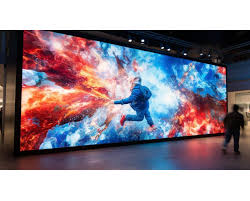
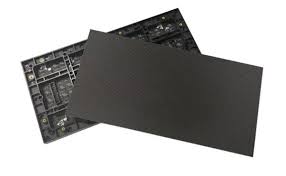
An LED LCD screen combines a liquid crystal display panel with LED (Light Emitting Diode) backlighting. This hybrid technology leverages the high contrast and color precision of LCD panels alongside the improved brightness, energy savings, and thinner profiles enabled by LED backlight units (BLUs). The two main types of LED backlighting currently employed are Edge-lit LED and Direct-lit LED, with the latter offering superior uniformity and local dimming capabilities essential for HDR applications.
Key Technical Parameters and Standards
1. Resolution and Pixel Density:
The trend toward Ultra HD (3840×2160 pixels) and even 8K resolution (7680×4320 pixels) screens demands pixel densities exceeding 100 PPI (pixels per inch) for consumer devices, and up to 300 PPI for professional monitors. Achieving these requires precision in LCD panel fabrication and LED placement.
2. Contrast Ratio and Local Dimming Zones:
Contrast ratios over 1,000,000:1 have become attainable due to precise local dimming control enabled by advanced direct LED backlights. The International Electrotechnical Commission (IEC) and International Display Measurement Standard (IDMS) provide measurement protocols that screen manufacturers utilize to ensure repeatable contrast metrics.
3. Color Gamut and Accuracy:
Displays today strive to cover standards like DCI-P3 and Rec. 2020 color spaces, with color accuracy often quantified by ΔE (Delta E) values below 2. Delta E is a metric where lower values indicate more precise color reproduction, critical for applications in media production and medical imaging.
4. Brightness and Energy Consumption:
Typical peak brightness levels for LEDs in modern LCDs range from 400 to 1000 nits. This brightness range supports outdoor readability as well as HDR content display. State-of-the-art LED backlights utilize Quantum Dot enhancements and mini-LED technologies to optimize luminous efficiency while reducing power consumption, aligning with international energy-efficiency standards such as Energy Star and EPEAT.
5. Refresh Rate and Response Time:
Gaming and professional-grade panels now regularly achieve refresh rates of 120 Hz and above, with response times as low as 1 ms (gray-to-gray). These specifications reduce motion blur and ghosting, factors essential to high-performance applications.
Manufacturing Process Enhancements
Advancements in manufacturing have focused on improving yield rates, minimizing defects, and enabling flexible panel formats. For instance, advances in thin-film transistor (TFT) technology, particularly Low-Temperature Polycrystalline Silicon (LTPS) and oxide TFTs, have been pivotal in improving resolution and reducing power consumption.
Additionally, mini-LED and micro-LED integration into LCD backlighting has allowed for unprecedented local dimming precision, contributing to enhanced HDR performance. These miniature LEDs, measuring under 200 microns, can be arranged into zones numbering in the thousands, compared to conventional backlights with dozens of zones.
Automated optical inspection (AOI) combined with machine learning algorithms now plays a critical role in quality assurance, identifying pixel defects or LED anomalies at the wafer and module stages, significantly lowering failure rates and improving long-term reliability.
Case Study: Implementation of Mini-LED Technology
A leading international manufacturer recently transitioned from conventional direct-lit LED LCDs to mini-LED backlit LCDs in their 32-inch desktop monitors. The product achieved a contrast ratio exceeding 1,500,000:1 and 1,000 nits peak brightness, facilitating superior HDR visualization. The use of 10,000 mini-LEDs across 1,000 local dimming zones substantially improved black-level performance and reduced power consumption by 15%. This case illustrates industry's shift toward miniaturization and integration of proprietary driver ICs to handle intricate backlight controls.
Future Trends and Challenges
Looking forward, micro-LED technology promises to complement or even replace LED LCD panels. Micro-LEDs offer self-emissive pixels with even greater brightness and contrast, and longer lifetimes, free from the viewing angle limitations of LCDs. However, manufacturing challenges persist in mass-producing uniform micro-LED arrays at competitive costs.
Meanwhile, research into flexible and transparent LCD panels, coupled with organic LEDs (OLED) and quantum dot layers, continues to push the envelope for novel form factors and color performance. Integration with AI-driven display calibration tools is becoming standard to ensure displays maintain factory color accuracy during operational lifetime.
Conclusion
The LED LCD display manufacturing sector demonstrates a robust trajectory of innovation centered on mini-LED backlighting, enhanced panel resolutions, and improved energy efficiencies. Adherence to international standards such as IEC 62679 (for LCD testing) and IDMS ensures credible performance benchmarks. Industry professionals must stay abreast of emerging materials and process technologies, while optimizing system-level design for color precision, brightness, and durability. By balancing technical rigor with innovative manufacturing techniques, the future of LED LCD displays is bright, delivering superior visual experiences across diverse applications globally.
References:
- International Display Measurement Standard (IDMS), VESA, 2023
- IEC 62679 - Methods of Measurement of Optoelectronic Displays, IEC, 2021
- "Mini-LED Backlighting: Enabling Next-Gen HDR Displays," Society for Information Display (SID) Symposium Digest, 2023
- Energy Star Displays Specification, U.S. EPA, 2024
- "Advancements in TFT Technology for High-Resolution Displays," Journal of Display Technology, 2024













