

Advancements and Best Practices in LED LCD Screen Manufacturing for Optimal Display Performance
The LED LCD screen industry has witnessed significant technological evolution over recent years, driven by escalating demands for higher resolution, enhanced energy efficiency, and superior color accuracy. As a professional LED display engineer with extensive expertise, I will delve into the critical aspects of LED LCD screen manufacturing, highlighting technical parameters, manufacturing challenges, and best practices validated by industry standards and recent case studies.
LED LCD technology integrates light-emitting diode (LED) backlighting with liquid crystal display (LCD) panels. This hybrid approach improves contrast ratios, brightness uniformity, and power consumption when compared to traditional cold cathode fluorescent lamp (CCFL) backlighting. The key to manufacturing an efficient LED LCD screen resides in precise control over several technical parameters including pixel density, color gamut, refresh rate, and luminance uniformity.
Pixel Density and Resolution
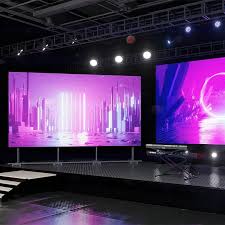
Pixel density, measured in pixels per inch (PPI), remains a principal metric for visual clarity. Modern LED LCD screens for consumer electronics such as monitors and TVs typically achieve resolutions ranging from Full HD (1920×1080) to 4K Ultra HD (3840×2160). Professional-grade displays may exceed 300 PPI, delivering razor-sharp images necessary for medical visualization or graphic design. The manufacturing process must ensure uniform alignment of liquid crystals and precise LED placement to avoid dead pixels or color distortions.
Backlight Engineering and Uniformity
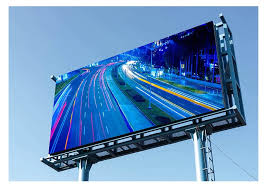
The efficiency of the LED backlight directly influences brightness and energy consumption. Low-voltage LEDs have become industry standards, offering long lifespans (up to 50,000 hours) and consistent luminance levels. Edge-lit and direct-lit LED configurations are employed depending on application needs. Direct-lit designs, while more expensive, provide superior brightness and uniformity essential for large-format displays. Implementing light diffusers and optical films such as brightness enhancement films (BEF) ensures even light distribution, eliminating hotspot issues.
Color Accuracy and Gamut
Modern LED LCDs strive to cover wide color gamuts, commonly adhering to industry benchmarks such as DCI-P3 or Adobe RGB standards. To achieve this, manufacturers integrate quantum-dot enhancement films (QDEF) or utilize specialized LED chips that emit in targeted wavelength bands. Calibration protocols are mandated by standards like ISO 12647-7 to maintain consistent color reproduction across production batches, critical in professional display segments.
Refresh Rate and Response Time
Higher refresh rates (120 Hz and above) reduce motion blur, crucial for gaming monitors and broadcasting equipment. Achieving this requires optimized LCD panel driving electronics and fast-switching liquid crystals. Response times under 5 milliseconds are generally required; manufacturers often deploy overdrive circuits to meet these benchmarks without image artifacts.
Thermal Management
LED arrays generate heat that can affect liquid crystal stability and overall panel longevity. Effective thermal dissipation techniques include integrating aluminum heat sinks, thermally conductive adhesives, and active cooling in large-scale installations. Compliance with standards such as IEC 60950-1 ensures safe operating temperatures and reduced risk of thermal degradation.
Quality Control and Reliability Testing
Robust quality assurance is paramount. Manufacturers implement inline inspection systems using automated optical inspection (AOI) and electroluminescence (EL) testing to detect defects early. Environmental stress tests—covering humidity, temperature cycling, and mechanical shock—validate durability in various application scenarios.
Case Study: Samsung’s Quantum Dot Displays
Samsung’s QLED line exemplifies state-of-the-art LED LCD manufacturing utilizing quantum dot technology to boost color saturation while maintaining energy efficiency. Their proprietary backlight module, combined with advanced optical films, delivers peak brightness levels exceeding 1500 nits with 98% DCI-P3 coverage. This approach has set industry benchmarks in professional-grade home entertainment displays.
Conclusion
Manufacturing LED LCD screens demands a multidisciplinary engineering approach encompassing optics, electronics, materials science, and thermal management. Prioritizing pixel precision, backlight efficiency, color fidelity, and reliability aligned with international standards like ISO and IEC ensures production of high-quality displays meeting diverse market needs. Continuous innovation, as evidenced by quantum dots and mini-LED backlighting, will sustain growth and differentiation in an intensely competitive landscape.
Industry stakeholders and engineers must maintain rigorous control over every manufacturing phase to optimize performance, reduce defects, and extend product lifespan, ensuring that LED LCD technology remains a dominant and evolving solution in modern digital display systems.













