

Advanced Technologies and Quality Standards in LED LCD Screen Manufacturing
The LED LCD screen industry has witnessed remarkable advancements driven by continuous innovations in materials, fabrication techniques, and quality control standards. As a professional LED display engineer with extensive experience, this article explores the critical technical parameters, manufacturing processes, and industry best practices that shape the performance and reliability of LED LCD screens. The aim is to provide international readers with an authoritative understanding of current technologies, ensuring informed decision-making for applications ranging from consumer electronics to industrial displays.
Understanding LED LCD Technology Fundamentals
LED LCD screens integrate two core technologies: Liquid Crystal Displays (LCD) serving as the modulation layer, and Light Emitting Diodes (LED) used as backlighting units. The LED backlight illuminates the liquid crystals, which modulate light to produce accurate colors and images. Modern LED LCD displays leverage advancements such as quantum dot enhancement films (QDEF) to widen color gamut and improve brightness efficiency, achieving up to 95% of the DCI-P3 color space, a critical standard for cinema-grade color accuracy.
Key Technical Parameters and Performance Metrics
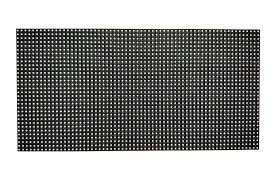
Several technical benchmarks determine LED LCD quality levels:
- Resolution: From Full HD (1920x1080 pixels) to 8K UHD (7680x4320 pixels), resolution dictates image clarity. High pixel density (measured in PPI—pixels per inch) is essential for displays used in virtual reality and medical imaging.
- Brightness: Measured in nits (cd/m²), typical LED LCDs range from 300 to 1000 nits. Outdoor displays may exceed 2000 nits for visible daylight operation.
- Contrast Ratio: High contrast ratios (above 3000:1) ensure deep blacks and vibrant colors. Advanced technologies include local dimming backlights to boost dynamic contrast.
- Refresh Rate: Standard rates are 60 Hz; gaming and high-end applications require 120 Hz or higher for smooth motion rendering.
- Color Accuracy: Quantified using Delta E values; professional displays strive for Delta E<2 to guarantee perceptually accurate colors.
Manufacturing Techniques and Quality Control
Manufacturing high-quality LED LCD panels involves precision assembly in dust-free environments (cleanrooms rated at ISO Class 5 or better). Key steps include:
- Deposition of Indium Tin Oxide (ITO) electrodes for transparent electrical conduction.
- Application of active matrix thin-film transistors (TFT) using amorphous silicon (a-Si) or low-temperature poly-silicon (LTPS) to control pixel switching speed and reduce power consumption.
- Backlight unit assembly incorporating LEDs, light guide plates, diffuser films, and reflectors to ensure uniform brightness distribution.
Stringent Industry Standards like IEC 62368-1 for safety and ISO 9241 for ergonomic display design are adhered to throughout production. In particular, thermal management employing heat sinks and thermally conductive adhesives safeguards longevity amid high luminance operation.
Sustainability and Environmental Considerations
Modern LED LCD manufacturing prioritizes eco-friendly practices. Use of lead-free solder under RoHS (Restriction of Hazardous Substances) directive limits hazardous material usage. End-of-life recycling plans and energy-efficient driver ICs contribute to reduced carbon footprints.
Case Studies: Innovations in Commercial and Industrial Displays
A leading manufacturer implemented quantum dot-enhanced LED backlighting in large outdoor digital billboards, achieving a peak brightness of 2500 nits and 99% DCI-P3 coverage, resulting in superior daylight readability and color fidelity. Another enterprise adopted LTPS TFT panels in medical monitors, reducing power consumption by 15% while improving response time to under 5 ms, critical for real-time imaging diagnostics.
Challenges and Future Trends
Despite advancements, challenges persist including minimizing display flicker at high refresh rates and enhancing flexibility for foldable or curved LED LCDs. Emerging technologies like mini-LED and micro-LED backlight arrays promise increased contrast and lower power consumption but require innovations in mass production techniques to remain cost-effective.
Conclusion
The manufacture of LED LCD screens embodies a synthesis of cutting-edge materials science, precision engineering, and comprehensive quality assurance protocols. Staying abreast of evolving standards such as DisplayHDR and BT.2020 color specifications ensures that manufacturers meet global demands for high-performance, reliable displays. Through continuous innovation and adherence to rigorous industry standards, the LED LCD display sector remains a cornerstone of modern visual technology.













