

Advancements and Technical Insights into LED Smart Screen Technology
LED smart screens have become a cornerstone technology in modern digital signage, retail displays, transportation hubs, and entertainment venues worldwide. Leveraging advances in LED technology, intelligent control systems, and integrated software, these displays offer unparalleled visual experiences combined with interactive and networked functionalities. This article elucidates the core technical principles, manufacturing standards, and emerging trends driving the evolution of LED smart screens, providing industry professionals and decision makers a comprehensive understanding of their capabilities and application potential.
At the heart of LED smart screens is the Light Emitting Diode (LED) itself, a semiconductor device that emits light when an electric current passes through. Unlike conventional LCD or plasma displays, which rely on backlighting or gas plasma, LEDs provide direct self-emissive pixels. This attribute enables superior brightness, contrast ratio, color uniformity, and viewing angle. Typical parameters for a high-performance LED smart screen panel include pixel pitch ranging from 0.8mm to 10mm—where pixel pitch defines the distance between the centers of adjacent pixels and directly affects resolution and viewing distance.
The integration of smart control units is what differentiates LED smart screens from traditional LED displays. These control systems encompass embedded processors, communication modules (such as Ethernet, Wi-Fi, or 5G), and proprietary or open software platforms that support content management, remote diagnostics, and dynamic display adjustments. Advanced smart screens implement AI algorithms to optimize brightness and color calibration in real-time based on ambient light and content type, substantially enhancing visual comfort and energy efficiency.
MicroLED technology represents a significant leap forward in LED smart screen manufacturing. By using microscopic LEDs as individual pixels, MicroLED panels offer exceptional pixel density (up to 10,000 PPI), higher peak brightness (>10,000 nits), and improved lifespan (>200,000 hours). Industry standard measurements such as ISO 9241-307 are applied to assess color consistency and luminance uniformity, ensuring that MicroLED displays meet stringent requirements for professional applications including medical imaging and high-end broadcast studios.
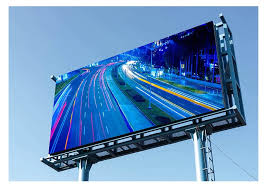
Durability and reliability are critical aspects in the industrial-grade LED smart screen design. Compliance with international standards like IEC 60529 (IP rating for dust and water resistance) and MIL-STD-810 (military standard for environmental conditions) guarantees performance under harsh conditions such as extreme temperatures, humidity, and vibration. For instance, many outdoor LED smart screens feature an IP65 or higher rating to prevent ingress of dust and water, ensuring continuous operation in rain or dusty environments.
Another critical technical parameter is refresh rate, especially for applications involving motion graphics and video playback. Modern LED smart screens achieve refresh rates between 1920Hz and 3840Hz, which effectively eliminate flickering and ghosting, providing smooth motion visuals even during slow-motion replays in sports broadcasting. The refresh rate, coupled with the color depth (usually 16-bit to 24-bit for HDR content), determines the fidelity and immersive quality of the displayed image.
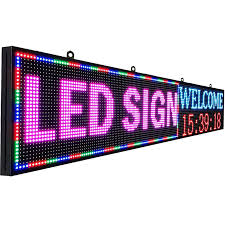
Energy efficiency is a growing concern within the LED smart screen industry. Innovations in chip design, thermal management, and power supply units have resulted in considerable reductions in power consumption—typically between 200 and 400 watts per square meter, depending on brightness settings. Technologies such as dynamic dimming and localized pixel control further minimize energy use without compromising image quality, aligning with global sustainability goals.
From a manufacturing standpoint, precision assembly and rigorous quality control are mandatory. Automated pick-and-place machines install LED modules with micron-level accuracy, ensuring consistent pixel placement and minimizing defects. Optical measurement systems verify parameters such as chromaticity coordinates (CIE 1931 standard) and luminance uniformity during production. Post-assembly calibration is performed with spectroradiometers to fine-tune color gamut coverage, often aiming for over 90% coverage of the Rec. 709 or DCI-P3 color spaces, depending on the application.
Emerging trends in LED smart screen technology include flexible displays, transparent LED screens, and holographic projection integration. Flexible LED displays utilize bendable substrates allowing installation on curved surfaces, enhancing architectural design possibilities. Transparent LED screens integrate into glass facades, combining natural ambient light with digital content—enabled by semi-transparent LED modules with up to 40% transparency. Additionally, holographic projection interfaces are being explored for next-generation interactive displays, where 3D content appears to float in space without the need for glasses or headgear.
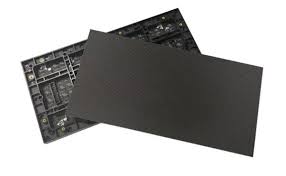
In conclusion, LED smart screens are a dynamic, sophisticated technology amalgamating LED hardware excellence with intelligent software ecosystems. Their widespread adoption across sectors hinges on continual improvements in pixel density, energy efficiency, durability, and interactive functionalities. Industry standards and technical parameters serve as benchmarks ensuring that LED smart screens deliver high-quality, reliable, and visually striking experiences to end-users globally. As research progresses, innovations like MicroLED and flexible displays promise to elevate this technology to unprecedented heights.
References:
1. International Electrotechnical Commission (IEC) 60529 – Degrees of Protection Provided by Enclosures (IP Code).
2. ISO 9241-307 – Ergonomics of Human-System Interaction – Part 307: Analysis and compliance test methods for colour displays.
3. U.S. Military Standard MIL-STD-810 – Environmental Engineering Considerations and Laboratory Tests.
4. Society for Information Display (SID) – MicroLEDs: The Next Generation of Displays, Journal of the SID, 2023.
5. CIE 1931 Color Space standard – Commission Internationale de l’Eclairage.
6. Display Industry Whitepapers, LEDinside and FutureSource Consulting Reports, 2022-2024.













