

Advanced Technologies and Best Practices in LED Display Manufacturing
The LED display industry has experienced significant advancements in recent years, driven by innovations in technology and evolving market demands. As a professional LED display engineer, understanding the manufacturing processes, material selections, and quality assurance measures is crucial to delivering products that meet stringent performance criteria across diverse applications, from large outdoor advertising to precision indoor displays used in control rooms and medical imaging.
Introduction
Light Emitting Diode (LED) display technology has revolutionized visual communication globally due to its superior brightness, energy efficiency, and longevity compared to traditional display technologies. Global LED market reports, including those from the International Electrotechnical Commission (IEC) and the Display Industry Association, indicate a steady CAGR growth of over 10% in LED display manufacturing, fueled by innovations in pixel pitch reduction, improved luminance uniformity, and enhanced durability. This article examines the key technical parameters, manufacturing techniques, and quality standards that define contemporary LED display production.
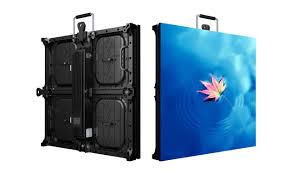
Materials and Components
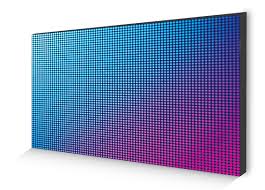
At the core of every LED display lies the semiconductor diode, typically based on Gallium Nitride (GaN) or Gallium Arsenide (GaAs), selected for their high luminous efficacy and long operational lifespan. The choice of LED packages—whether surface-mounted device (SMD) or through-hole type—depends on the application’s resolution and viewing distance requirements.
For high-resolution indoor displays, SMD LEDs like the SMD 1010 or SMD 0603 models offer fine pixel pitch options down to 0.9mm, enabling ultra-clear image rendering. Outdoor displays, on the other hand, often use larger LED modules with pixel pitches ranging from 3mm to 20mm to balance cost, visibility, and durability under varying weather conditions.
The substrates typically consist of printed circuit boards (PCBs) made from FR4 or aluminum with thermal management properties. Industry standards, such as IPC-6012 for rigid PCBs, ensure robust mechanical and electrical characteristics crucial for long-term performance.
Manufacturing Processes
Precision and consistency in manufacturing are paramount. The process begins with LED binning—sorting LEDs based on color wavelength, brightness, and current-voltage characteristics—to ensure uniform display color and brightness. Effective binning minimizes color deviations and improves the overall visual fidelity of the display.
Advanced pick-and-place machines place LEDs precisely on the PCB, followed by soldering via reflow or wave soldering techniques. The use of automated optical inspection (AOI) systems, compliant with standards like IPC-A-610 Class 3, ensures defect-free solder joints and correct component placement.
Driver IC selection and integration are critical for controlling luminance and refresh rates. Modern drivers support refresh rates upwards of 3840 Hz, necessary to eliminate flicker in high-definition video playback and camera applications as specified in industry benchmarks including those from the Society for Information Display (SID).
Post-assembly, displays undergo rigorous testing, including burn-in tests lasting between 72 to 168 hours to weed out early failures, color calibration using spectroradiometers, and waterproofing tests following IP65-IP68 standards for outdoor modules.
Trends and Innovations
Miniaturization of pixel pitch has led to the rise of micro-LED technology, promising enhanced brightness, faster response times, and greater energy efficiency. While still maturing in commercial applications, micro-LEDs leverage wafer-level manufacturing techniques and transfer printing to enable next-generation displays.
Additionally, flexible LED displays using bendable substrates and encapsulation materials allow deployment in curved or irregular surfaces, expanding design possibilities for automotive and wearable devices.
AI-driven manufacturing analytics and machine learning predictive maintenance are becoming mainstream to enhance yield, reduce downtime, and optimize supply chain logistics.
Conclusion
Expertise in LED display manufacturing demands a multidisciplinary approach leveraging semiconductor physics, materials science, precision engineering, and quality management systems. Adhering to international standards like IPC, IEC, and environmental compliance directives ensures that final products not only meet rigorous technical benchmarks but are also reliable and sustainable.
The continuous evolution of LED technologies, including micro-LEDs and flexible displays, promises to redefine the visual landscape. For manufacturers and engineers, staying abreast of these developments and integrating best practices is essential to maintaining competitive advantage and delivering high-quality LED displays that satisfy diverse customer needs worldwide.













