

What is OLED vs Micro LED: A Comprehensive Comparison of Display Technologies
In the rapidly evolving field of display technologies, OLED (Organic Light Emitting Diode) and Micro LED stand out as two of the most advanced and promising solutions for high-quality visual experiences. Understanding the technical differences, performance characteristics, and applications of these technologies is essential for professionals, manufacturers, and consumers seeking optimal display performance.
Fundamental Technology Differences
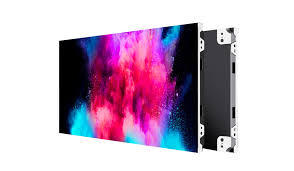
OLED displays rely on organic compounds that emit light when an electric current passes through them. Each pixel in an OLED screen generates its own light, meaning no backlight is necessary. This self-emissive property enables true blacks and exceptional contrast ratios because pixels can be completely turned off.
In contrast, Micro LED technology uses microscopic inorganic LEDs (typically gallium nitride, GaN-based) as individual pixels. These micro-sized LEDs are independently controlled and emit light directly, similar to OLED's self-emissive principle but with inorganic materials, providing greater brightness durability and longevity.
Technical Parameters and Performance
1. Brightness and Efficiency
OLED panels typically deliver brightness levels between 600 to 1,000 nits for consumer devices, with higher-end models reaching up to 1,500 nits. However, OLEDs suffer from limited peak brightness due to organic material degradation and heat sensitivity, imposing constraints in bright ambient conditions.
Micro LEDs, on the other hand, can achieve much higher peak brightness, often exceeding 3,000 nits, because inorganic LEDs are more robust under heat and prolonged use. This property makes Micro LED ideal for HDR content and outdoor displays where intense brightness is needed.
2. Contrast and Black Levels
OLED is renowned for its perfect black levels with near-infinite contrast ratios stemming from its pixel-level light emission control. By turning off pixels, OLED achieves absolute blacks, essential for deep contrast in cinema-quality displays.
Micro LED matches or can exceed this capability due to similar pixel-level control without requiring organic components. The inorganic nature ensures contrast remains stable even after extended use without burn-in risks.
3. Color Accuracy and Gamut
Both OLED and Micro LED can cover wide color gamuts, including DCI-P3 and Rec. 2020 standards used in professional-grade content. OLED's organic emitters offer excellent color fidelity and saturation but may experience color shifts over time due to material aging.
Micro LED’s inorganic emitters maintain consistent color reproduction with less degradation, leading to longer-term color stability, critical for digital signage and medical imaging where color precision is mandatory.
4. Lifespan and Burn-In
A significant challenge for OLED technology is the risk of burn-in, where static images cause permanent discoloration due to uneven pixel aging. Typical OLED lifespan ranges from 20,000 to 30,000 hours, depending on usage and panel quality.
Micro LED excels with exceptional longevity, over 100,000 hours of operation, and negligible burn-in risk due to the robust inorganic elements. This makes Micro LED ideal for applications demanding extended display life.
5. Manufacturing Complexity and Cost
OLED fabrication involves depositing thin organic films and adding flexible substrates for advanced form factors, enabling curved and foldable displays. While production is mature, achieving uniformity at large sizes and high resolution is costly.
Micro LED manufacturing remains challenging because of the precise transfer and placement of millions of tiny LEDs onto substrates. Yield rates and equipment costs currently keep Micro LED prices high, limiting its availability mostly to premium, large-scale displays, including microdisplays for AR/VR devices.
Applications and Market Trends
OLED technology enjoys widespread adoption in smartphones, TVs, wearable devices, and laptops due to its lightweight, flexible features and excellent image quality. Leading suppliers like Samsung Display and LG Display have optimized OLED panels for commercial availability and consumer demand.
Micro LED is emerging as a disruptive technology positioned for next-generation applications requiring ultra-high brightness, durability, and energy efficiency—such as large venue displays, augmented reality headsets, automotive dashboards, and smart glasses. Companies like Sony, Samsung, and Apple are investing heavily in micro LED research and pilot manufacturing.
Standards and Industry Perspectives
- The International Electrotechnical Commission (IEC) defines safety and performance standards for LED and organic LED displays.
- The Society for Information Display (SID) regularly publishes in-depth research and guidelines for emerging display technologies.
- Industry reports, such as those from Display Supply Chain Consultants (DSCC) and IHS Markit, forecast substantial growth for micro LED in the coming decade, while OLED continues to mature in consumer electronics.
Conclusion
OLED and Micro LED represent the cutting edge of display technology, each with distinct advantages and limitations:
- OLED excels in contrast, flexibility, and color performance but faces lifespan and brightness constraints.
- Micro LED provides superior brightness, durability, and scalability but currently demands complex manufacturing and higher costs.
Selection depends heavily on application scenarios. For smartphones and TVs, OLED remains a practical leader, while Micro LED is geared toward high-end commercial displays and future portable devices.
As research progresses and economies of scale improve, Micro LED is expected to complement and potentially surpass OLED in both cost-effectiveness and performance, heralding a new era in display technology innovation.
References:
- International Electrotechnical Commission (IEC) Display Standards, IEC 62368-1
- Society for Information Display (SID) Technical Reports, 2023
- Display Supply Chain Consultants (DSCC) Quarterly Market Report, Q1 2024
- “Micro LED vs OLED: The Next Generation Display Technology,” IEEE Journal of Display Technology, 2023













