

Advanced Engineering and Manufacturing of High-Performance LED Display Panels: Industry Insights and Technical Standards
The evolution of LED display technology represents one of the most significant advancements in modern visual communication systems. With increasing demands across advertising, broadcasting, entertainment, and public information sectors, the development and manufacture of high-performance LED display panels have become a critical focus area for manufacturers and engineers worldwide. This comprehensive article delves into the engineering principles, manufacturing processes, technical parameters, industry standards, and the latest innovations shaping the LED display industry, designed for professionals seeking authoritative insights.
Understanding LED Display Panel Technology
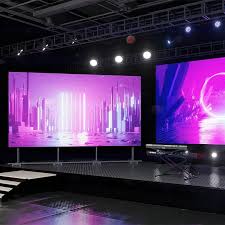
An LED (Light Emitting Diode) display panel is a flat panel display consisting of an array of light-emitting diodes that serve as individual pixels. LED displays are classified primarily into direct-view LED panels (also called LED video walls) and LED-backlit LCD panels. The focus here is on direct-view LED panels, widely used in large-scale installations such as stadium screens, digital billboards, stage displays, and control rooms.
The core components of an LED display include:
- LED Chips: The minute semiconductor diodes that emit light when electrically activated. These can be surface-mounted device (SMD) LEDs or through-hole LEDs (DIP LEDs).
- Pixel Pitch: The center-to-center distance between adjacent LEDs, measured in millimeters. Pixel pitch is a crucial determinant of display resolution and viewing distance capabilities. For instance, P0.9mm represents 0.9mm pixel pitch, suitable for fine indoor displays.
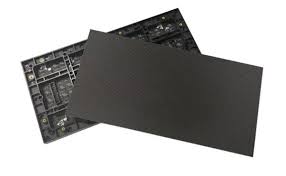
- Modules: Subsections of the full panel containing multiple LEDs assembled on a printed circuit board (PCB). They facilitate modular assembly, testing, and maintenance.
- Driving Circuitry and Control Systems: These manage LED brightness, color calibration, refresh rate, and synchronization. LED driver ICs and FPGA-based controllers are typical components.
Materials and Manufacturing Processes
The manufacture of LED display panels requires precision engineering and high-quality materials to ensure reliability and performance longevity. Key manufacturing stages include:
1. LED Chip Fabrication
Silicon carbide (SiC) or gallium nitride (GaN) substrates are typical for high-brightness LED chips, allowing robust emission in visible spectrum (red, green, blue) needed for full-color displays. Processes like Metalorganic Chemical Vapor Deposition (MOCVD) grow epitaxial layers with nanoscale precision.
2. SMD Packaging
SMD LEDs integrate the LED chip, a lens, and bonding wires into a compact package for surface mounting on PCBs. The package's thermal design is vital to dissipate heat generated during operation, maintaining LED lifespan often exceeding 100,000 hours (L70 rating). Industry leaders such as Nichia and Cree provide high-efficiency SMD LEDs with luminous efficacy over 150 lm/W.
3. PCB Assembly and Module Formation
Multi-layer PCBs with fine pitch copper traces are fabricated under IPC standards (IPC-6012 for rigid PCBs). LEDs are mounted using automated pick-and-place machines ensuring positional accuracy within ±0.05mm and soldered via reflow soldering processes consistent with J-STD-001 workmanship standards.
4. Panel Assembly
LED modules are assembled onto sturdy steel or aluminum cabinets designed to meet IP65 or higher standards for outdoor protection. Ensuring mechanical robustness and waterproofing is critical for field reliability.
5. Testing and Calibration
Post-assembly, displays undergo rigorous testing, including Mura correction (uniformity correction) using grayscale compensation LUTs (Look Up Tables) and aging tests (48–72 hours burn-in). Optical metrology employs goniophotometers aligned with CIE 1931 color space standards to guarantee color uniformity and correct gamma performance.
Technical Parameters and Performance Metrics
Key technical parameters influencing LED display quality include:
- Brightness: Typically, indoor LED panels operate at 800-1500 nits, while outdoor displays can exceed 5000 nits for daylight visibility. Brightness uniformity (less than 10% variation) is a key quality indicator.
- Contrast Ratio: High dynamic contrast enhances image richness. Typical static contrast ratios hover around 3000:1; however, dynamic local dimming improves perceived contrast significantly.
- Refresh Rate: Refresh rates of 3840 Hz or higher are standard to prevent flicker on camera, especially for broadcast applications, complying with SMPTE 2046 standards.
- Viewing Angle: Typically ±160° horizontal and vertical, ensuring consistent image quality across wide audience spreads due to advanced lens designs and LED binning.
- Color Gamut and Depth: Achieving close to Rec. 709 or DCI-P3 standards for color gamut ensures vivid color reproduction. 16-bit processing per channel is becoming industry norm to reduce color banding.
Industry Standards and Compliance
Adherence to international standards ensures product safety, interoperability, and customer confidence. Relevant standards include:
- IEC 62368-1: Safety requirements for multimedia equipment.
- ANSI/CTA-2075: Performance standards for LED video displays, guiding luminance, resolution, and colorimetry parameters.
- RoHS and REACH Regulations: Environmental compliance for hazardous substances, critical for responsible manufacturing.
- IP Ratings (Ingress Protection): Ensuring the durability of outdoor displays, with IP65 or IP67 frequently mandated.
- UL Certification: Safety certification confirming electrical and fire safe design.
Recent Advances in LED Display Technology
To meet evolving market applications, innovations include:
- Mini and MicroLED Displays: Pixel pitches below 1mm (miniLED) and even 100μm (microLED), offering exceptionally high resolution and contrast suitable for premium monitors and AR/VR devices. Challenges remain in mass transfer and yield management.
- Flexible and Transparent LED Displays: Utilizing flexible PCBs and transparent substrates, these displays enable innovative applications in retail and automotive sectors.
- High Refresh Rate and HDR Support: Enhanced controllers allowing 10-bit+ color depth and HDR10/HLG standards integration for life-like visuals.
- Smart Calibration Systems: AI-powered real-time calibration to compensate for aging and environmental conditions, prolonging display consistency.
Case Studies: Implementation and Performance
Case Study 1: Times Square LED Billboard
An installation of a 1000 m² P4mm direct-view LED wall demonstrated the application of modular design, facilitating quick module replacements within minutes. Employing synchronous multi-site control allowed seamless synchronization of video content across the massive display, achieving consistent 5000 nits brightness visible under direct sunlight.
Case Study 2: Indoor Control Room Display
A critical control room adopted a P0.9mm fine-pitch LED array for surveillance feeds and data visualization. The system’s 3840 Hz refresh rate eliminated camera flicker challenges, critical during 24/7 monitoring. The meticulous Mura calibration reduced pixel brightness variation to under 3%, as validated by spectroradiometer testing.
Conclusion
Manufacturing high-performance LED displays is an intersection of advanced semiconductor technology, precision mechanical engineering, and strict adherence to international standards. With continuous innovation in materials, design, and control technologies, the LED display industry is set to meet future demands for higher resolutions, larger scales, and flexible form factors. Professionals engaging in this sector benefit greatly from a sound understanding of both technical parameters and practical manufacturing considerations to produce reliable, visually stunning LED displays.
Authoritative Sources:
- International Electrotechnical Commission (IEC) 62368-1
- Society of Motion Picture and Television Engineers (SMPTE) 2046
- ANSI Consumer Technology Association (CTA) - ANSI/CTA-2075
- IPC standards for PCB manufacturing
- Nichia Corporation Technical Data Sheets
- Cree LED Whitepapers
The integration of these standards and technologies ensures LED display products engineered today meet the highest benchmarks of performance and reliability demanded by global end-users.













