

Advanced LED Display Technology: Practical Applications, Advantages, Challenges, and Emerging Trends
LED display technology has experienced rapid evolution in recent years, asserting its dominance across numerous sectors due to unmatched brightness, color fidelity, and energy efficiency. As a professional in LED and LCD screen manufacturing with over a decade of industry experience, this article provides an in-depth exploration of LED displays—encompassing practical applications, technical advantages, common challenges, and the latest technological advancements.
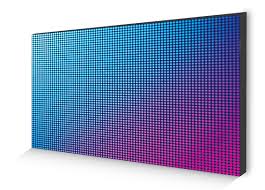
At its core, an LED (Light Emitting Diode) display consists of an array of LEDs that function as individual pixels. Unlike LCD technology that relies on backlighting and liquid crystal modulation, LED displays emit light directly. This fundamental distinction brings key performance benefits. Typical parameters for modern indoor LED panels include pixel pitch ranging from 0.9mm to 2.5mm, brightness levels of 800 to 1500 nits, and contrast ratios exceeding 5000:1. Outdoor LED displays generally feature pixel pitches starting at 2.5mm to 10mm, with brightness levels above 5000 nits to ensure visibility under direct sunlight.
Practical Applications
LED displays find extensive use in advertising, live event staging, control rooms, transportation hubs, retail environments, and sports arenas. In digital advertising, high-resolution LED displays allow for dynamic content delivery capable of captivating diverse audiences with vivid color and motion clarity. Control rooms benefit from extended lifespans and modular designs, facilitating continuous operation with minimal downtime. Additionally, in stadiums and concert venues, large outdoor LED screens enhance audience engagement through real-time video and data streaming, meeting IP65 or higher ingress protection standards to endure weather extremes.
Advantages
The superiority of LED displays lies in their:
- Energy Efficiency: LEDs consume significantly less power compared to traditional lighting or LCD backlights, with efficacy reaching up to 150 lumens per watt, reducing operational costs and environmental impact.
- High Brightness and Contrast: Direct emission allows for exceptional brightness and deep blacks, critical in environments with high ambient light.
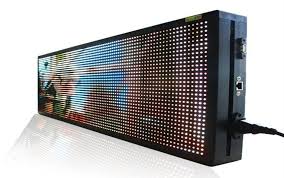
- Wide Viewing Angles: Modern LED panels achieve viewing angles upwards of 160 degrees horizontally and vertically without significant color distortion.
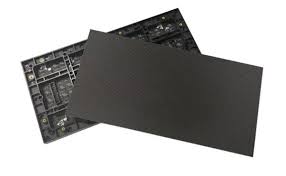
- Modularity and Scalability: LED systems are composed of panels that can be configured into various sizes and aspect ratios, enabling bespoke installations.
- Longevity and Durability: Quality LED displays typically offer lifespan estimates of 100,000 hours under optimal conditions, outpacing alternative display technologies.
Common Problems
Despite advancements, several challenges persist:
- Pixel Failure and Color Uniformity: Dead or stuck pixels cause visual artifacts, especially in high pixel density displays. Uniform brightness and color calibration are critical but can be time-consuming and require sophisticated equipment.
- Thermal Management: LEDs generate heat that must be efficiently dissipated through heatsinks or active cooling to prevent performance degradation and shorten lifespan.
- Signal Transmission Latency: Large-scale LED arrays may suffer from delay in signal propagation, necessitating optimized driver ICs and firmware for synchronization.
- Environmental Factors: Outdoor installations face moisture, dust, and temperature extremes. Implementing IP-rated enclosures and conformal coatings are essential to mitigate damage.
Latest Trends
1. MicroLED Technology: Emerging MicroLED displays offer micro-scale LEDs yielding superior brightness, contrast, and energy efficiency at a pixel pitch as low as 0.5mm, poised to challenge OLED and LCD dominance for premium devices.
2. HDR Integration: High Dynamic Range (HDR) capability is increasingly standard in professional LED displays, delivering enhanced color depth and luminance that translate into more realistic visuals.
3. AI-Driven Calibration: Artificial intelligence algorithms facilitate automated brightness, color correction, and fault detection, drastically reducing maintenance cycles and improving image consistency.
4. Flexible and Transparent LEDs: Innovation in substrate materials allows for flexible bendable panels and transparent displays, unlocking new possibilities in architectural integration and automotive HUDs.
5. Sustainability Initiatives: Industry focuses on recyclable materials, reduced hazardous substances (RoHS compliance), and energy-saving designs in alignment with global environmental standards such as ISO 14001.
Conclusion
LED display technology stands as a testament to the confluence of engineering precision and practical utility. Its vibrant applications span from commercial to entertainment realms worldwide, driven further by continuous innovations that enhance performance while addressing existing challenges. As LED manufacturing processes adhere to strict quality standards like IEC 62087 for energy efficiency measurement and ISO 9001 for quality management, end-users benefit from reliable, high-performance displays tailored to diverse technical and environmental needs.
For professionals and stakeholders in the LED display ecosystem, understanding these technical nuances and emerging trends not only informs procurement and deployment decisions but also inspires future innovation opportunities—ensuring LED displays remain a cornerstone of modern visual communication.













