

Advanced Insights into LED LCD Screen Manufacturing: Technical Parameters and Industry Standards
In the rapidly evolving display technology industry, LED LCD screens hold a pivotal role, combining the benefits of Liquid Crystal Display (LCD) technology with the advanced illumination of Light Emitting Diodes (LEDs). As a professional LED display engineer with extensive experience in the field, this article delves into the technical parameters, manufacturing processes, and industry standards that define high-quality LED LCD screens, offering critical insights grounded in practical application and industry data.
Understanding LED LCD Technology
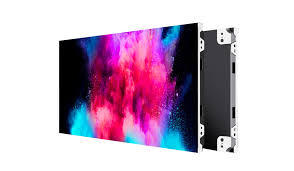
LED LCD screens are essentially LCD panels illuminated by LED backlighting rather than traditional cold cathode fluorescent lamps (CCFL). This transition has led to significant improvements in brightness, energy efficiency, color reproduction, and form factor flexibility. The LEDs employed can be arranged either as edge-lit arrays or full-array backlighting, with full-array providing superior uniformity and contrast ratio enhancements.
Key Technical Parameters
- Resolution and Pixel Density:
For modern applications such as computer monitors, televisions, and digital signage, high resolution and pixel density are paramount. Standards commonly range from Full HD (1920x1080 pixels) to 4K UHD (3840x2160 pixels) and even 8K resolutions. Pixel density, measured in pixels per inch (PPI), directly affects the sharpness and detail; for instance, a 27-inch 4K LED LCD monitor may reach approximately 163 PPI.
- Brightness and Contrast Ratio:
Brightness is measured in nits (cd/m²), with typical commercial LED LCD panels ranging between 250 to 600 nits. High-end professional displays can exceed 1000 nits for HDR content. Contrast ratio, the measure of luminance difference between the brightest white and darkest black, varies widely; VA (Vertical Alignment) panels can reach 3000:1 or more, while IPS (In-Plane Switching) panels traditionally offer around 1000:1. Recent advancements, including local dimming techniques in full-array LED backlighting, have markedly improved dynamic contrast ratios.
- Color Accuracy and Gamut:
Color reproduction is critical for professional environments like graphic design and medical imaging. Industry standards such as sRGB, Adobe RGB, and DCI-P3 define the color gamut coverage. High-end LED LCD displays typically target 99% sRGB coverage and up to 90% DCI-P3. The use of quantum dot enhancement layers (QDEF) has become an industry best practice to enhance color gamut and brightness efficiency.
- Response Time and Refresh Rate:
Response time, the time a pixel takes to change color, affects motion blur in video and gaming applications. LED LCDs generally achieve response times between 1ms (grey-to-grey) to 8ms, depending on panel type. Refresh rates typically range from 60Hz in conventional displays to 240Hz or higher in gaming-specific products.
Manufacturing Process Overview
The manufacturing of LED LCD screens involves multiple精密 stages, including:
1. Glass Substrate Preparation: Ultra-clean glass substrates serve as the foundation. Quality control at this stage ensures the removal of particulate contaminants that can cause dead pixels.
2. Thin Film Transistor (TFT) Array Formation: Using photolithography, thin film transistors are created on the glass substrates to individually control each pixel’s liquid crystal element.
3. Liquid Crystal Filling and Sealing: After aligning polarizers, liquid crystals are injected with precise control to maintain uniformity in thickness and properties.
4. Backlight Assembly: The LED backlight system is crafted, often incorporating optical films like diffusers, prism sheets, and light guides to ensure uniform illumination.
5. Quality Testing and Calibration: Each unit undergoes extensive testing, including luminance uniformity, color calibration with equipment such as spectroradiometers, and reliability testing under accelerated aging conditions per IEC 62717 standards.
Industry Standards and Compliance
Compliance with international standards guarantees performance, safety, and interoperability:
- IEC 62717 – Specification for LED panels, addressing photometric and electrical performance.
- ISO 9241-307 – Measurement methods for pixel defects in flat panel displays.
- Energy Star – Energy efficiency requirements for commercial displays, which increasingly guide LED backlighting designs.
Moreover, adherence to RoHS and REACH regulations ensures environmental and consumer safety by restricting hazardous substances.
Case Study: Optimizing a 55-inch LED LCD for Outdoor Digital Signage
A key design challenge involves maintaining visibility in direct sunlight. This project implemented a 55-inch IPS panel with a full-array local dimming LED backlight capable of 1500 nits peak brightness. Incorporating anti-reflective coatings and robust thermal management mechanisms ensured operational stability under harsh conditions. The screen passed rigorous testing aligned with IEC 60068 environmental standards, achieving an expected lifespan exceeding 70,000 hours.
Future Trends and Innovations
The industry is witnessing a shift towards mini-LED and micro-LED backlighting—a technology that increases the number of backlight zones dramatically, offering unprecedented local dimming precision, superior contrast ratios, and power efficiency. Advanced materials like quantum dots are being further integrated to push color performance boundaries.
Conclusion
Mastering LED LCD screen manufacturing requires a comprehensive understanding of intricate production steps, strict adherence to technical parameters, and conformity to global standards. Given the growing demand for high-brightness, energy-efficient, and color-accurate displays, engineers must stay abreast of technological advancements and regulatory frameworks. With precision engineering and innovative material science, LED LCD technology will continue to be a cornerstone of visual display technology in diverse applications worldwide.
References:
- International Electrotechnical Commission (IEC) 62717: LED Panels Performance
- ISO 9241-307: Pixel Defect Measurements
- Society for Information Display (SID) Technical Digest
- Energy Star Program Requirements for Displays, Version 8.0
- "Display Technology Overview," Journal of Display Engineering, 2023













