

Advanced Technologies and Quality Standards in LED LCD Screen Manufacturing
The LED LCD screen market has witnessed remarkable growth and innovation driven by advancements in display technologies and growing consumer demand for higher resolution and better visual performance. As a professional LED display engineer with extensive experience in LED and LCD screen manufacturing, this article explores essential aspects of LED LCD screen production, focusing on advanced technologies, quality standards, and technical parameters crucial to delivering optimal display products.
Understanding LED LCD Screen Technology
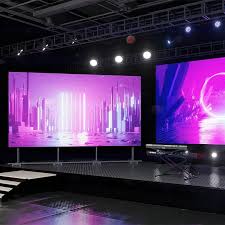
An LED LCD screen integrates Light Emitting Diode (LED) backlighting with Liquid Crystal Display (LCD) technology. This hybrid display architecture leverages the energy efficiency, brightness, and color accuracy of LED backlights alongside the precise light modulation capabilities of LCD panels. LED backlighting can be implemented as Edge-Lit or Direct-Lit (Full Array), each offering trade-offs in uniformity, thickness, and cost.
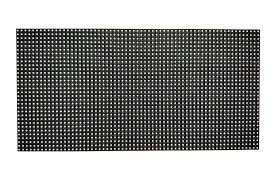
Edge-Lit LED uses LEDs at the edges of the panel, enabling thin form factors suitable for ultra-slim TVs and monitors. However, it may face challenges in achieving uniform brightness distribution without sophisticated light guide plates (LGPs) and diffusers.
Direct-Lit LED panels position LEDs directly behind the LCD matrix, giving superior brightness uniformity and enabling local dimming features essential for higher contrast ratios. Local dimming zones dynamically adjust brightness to enhance black levels and detail, meeting modern HDR standards as defined by the UHD Alliance.
Key Technical Parameters
1. Resolution and Pixel Pitch: Pixel pitch, the physical distance between pixel centers, determines the screen’s sharpness. In LED LCD manufacturing, typical pixel pitches range from 0.2mm to over 1mm depending on application (TV, signage, medical). Higher resolution panels correspond with smaller pixel pitch to enhance image detail per the standard ITU-R BT.709 color space and Rec. 2020 color gamut specifications.
2. Refresh Rate and Response Time: A refresh rate of 60Hz is standard for general-purpose displays, but gaming and professional-grade monitors push rates up to 144Hz or 240Hz for smoother motion rendering. Response time, measured in milliseconds (ms), indicates how quickly pixels switch states, with values under 5ms minimizing motion blur.
3. Brightness and Contrast Ratio: LED backlighting supports high brightness levels typically ranging from 250 to 1000 nits for consumer devices, and up to 4000 nits for professional HDR displays. Contrast ratio, which gauges the luminance difference between black and white, is improved by implementing local dimming and using VA or IPS LCD panels. HDR10 and Dolby Vision certifications are benchmarks to verify superior contrast and color accuracy.
Industry Standards and Quality Control
Adherence to rigorous international standards ensures LED LCD products meet performance and safety criteria important for consumer trust and regulatory compliance. Key standards include:
- IEC 62368-1: Safety requirements for audio/video and ICT equipment, ensuring electrical safety and preventing hazards.
- ISO 9241-307: Specifies ergonomic design parameters focused on visual display requirements to minimize eye strain.
- ANSI/CTA-2065: Addresses measurement methods for peak luminance and flicker in HDR displays.
Quality control processes in manufacturing involve precise calibration of color temperature (typically calibrated to D65, 6500K white point), uniformity testing, and advanced automated optical inspection (AOI) techniques to detect pixel defects such as dead pixels, stuck pixels, and mura (uneven brightness). Reference calibration tools such as spectroradiometers and colorimeters are industry mainstays.
Manufacturing Challenges and Innovations
Achieving consistent uniformity and reliability in mass production remains a critical challenge. Variations in LED binning (categorizing LEDs based on brightness and color output) and LCD panel manufacturing tolerances affect final display quality. To mitigate these, manufacturers implement smart binning algorithms and robust assembly automation to optimize yield.
Emerging innovations such as mini-LED and micro-LED backlighting further improve brightness, contrast, and power efficiency by increasing the number of local dimming zones dramatically. Mini-LED technology, with thousands of tiny LEDs behind the panel, enables ultra-high dynamic range and precise local dimming not possible with traditional edge-lit LED techniques.
Additionally, the integration of quantum dot layers enhances color gamut beyond the Rec. 709 standard, enabling displays to reach up to 98% DCI-P3 coverage, essential for cinematic content and professional color grading.
Conclusion
The LED LCD screen manufacturing sector combines sophisticated materials engineering, optical design, and cutting-edge electronics to produce displays meeting diverse application demands from entertainment to medical imaging. Industry adherence to internationally recognized standards and rigorous quality controls ensures product reliability and user safety. Continuous innovation in backlighting technology and panel design promises further improvements in brightness, contrast, color accuracy, and form factor versatility.
References:
1. ITU-R BT.2020, “Parameter values for ultra-high definition television systems for production and international programme exchange,” International Telecommunication Union, 2015.
2. IEC 62368-1, “Audio/video, information and communication technology equipment - Part 1: Safety requirements,” International Electrotechnical Commission, 2018.
3. ANSI/CTA-2065, “HDR Displays - Measurement Methods and Requirements,” Consumer Technology Association, 2020.
4. Chen, Wei et al., “Mini-LED Technology and Its Application in Backlight Display,” Journal of Display Technology, IEEE, 2021.













