

Advanced Engineering and Manufacturing of LED LCD Displays: Industry Standards, Technologies, and Practical Insights
The LED LCD display industry has undergone tremendous evolution in recent years, driven by technological advancements, rising consumer demand for high-quality visuals, and stringent manufacturing standards. As a professional LED display engineer with extensive experience in the design, production, and quality assurance of LED and LCD screens, I will present an authoritative, comprehensive overview of the current state of LED LCD display manufacturing, including critical technical parameters, industry standards, case studies, and insights into practical engineering challenges.
Overview of LED LCD Technology
LED LCD displays combine the backlighting benefits of light-emitting diodes (LEDs) with liquid crystal display technology to enhance brightness, energy efficiency, and color accuracy. Unlike traditional cold cathode fluorescent lamp (CCFL) backlights, LED backlighting offers superior lifespan and the ability to produce thinner panel designs, aligning well with the modern consumer demand for sleeker devices with vivid displays.
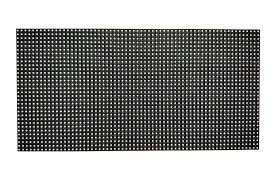
The typical LED LCD panel comprises three primary layers:
1. Liquid Crystal Layer: Manipulates light polarization to create images.
2. Color Filter Layer: Filters light to reproduce colors.
3. LED Backlight Layer: Provides illumination passing through the LCD and color filters.
With increasing demand for refined image quality, engineers are integrating advanced technologies such as local dimming, quantum dot enhancement films (QDEF), and High Dynamic Range (HDR) compatibility, enhancing contrast ratios and color gamut coverage.
Key Technical Parameters
Understanding and controlling the following parameters is paramount in delivering high-performance LED LCD displays:
- Resolution and Pixel Density: High-definition standards define current market expectations. Full HD (1920x1080), Quad HD (2560x1440), and 4K UHD (3840x2160) are popular resolutions, with pixel densities ranging from 80 PPI in large displays to over 400 PPI in mobile devices supporting crisp visuals.
- Brightness (Nits): LED backlights enable brightness levels typically ranging from 300 nits for indoor displays to over 1500 nits for professional HDR monitors. According to VESA’s DisplayHDR certification standards, higher brightness correlates with enhanced display quality for HDR content (VESA DisplayHDR White Paper, 2023).
- Contrast Ratio: Effective contrast ratios for LED LCDs vary; local dimming technologies can achieve dynamic contrast ratios above 1,000,000:1, crucial for deeper blacks and vibrant colors.
- Color Gamut Coverage: Standards like sRGB, AdobeRGB, and DCI-P3 define color space performance. Quantum dot-enhanced displays now routinely cover >95% DCI-P3, enabling more realistic color reproduction.
- Response Time and Refresh Rate: Key for applications in gaming and professional use, response times under 5 ms and refresh rates ranging from 60Hz to 240Hz are increasingly common.
Manufacturing Process and Quality Control
Manufacturing LED LCD panels involves a multi-step process requiring precision engineering and environmental controls:
1. Substrate Preparation: Glass or flexible substrates are cleaned and prepared to receive thin-film transistors (TFTs) that control pixel activation.
2. Thin-Film Transistor Layer Deposition: Using photolithography and sputtering, precise TFT arrays are formed. Amorphous silicon (a-Si) and low-temperature polysilicon (LTPS) processes are industry standards—LTPS allows higher resolution and lower power consumption suitable for mobile displays.
3. Color Filter Production: Color filters are created either through pigment printing or dyeing, validated by spectrophotometric color accuracy assessments per ISO 12647 standards.
4. Assembly of Liquid Crystal Layer: Requires uniform liquid crystal injection under clean-room conditions to avoid defects such as bubbles or misalignment, which degrade display quality.
5. LED Backlight Integration: Placement of LED arrays, often incorporating mini-LED or micro-LED components for higher local dimming zones. The LEDs must meet luminous flux, spectral wavelength, and CCT (Correlated Color Temperature) specifications (typically 6500K white point).
6. Encapsulation and Final Assembly: Protection with polarizers, anti-reflective coatings, and touch sensor integration.
Quality control throughout manufacturing is critical, employing Automated Optical Inspection (AOI), Electro-Optical Testing (EOT), and High-Speed Camera analysis for pixel defects and uniformity.
Industry Standards and Certifications
To ensure reliability, safety, and performance, LED LCD display manufacturing aligns with international standards:
- IEC 62368-1: Safety requirements for audio/video equipment.
- ISO 9241-307: Measurement methods for pixel defects.
- VESA DisplayHDR Certification: Defines HDR performance tiers.
- RoHS and REACH: Environmental compliance regarding hazardous substances.
Case Study: Implementation of Mini-LED Backlighting in Commercial Displays
A leading manufacturer recently integrated mini-LED technology into a 75-inch commercial LED LCD display, achieving over 2,000 local dimming zones with peak brightness of 2,500 nits and 100,000:1 contrast ratio. This resulted in significantly enhanced HDR content rendering and uniformity. Challenges included thermal management due to increased LED density and calibration precision, overcome through advanced cooling systems and machine learning-based calibration algorithms.
Future Trends and Engineering Challenges
- Micro-LED Integration: Offering self-emissive pixels for unparalleled color and contrast but facing yield and cost barriers.
- Flexible and Transparent Displays: Enabled by flexible OLED layers combined with LCD substrates for new form factors.
- Sustainability: Emphasis on reducing power consumption and toxic material usage while improving recyclability.
- Advanced Manufacturing Automation: Incorporating AI and robotics to improve throughput and reduce defects.
Conclusion
The LED LCD display industry exemplifies the convergence of sophisticated materials science, precision engineering, and advanced manufacturing processes. Engineers must stay abreast of evolving standards, emerging technologies, and real-world industry challenges to deliver superior displays meeting increasingly demanding applications — from consumer electronics to professional visualization and public signage.
With continuous innovation such as mini-LED backlighting, quantum dots, and AI-enhanced calibration, the future of LED LCD displays promises richer visuals, enhanced energy efficiency, and new form factors, reaffirming the technology’s global relevance and commercial vitality.
References:
- VESA DisplayHDR White Paper, 2023
- IEC 62368-1 Standard, 2022 Edition
- ISO 9241-307 Ergonomics of Human-System Interaction – Part 307, 2020 Edition
- RoHS Directive (EU) 2011/65/EU and REACH Regulation (EC) No 1907/2006
- “Mini-LEDs: The Next Step in Display Technologies,” Journal of Display Technology, 2023













