

Advanced LED Display Manufacturing: Technology, Standards, and Best Practices for High-Performance LED LCD Screens
In the rapidly evolving field of display technology, LED LCD screens have cemented their position as critical components across diverse applications—from consumer electronics and automotive displays to large-scale outdoor signage and professional broadcast equipment. Understanding the nuances of LED display manufacturing is thus essential for engineers, manufacturers, and industry stakeholders aiming to achieve top-tier performance, reliability, and cost efficiency.
This article delves into the manufacturing technologies, materials, quality control standards, and emerging trends that define modern LED LCD production. Drawing upon comprehensive industry data, case studies, and advanced engineering principles, it provides an authoritative guide for professionals who seek to deepen their expertise and stay abreast with evolving market requirements.
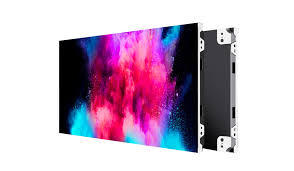
Fundamental Technologies in LED LCD Manufacturing
LED (Light Emitting Diode) backlit LCDs combine the best of two worlds: the mature liquid crystal display technology and the energy-efficient, high-brightness LED lighting. In typical LED LCD architectures, the LED module serves as the backlight behind the liquid crystal panel, improving brightness uniformity and color accuracy while reducing power consumption compared to CCFL (Cold Cathode Fluorescent Lamp) backlighting.
1. LED Backlight Units (BLU)
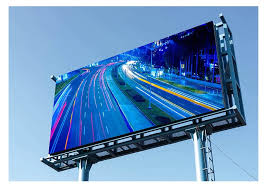
Modern BLUs primarily use edge-lit or direct-lit configurations. Edge-lit LEDs are placed along the screen edges with light guides distributing light evenly, allowing thinner panels. Direct-lit modules embed LEDs behind the entire panel, providing superior brightness and contrast but with increased thickness and cost.
- Technical parameters:
- Typical luminance: 250-800 cd/m² for commercial-grade displays, exceeding 1000 cd/m² for high dynamic range (HDR) devices.
- Color gamut: Up to 100% Rec. 709 or higher, depending on the LED phosphor composition and optical enhancements.
- Power efficiency: BLUs achieve upwards of 15-20 lumens per watt in high-efficiency designs.
2. Quantum Dot Enhancements
Quantum dot (QD) technology is increasingly integrated into LED LCD manufacturing to enhance color reproduction. By embedding QD films within the BLU, displays achieve a wider color gamut (up to DCI-P3 or BT.2020 standards) and improved color accuracy.
3. LCD Panel Specifications
The LCD panel itself remains the backbone, with improvements in thin-film transistor (TFT) arrays, liquid crystal alignment layers, and polarization films. High refresh rates (120Hz or more), high resolution (4K and 8K), and local dimming capabilities continue to push the envelope.
Materials and Components Quality
Selecting premium raw materials is a must for longevity and consistent performance. Key materials include high-purity gallium nitride (GaN) for blue LEDs, advanced polarizing films, high-optical-transmission glass substrates, and anti-reflective coatings to reduce ambient light interference.
- LED die quality significantly influences brightness, lifetime (typically >50,000 hours L70), and color stability.
- Backplane design applies industry standards such as JEDEC JESD22 for thermal cycling and mechanical stress to ensure robustness.
Manufacturing Processes and Challenges
Manufacturing LED LCDs involves several precision steps:
- Wafer Fabrication and LED Chip Production
LED wafers are fabricated using Metal-Organic Chemical Vapor Deposition (MOCVD) to deposit epitaxial layers. Advanced epitaxial designs incorporate multi-quantum wells that optimize electron-hole recombination for luminous efficiency.
- Die Bonding and Packaging
LED dies are mounted on substrates with precise alignment. Thermal management structures like ceramic or copper heat sinks are integrated to dissipate heat efficiently.
- BLU Assembly and Optical Film Integration
Optical films (diffusers, brightness enhancement films) are combined to optimize light distribution and minimize hotspotting.
- Panel Assembly and Inspection
The LCD panel is laminated with the BLU under cleanroom conditions. Stringent inspection includes electroluminescence uniformity tests, color consistency measurement (using CIE 1931 color space), and defect detection via automated optical inspection (AOI).
Industry Standards and Quality Control
Adhering to international standards ensures the interoperability and safety of LED LCD products.
- IEC 62679 (LED Modules for General Lighting) sets criteria for energy efficiency, photometric data, and mechanical safety.
- ISO 13485 standards apply in medical display manufacturing, emphasizing traceability and risk management.
- DisplayHDR Certification by VESA specifies HDR performance levels vital for professional-grade monitors.
Advanced manufacturing also follows Six Sigma or Lean Manufacturing principles to reduce defects below 50 parts per million (ppm), a benchmark demanded in competitive electronic markets.
Emerging Trends and Future Directions
- Mini-LED and Micro-LED Integration
Mini-LED backlighting uses thousands of smaller LEDs, enabling local dimming zones that dramatically enhance contrast ratio (up to 1,000,000:1), closely approaching OLED performance but with better lifespan. Micro-LED displays integrate microscopic LEDs as self-emissive pixels, promising ultra-high brightness, color, and energy efficiency but require breakthroughs in mass transfer and defect repair.
- Flexible and Transparent LED Displays
Flexible substrates incorporating organic or inorganic LEDs open new form factors for wearable devices and automotive displays. Transparent LED displays enable see-through applications in retail or augmented reality.
- Artificial Intelligence in Quality Inspection
AI-powered vision systems increasingly automate defect detection, ensuring consistent quality in high throughput environments.
Case Studies: Successful Implementations
- Samsung’s QLED Panels utilize quantum dot technology for enhanced color volume, achieving DCI-P3 coverage above 95%, as confirmed in rigorous photometric testing reports.
- Sony’s BRAVIA XR Series incorporates mini-LED technology with full-array local dimming, achieving DisplayHDR 1000 certification, demonstrating excellence in peak brightness and black-level control.
- LG Display’s Transparent OLED prototypes showcase future avenues of integrating LED and LCD technologies with novel substrates.
Conclusion
The evolution of LED LCD display manufacturing is a confluence of material science, precision engineering, and rigorous quality control. Manufacturers must balance costs while pushing technical limits—improving luminance, color fidelity, power efficiency, and form factor. By adhering to industry standards and leveraging cutting-edge advancements like quantum dots and mini-LEDs, the LED display sector continues to meet the growing demands of consumers and industry applications worldwide.
For engineers and decision-makers, understanding these manufacturing intricacies and technological parameters is indispensable for innovating the next generation of displays. Continued investment in R&D, standardization compliance, and process improvements will drive sustainable advancement in LED LCD screens, catering to the increasingly sophisticated visual experiences demanded by global markets.













