

Advanced Engineering Techniques and Standards in LED Display Manufacturing
The LED display industry has experienced rapid technological advancements and heightened market demands over the past decade. As a professional LED display engineer with extensive experience in LED LCD screen manufacturing, it is essential to understand both the intricate technical parameters and industry standards that define modern LED displays. This article explores key aspects of LED display manufacturing, focusing on engineering techniques, product quality assurance, and emerging trends that ensure superior performance and longevity.
Core Components and Material Selection
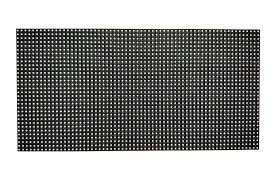
Manufacturing high-quality LED displays begins with selecting appropriate core components, notably the LED chips, PCB substrates, and driver ICs. Most modern displays use SMD (Surface-Mount Device) LEDs due to their superior brightness uniformity and reliability compared to DIP LEDs. The LED chips typically operate within a wavelength range of 620-630 nm for reds, 520-530 nm for greens, and 460-470 nm for blues, delivering vivid color rendering. High-end displays often integrate encapsulation materials with specific refractive indices (1.5 to 1.7) to maximize light extraction efficiency.
The choice of PCB substrate, whether FR4, aluminum-based, or flexible circuits, significantly affects thermal dissipation and signal integrity. Aluminum substrates are preferred in high-power applications due to their superior thermal management capabilities, preventing hotspot formation that can degrade LED lifetime and color consistency.
Precision in Assembly and Calibration
Accurate LED chip placement with tolerances within ±0.05 mm is vital to maintain uniform pixel pitch, which directly impacts the display’s resolution and viewing angle. Automated pick-and-place machines combined with computer vision systems ensure this precision. Additionally, calibration after assembly adjusts color temperature and brightness across the panel to adhere to uniformity standards, such as those set by the International Electrotechnical Commission (IEC) 62368-1 for safety and performance.
Uniform calibration involves measuring brightness and chromaticity with spectroradiometers and correcting for pixel-by-pixel variations through software LUTs (Look-Up Tables). This process guarantees color temperature stability typically around 6500 K ± 200 K, adhering to industry norms for sRGB and BT.709 color spaces.
Thermal Management and Structural Design
Effective thermal management extends LED lifespan and maintains consistent luminance. Passive cooling methods involve the use of heat sinks made from anodized aluminum with finned structures to maximize heat dissipation. Active cooling, such as integrated fans or liquid cooling systems, may be adopted in large-format or high-brightness displays rated at over 1500 nits, common in outdoor advertising.
Structural designs must meet mechanical robustness standards—such as MIL-STD-810G for environmental durability—especially for displays exposed to harsh weather. Waterproofing is achieved by sealing components to IP65 or higher ratings, ensuring reliable operation in rain and dust.
Driving Circuit Technology and Power Efficiency
Signal processing units utilize driving ICs with advanced features like PWM (Pulse Width Modulation) dimming and dynamic refresh rates, minimum being 3840 Hz for flicker-free display quality in broadcast environments. Power efficiency is enhanced using constant current drivers with 18-bit grayscale capability, reducing power consumption by up to 30% compared to older generation drivers.
Recent industry case studies highlight that refined driving algorithms which incorporate real-time feedback sensors further optimize brightness control under varying ambient light conditions, balancing visual performance and electrical consumption.
Emerging Trends and Industry Standards Compliance
The future of LED display manufacturing leans toward mini-LED and micro-LED technologies, which offer higher pixel densities, better contrast ratios – often exceeding 10,000:1 – and wider color gamuts supporting DCI-P3. These developments demand new production techniques involving wafer-level transfer and enhanced photolithography.
Complying with international standards such as ISO 9241-307 (visual display ergonomics) and JEDEC JESD22 (reliability testing for semiconductor devices) remains critical. Manufacturers are increasingly integrating IoT-based monitoring systems, enabling predictive maintenance and remote diagnostics, which significantly reduce downtime and operational costs.
Conclusion
Manufacturing state-of-the-art LED displays requires an integrated approach combining precision engineering, material science, thermal management, and rigorous adherence to global industry standards. Through advanced calibration and driving technologies, today's LED displays achieve superior image quality, extended service life, and energy efficiency. Engineers must continuously adapt to new materials and fabrication methods like mini-LED and micro-LED to maintain competitiveness in a dynamic market. By prioritizing these technical parameters and quality control systems, manufacturers can ensure products that meet the demanding expectations of international clients for both indoor and outdoor applications.
For further reading, reference materials include "Display Technology and Manufacturing" by SPIE Press and IEC standards documentation on LED display safety and performance.













