

Advanced Insights into LED LCD Screen Manufacturing: Techniques, Parameters, and Industry Standards
The evolution of display technology has significantly transformed the LED LCD screen manufacturing industry, driving innovation, efficiency, and quality to new heights. As a professional LED display engineer, it is essential to examine the critical components, manufacturing methodologies, and the industry's technical standards that underpin the production of high-performance LED LCD screens. This article delivers an authoritative and comprehensive overview, blending practical experience with industry data and established norms to offer international readers a clear understanding of contemporary LED LCD screen manufacturing.
Introduction
LED LCD screens combine Liquid Crystal Display (LCD) technology with Light Emitting Diode (LED) backlighting to deliver superior brightness, contrast, energy efficiency, and thinner profiles compared to traditional CCFL (Cold Cathode Fluorescent Lamp) backlit screens. This hybrid approach has matured into the dominant technology for monitors, televisions, and large-format displays worldwide, spanning from consumer electronics to high-end industrial applications.
Understanding the core elements of LED LCD manufacturing involves examining the panel’s structure, the LED backlighting system, and the integration of control electronics, alongside strict adherence to industry standards such as IEC 62368-1 for safety and IEC 62087 for measurement methods.
Core Components and Technical Parameters
1. LCD Panel Structure
The foundation of an LED LCD display is the liquid crystal panel itself, composed of two polarized glass substrates with liquid crystal molecules sandwiched between them. It is equipped with thin-film transistors (TFT) forming an active matrix for pixel control. Critical parameters include:
- Resolution: Standard Full HD (1920x1080) up to 8K (7680x4320) depending on application.
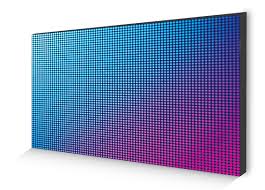
- Pixel Pitch: Typically ranges from 0.25 mm to 0.7 mm for high-definition screens.
- Contrast Ratio: Varies widely; values of 1000:1 to 5000:1 are common in consumer and professional displays.
- Response Time: 1ms to 8ms depending on panel technology (IPS, VA, TN).
2. LED Backlighting Technologies
LED backlighting introduces improved brightness uniformity, color gamut, and energy efficiency. Two prevalent backlighting configurations dominate the market:
- Edge-Lit LED: LEDs are placed along the panel edges, using light guides to distribute illumination. This design allows thin panels but may have less uniform brightness.
- Direct-Lit / Full-Array LED: A matrix of LEDs behind the LCD panel provides superior brightness and local dimming features for enhanced contrast ratios.
Advanced techniques include Mini-LED and Micro-LED innovations. Mini-LED backlights contain thousands of tiny LEDs, enabling finer local dimming zones and peak brightness over 1000 nits, enhancing HDR performance.
3. Color and Brightness Management
Achieving more accurate color rendering and higher brightness levels demands precise backlighting and color filter optimization. The use of Quantum Dot (QD) enhancement films is widespread in factory settings to increase the color gamut up to DCI-P3 or even Rec.2020 standards.
Typical luminance levels for LED LCD screens vary depending on usage:
- Standard monitors: 250-350 cd/m²
- Professional displays and HDR monitors: 600-1000 cd/m²
- Outdoor or specialized industrial screens: Up to 2000 cd/m²
Manufacturing Process Overview
The manufacturing workflow spans multiple critical stages:
- Glass Substrate Preparation: High-purity glass substrates are cleaned to ensure no particulate contamination that would compromise pixel integrity.
- TFT Layer Deposition: Thin-film transistor layers are deposited using photolithography. The precision of this step defines pixel control fidelity and timing.
- Liquid Crystal Injection: Advanced filling and sealing technologies ensure uniform distribution of the liquid crystals, avoiding defects like mura or dead pixels.
- Backlight Assembly: LED arrays are fabricated and calibrated, incorporating light diffusion films and reflectors to enhance uniformity.
- Module Integration: The LCD panel is combined with backlighting and control driver ICs, often with integrated circuitry for gamma correction, color management, and dynamic contrast control.
- Quality Assurance: Rigorous testing governed by ISO 13485 or comparable standards is employed to inspect brightness uniformity, pixel defects, and electrical reliability.
Industry Standards and Certifications
Manufacturers adhere to several global standards to assure performance and safety:
- IEC 62368-1: Safety requirements for audio/video, information, and communication technology equipment.
- IEC 62087: Specifies measurement methods for power consumption and brightness, critical for energy labeling and regulatory compliance.
- TIA/EIA-329: Interfaces and environmental testing standards for luminance and colorimetry.
Additionally, testing for flicker, blue light emission, and electromagnetic compatibility (EMC) ensures products meet consumer health and regulatory demands.
Innovations and Future Trends
The LED LCD industry is rapidly advancing with integration of AI-based calibration systems, improving color accuracy and reducing manufacturing tolerances. Furthermore, hybrid displays incorporating OLED and micro-LED elements are pushing boundaries in brightness, contrast, and flexibility.
Mini-LED technology, having transitioned from R&D to mass production in recent years, is now mainstream in premium monitors and television segments, offering refined local dimming with lower cost compared to full OLED panels. The challenge lies in balancing luminance, power consumption, and cost without compromising display lifespan.
Conclusion
As LED LCD screen manufacturing continues to evolve, holding mastery over the intricate balance between liquid crystal technologies and LED backlighting architectures is paramount to producing displays that fulfill growing demands in resolution, brightness, color fidelity, and energy efficiency. Rigorous adherence to internationally accepted processes and standards coupled with technological innovation paves the way for next-generation screens that cater to diverse global markets—from consumer electronics to industrial and medical applications. Expertise in these technical parameters and production methodologies guarantees engineers and manufacturers the credibility and competitiveness necessary in the dynamic landscape of LED LCD display technology.













