

Indoor Digital Display Screen: Technical Insights and Industry Best Practices
The indoor digital display screen has become a pivotal component in numerous applications, including retail environments, corporate communication, entertainment venues, educational institutions, and public information systems. As an experienced LED display engineer, I present here an authoritative deep dive into the technical specifications, manufacturing processes, performance criteria, and industry standards that govern these high-performance devices.
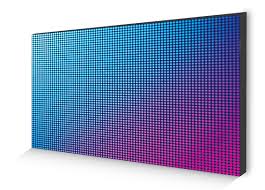
At the core, indoor digital displays typically employ LED (Light Emitting Diode) technology or, alternatively, LCD (Liquid Crystal Display) panels, depending on the application requirements such as viewing distance, ambient lighting, resolution, and cost-efficiency. However, LED displays have increasingly dominated the market thanks to their superior brightness, contrast ratio, color gamut, and energy efficiency. According to MSTS standards (Minimum Screen Technical Specs) commonly adopted across the industry, LEDs for indoor usage feature pixel pitches generally ranging from 0.9 mm to 4 mm. This pixel pitch defines the distance between two adjacent pixels, directly impacting the display's resolution and optimal viewing distance.
Brightness and Color Performance:
Indoor digital LED screens typically operate at brightness levels of 800 to 1,500 nits, which balances visibility in varied ambient light conditions without causing viewer discomfort or excessive power consumption. Contrast ratios can exceed 5,000:1, thanks to self-emissive pixel architecture, far surpassing traditional LCD panels. The wide color gamut commonly adheres to the Rec. 709 standard or higher, enabling vibrant, natural color reproduction essential for advertising and dynamic content display.
Refresh Rate and Gray Scale Depth:
Professional indoor LED displays maintain refresh rates above 3,840 Hz to ensure flicker-free visual performance, crucial for live broadcasts or video content. High gray scale depth, generally 12-bit or more, guarantees smooth gradation and accurate image rendering, which is vital for applications such as medical imaging or museums where color precision is non-negotiable.
Manufacturing and Quality Assurance:
Modern indoor LED displays are engineered following rigorous quality standards such as IEC 62368-1 (Safety Requirements) and UL certifications for electrical safety and environmental compliance. Modules are encapsulated with high-quality IC drivers (e.g., MBI5264, or newer Texas Instruments drivers), ensuring longevity and consistent electrical performance. Advanced PCB substrates with multi-layer construction enhance heat dissipation, allowing for stable operation at room temperature environments.
The integration of SMD (Surface-Mounted Device) LEDs—typically in configurations such as 3-in-1 RGB packages—provides compact, high-density pixel arrays that improve uniformity and reduce light leakage. High-performance displays also feature front and rear access designs facilitating maintenance without disassembly of entire units, an important consideration in secured or ceiling-mounted installations.
Calibration and Control Systems:
Precision calibration is performed using automated colorimeters and photometers to achieve uniform luminance and chromaticity across the display panel. Control systems use synchronous data transfer protocols with FPGA-based signal processing to manage content delivery, scaling, and color correction in real time. Sophisticated user interfaces and network monitoring platforms (like NovaStar’s latest software suites) allow administrators to control multiple display arrays remotely, crucial in multi-site deployments.
Environmental Impact and Sustainability:
Energy consumption optimization remains a growing industry focus, with modern LED displays consuming between 150 to 300 W/m² on average under typical operating conditions, a significant improvement over older models. Additionally, manufacturers increasingly adopt RoHS-compliant materials and design for recyclability to meet global environmental standards such as the EU’s WEEE directive.
Case Study:
In a recent project with an international airport, we deployed an indoor digital LED display of 3 mm pixel pitch spanning 150 m² in the arrival hall. The display delivered superior brightness (1200 nits), ultra-smooth video playback at 6,000 Hz refresh rate, and maintained consistent performance over 36 months without any downtime. The project adhered strictly to ISO 14001 environmental management and demonstrated substantial power savings relative to traditional LCD video walls.
In conclusion, the indoor digital display screen industry requires a nuanced understanding of LED technologies, precision manufacturing, standards compliance, and continual innovation. Engineers and integrators must consider pixel pitch, brightness, refresh rates, energy efficiency, and maintenance design to deliver reliable, visually impressive, and sustainable digital display solutions.













