

Engineering Sunlight Readable Displays for Harsh Environments Optical and Thermal Challenges
In today’s global display industry, the demand for sunlight readable displays capable of delivering high visibility under harsh environmental conditions has surged remarkably. This requirement is most pronounced in sectors such as outdoor digital signage, transportation hubs, and industrial control systems, where displays must maintain clarity and reliability under intense ambient light and challenging temperature extremes.
Technically, the foundation of sunlight readable displays lies in optimizing three critical parameters: brightness (measured in nits), contrast ratio, and power consumption. Traditional TFT-LCD panels, which typically range from 300 to 700 nits, prove insufficient for outdoor use where ambient light intensity can exceed 100,000 lux. To overcome this, manufacturers have transitioned to high-brightness LCD technology, often delivering 2,500–3,500 nits, ensuring content remains clear and legible even under direct sunlight. These high luminance levels, combined with enhanced contrast ratios (commonly above 3,000:1), help maintain image sharpness and color fidelity.
From an engineering perspective, achieving such performance involves advanced materials and manufacturing processes. Key innovations include optical bonding, which reduces reflections by eliminating air gaps between cover glass and LCD modules, significantly increasing sunlight readability. Concurrently, the implementation of anti-reflective and anti-glare coatings further mitigates surface reflections. The backlight module has evolved from Cold Cathode Fluorescent Lamps (CCFL) to powerful yet energy-efficient MiniLED technology, offering localized high-intensity lighting with reduced thermal footprint.
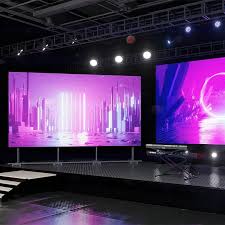
Thermal management is a paramount challenge in these displays. High-brightness operation introduces substantial heat generation that, if not adequately dissipated, deteriorates lifespan and performance. Solutions include the integration of heat sinks, convection cooling designs, and specialized thermal interface materials (TIMs) to efficiently draw heat away from sensitive LED backlights and LCD driver components. Moreover, smart thermal sensors feed data to adaptive brightness controls, dynamically balancing brightness output and power consumption to prevent overheating without compromising visibility.
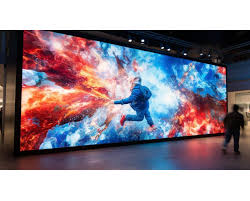
Throughout manufacturing, rigorous quality control ensures durability and compliance with environmental standards. Displays destined for outdoor installation undergo aging tests that simulate prolonged exposure to sunlight and temperature cycles, vibration tests to withstand transportation shocks, and waterproof certifications such as IP65 and IP67 to ensure dust-tightness and water ingress protection. Such robust testing aligns with IEC and ISO standards, confirming the displays’ resilience in demanding conditions.
Real-world applications underscore these technologies’ efficacy. For example, retail storefront digital signage in northern Europe utilizes high-brightness LCDs combined with optical bonding and ambient light sensors to maintain engaging visual content irrespective of weather conditions. Similarly, transportation hubs in Dubai employ sunlight readable displays operating reliably amid intense desert sun and dust storms, enabled by careful attention to heat dissipation and IP67-rated enclosures.
Compliance with global industry standards like CE, RoHS, REACH, UL, and FCC ensures not only environmental and electrical safety but also electromagnetic compatibility (EMC), critical for installations near complex electronic systems. Performance evaluation often references benchmarks such as IEC 62087 for display power measurement and ISO 9241-307 for visual ergonomics.
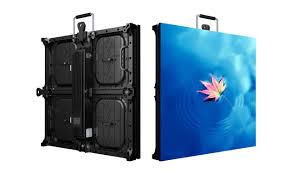
Looking ahead, future innovations promise enhanced intelligence and efficiency. AI calibration techniques will further refine color accuracy and brightness uniformity dynamically, while IoT integration facilitates remote monitoring and predictive maintenance. Additionally, advancements in semiconductor materials and backlight designs aim to push brightness levels beyond current caps without proportional power increases, directly addressing energy efficiency concerns.
In conclusion, engineering sunlight readable displays for harsh environments demands a multidisciplinary approach encompassing optical enhancement, thermal management, and strict quality assurance. These endeavors culminate in displays that not only meet exacting performance metrics but also promise reliability and longevity in outdoor and industrial scenarios. Enterprises seeking partnership or inquiries into tailored sunlight readable solutions are invited to engage with seasoned display engineers to harness the latest technology and deliver superior visual experiences worldwide.













