

Advanced LED Display Technology: Applications, Advantages, Challenges, and Emerging Trends
In the rapidly evolving field of digital displays, LED (Light Emitting Diode) technology remains at the forefront due to its superior brightness, energy efficiency, and versatility. As a professional LED display engineer, I have witnessed firsthand the transformation of LED display applications from basic signage to sophisticated, high-resolution screens in diverse industries worldwide. This article provides an in-depth exploration of LED display technology, emphasizing practical applications, inherent advantages, common challenges, and the latest market trends.
Practical Applications of LED Displays
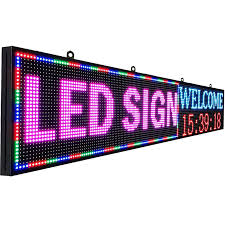
LED displays are ubiquitous across various sectors, including advertising, entertainment, transportation, sports, and information dissemination. The primary categories include:
- Outdoor Advertising and Digital Billboards: High brightness (typically 5,000 to 8,000 nits) and weather resistance make LED displays perfect for eye-catching outdoor signage visible even under direct sunlight.
- Indoor Commercial Displays: Often employed in shopping malls, airports, and conference halls, these displays feature high pixel density (PPI > 200) for crisp text and rich color definition.
- Sports Arenas and Event Displays: Large-scale LED screens offer dynamic content with refresh rates up to 3,840 Hz, essential for clear fast-motion video.
- Transportation Hubs: Timely updates of schedules and alerts rely on LED displays designed for optimal viewing angles (140° horizontal/vertical) and quick refresh.
- Medical Imaging and Control Rooms: High-resolution LED displays (pixel pitch<0.9 mm) allow detailed visualization critical to diagnostic tasks.
Advantages of LED Display Technology
1. Energy Efficiency: Compared with LCD and projection systems, LED displays consume 30%–50% less power, derived from advancements in semiconductor efficiency and intelligent drive circuits. Energy Star certifications often attest to this.
2. Superior Brightness and Contrast: LEDs can achieve brightness levels up to 10,000 nits for outdoor use, ensuring visibility even in direct sunlight. They provide contrast ratios exceeding 5,000:1 thanks to precise pixel control.
3. Long Lifespan and Reliability: Modern LED modules offer lifespans exceeding 100,000 hours under standard operating conditions, significantly reducing maintenance costs.
4. Flexibility in Shape and Size: The modular design allows for seamless combination into curved, spherical, or irregular shapes, enabling creative signage and immersive experiences.
5. Fast Response Times: LEDs have response times in the order of microseconds, minimizing motion blur and enabling smooth video playback at high frame rates necessary for live broadcast applications.
Common Problems and Mitigation Strategies
Despite their benefits, LED displays face technical and operational challenges:
- Heat Dissipation: High-brightness LEDs generate significant heat, potentially shortening lifespan and causing color shifts. Efficient thermal management systems, such as aluminum backplanes and active cooling, are essential.
- Color Calibration and Uniformity: Variations in LED binning and environmental factors can cause color inconsistencies. Advanced onboard calibration systems, often governed by ICs with feedback loops, ensure uniformity across the display.
- Pixel Failure and Dead LEDs: Over time, individual LEDs may fail. Techniques like redundancy in LED circuits and modular repair protocols can mitigate impact and facilitate quick maintenance.
- Power Supply Stability: Fluctuations can degrade LED performance, necessitating robust driver ICs and power supply units meeting standards such as IEC 61547 (EMC immunity).
- Viewing Angle Limitations: To maximize audience reach, wide viewing angles are required. Modern designs use lens engineering and pixel alignment to assure consistent luminance and color at up to 160° viewing angles.
Emerging Trends in LED Display Technology
In 2024, several technological advancements and market trends are shaping the future of LED displays:
- MicroLED and MiniLED Integration: MicroLEDs (with pixel pitch below 100 micrometers) offer unparalleled contrast and energy efficiency combined with ultra-high resolution, paving the way for next-gen displays in smartphones, AR/VR devices, and televisions.
- AI-Driven Content Optimization: AI algorithms are increasingly deployed to dynamically adjust brightness, contrast, and color based on ambient conditions and content type, enhancing viewer engagement and prolonging hardware life.
- Sustainability Initiatives: Manufacturers emphasize eco-friendly materials and energy recycling techniques, adhering to stricter global environmental standards such as RoHS and WEEE directives.
- Transparent and Flexible LED Displays: Innovations in substrate materials and LED encapsulation enable see-through displays for retail windows and flexible screens that can be rolled or folded without damage.
- High Frame Rate and HDR Support: The demand for ultra-smooth video and lifelike imagery has pushed the implementation of 120 Hz or higher refresh rates and high dynamic range (HDR) capabilities in LED displays.
Technical Parameters to Consider for Optimal LED Display Design
- Pixel Pitch (P): Defines resolution; lower pitch (<1.5 mm) equates to higher pixel density, suitable for close-viewing contexts.
- Brightness (cd/m² or nits): Outdoor applications typically require more than 5,000 nits, while indoor displays optimize around 800–1,200 nits.
- Refresh Rate (Hz): Higher refresh rates reduce flicker and motion blur; professional LED displays target ≥3,000 Hz.
- Contrast Ratio: A high contrast ratio (≥5,000:1) improves image depth and visual comfort.
- Viewing Angle: Wide viewing angles (≥140°) ensure consistent image quality across audiences.
- Lifetime: LEDs rated for 100,000+ hours lead to longer intervals between maintenance cycles.
In conclusion, LED display technology stands as a cornerstone in contemporary digital visualization, offering unmatched brightness, efficiency, and design flexibility. While challenges remain in heat management and color uniformity, ongoing innovations such as MicroLED and AI integration continue to elevate performance standards. For stakeholders in advertising, broadcast, transportation, or medical sectors, investing in advanced LED technology ensures reliable, cost-effective, and visually compelling solutions that meet evolving market demands.
References:
- International Electrotechnical Commission (IEC) Standards, IEC 62031 and IEC 61547
- Energy Star Program Guidelines on LED products (EPA, 2023)
- SID (Society for Information Display), “MicroLED Display Technology,” 2024 Technical Brief
- Journal of Display Technology, Vol.19, Issue 2, “Advances in Thermal Management for LED Displays,” 2024
- MarketWatch, “Global LED Display Market Report,” 2024













