

Advanced LED LCD Display Manufacturing: Technical Insights and Industry Standards
The manufacturing of LED LCD displays stands at the forefront of display technology, incorporating intricate engineering processes, strict quality standards, and evolving materials science to deliver vibrant, efficient, and durable screens. As global demand for higher resolution, greater brightness, and lower power consumption grows, understanding the key technical parameters and industry practices becomes essential for manufacturers, engineers, and technology enthusiasts worldwide.
Fundamentals of LED LCD Technology
Unlike traditional LCDs which use cold cathode fluorescent lamps (CCFL) for backlighting, LED LCD displays utilize light-emitting diodes (LEDs) as a backlight source. This upgrade confers several advantages: improved energy efficiency, thinner panel profiles, enhanced color accuracy, and greater lifespan. The LED backlight can be configured in two primary ways—edge-lit and direct-lit (full-array). Edge-lit LED LCDs position LEDs along the edges of the panel, allowing light to be guided via light guides. Direct-lit arrays place LEDs directly behind the liquid crystal layer, enabling local dimming zones that improve contrast ratios considerably.
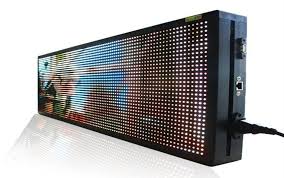
Typically, modern LED LCDs boast brightness levels from 300 to 1000 nits (cd/m²), suitable for indoor to high ambient light environments. Contrast ratio — a vital figure measuring luminance difference between darkest black and brightest white — often reaches from 3000:1 in standard panels up to 100,000:1 in top-tier displays employing quantum dot or HDR technology.
Manufacturing Process and Quality Control
The assembly line of an LED LCD panel involves multiple precision-driven steps:
1. Substrate Preparation: Glass substrates undergo cleaning, coating with alignment layers, and application of thin-film transistor (TFT) arrays which control individual liquid crystal pixels. High-resolution TFTs (e.g., 4K panels use Gershenson or LTPS technology for smaller transistors) enable finer image detail.
2. Liquid Crystal Injection: Post assembly of cell walls and spacers, liquid crystal material is injected under vacuum conditions to ensure uniform dispersion and minimize defects.
3. Backlight Integration: The LED backlight module integrates LEDs with diffusors and optical films (such as brightness enhancement films (BEF) and prism sheets) to uniformly illuminate the LCD array. Managing angular light distribution is critical to reducing hotspots and preserving color uniformity.
4. Quality Assurance: Industry standards such as IEC 62679 for optical measurements and ISO 9241-307 for visual ergonomics guide inspection protocols. Panels are tested for dead pixels, luminance uniformity, color gamut consistency (often measured in sRGB or DCI-P3 percentages), and response time. Typically, response times range from 1 ms (for gaming displays with TN panels) to 6 ms for IPS panels, balancing speed and viewing angle.
Materials and Innovations Driving Performance
Advancements in phosphor materials, quantum dot enhancement films (QDEF), and blue LED efficiencies have pushed color gamuts beyond standard NTSC or Rec.709 benchmarks. The implementation of mini-LED arrays introduces thousands of dimming zones, significantly improving HDR contrast by dynamically adjusting backlight precision. Research also focuses on extending panel refresh rates towards 240 Hz or more for smooth motion in gaming and professional applications.
Thermal management remains a critical consideration as LED longevity and color stability hinge on optimal operating temperatures. Innovations in heat dissipation, including vapor chambers and graphite sheets, help maintain consistent luminance over extended usage.
Environmental and Energy Considerations
LED LCD production increasingly incorporates eco-friendly materials and processes to comply with RoHS (Restriction of Hazardous Substances) directives, and manufacturers optimize energy consumption in line with ENERGY STAR certifications. Enhancements such as dynamic backlight control and adaptive brightness sensors contribute to reduced power usage without compromising visual quality.
Conclusion: Industry Trends and Future Outlook
The LED LCD display industry continues integrating semiconductor advances with optical engineering to meet growing market demands for ultra-high resolution, flexible form factors, and energy efficiency. Standards committees including the International Electrotechnical Commission (IEC) and the Video Electronics Standards Association (VESA) actively evolve guidelines ensuring interoperability and quality benchmarks.
For engineers and manufacturers, mastering the balance between LED luminosity, LCD molecular alignment, and optical layering remains the pivot for next-generation displays. Given the rapid innovation pace, maintaining adherence to industry best practices and continuous quality verification will define success in deploying robust, visually stunning LED LCD panels globally.













