

Advanced LED Display Technology: Practical Applications, Advantages, Challenges, and Emerging Trends
In the realm of modern visual technology, LED (Light Emitting Diode) display systems stand as a benchmark for innovation, performance, and reliability. With applications spanning from consumer electronics to large-scale outdoor advertising, LED displays have transformed how information is visually communicated worldwide. This article delivers a comprehensive overview rooted in industry expertise, covering practical applications, technical advantages, common challenges, and the latest advancements shaping the future of LED display technology.
Practical Applications of LED Displays
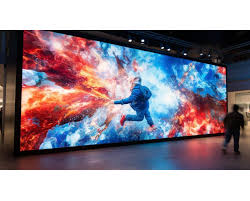
LED display technology has found versatile use across various sectors:
1. Digital Signage and Outdoor Advertising
Due to their high brightness (often exceeding 5,000 nits), durability, and weather resistance conforming to IP65 or higher standards, LEDs are ideal for outdoor environments. Large format LED billboards dominate areas like Times Square and Shibuya Crossing, offering dynamic, eye-catching content visible even under direct sunlight.
2. Broadcast and Studio Displays
In television studios, fine-pitch LED panels (pixel pitch below 1.5mm) are increasingly used as video walls and backdrops, providing vibrant colors, uniform brightness, and flexibility in shape and size. UHD (Ultra High Definition) resolutions have become achievable through advancements in mini-LED and micro-LED technologies.
3. Retail and Corporate Environments
Indoor LED displays feature prominently in retail stores and corporate lobbies for advertising, branding, and information dissemination. Their high contrast ratio (up to 5000:1 or more) and wide color gamut enhance viewer engagement.
4. Transportation and Public Information Systems
Airports, train stations, and bus terminals leverage LED displays for real-time schedules and alerts due to their rapid refresh rates (120Hz+), reliability, and visibility in variable lighting.
5. Entertainment and Events
Concerts and sports arenas utilize massive LED walls for audience engagement, offering seamless video playback and integration with special effects, thanks to their lightweight modular panels and fast refresh cycles.
Advantages of LED Displays
The dominance of LED technology in display applications stems from several critical advantages:
- Superior Brightness and Visibility:
The inherent efficiency of LEDs enables brightness levels from 1,000 to over 10,000 nits, ensuring visibility under direct sunlight and varied ambient lighting.
- Energy Efficiency and Longevity:
LEDs consume significantly less power compared to cathode-ray tube (CRT) or plasma displays and offer operational lifetimes exceeding 100,000 hours with minimal luminance degradation, adhering to standards like IEC 62717.
- Color Accuracy and Wide Viewing Angles:
Modern LED displays deliver a broad color range (up to BT.2020 coverage) and wide viewing angles (≥140° both horizontal and vertical), allowing consistent image quality across audiences.
- High Refresh Rates and Low Latency:
Refresh rates between 120Hz and 240Hz reduce flickering and motion blur, critical for video clarity in broadcast environments.
- Modular Design and Scalability:
LED panels can be seamlessly tiled to form screens ranging from small dashboards to massive arena displays with pixel pitches as fine as 0.5mm, enabling customization to specific applications.
Common Challenges and Problem Areas
Despite its advantages, LED display technology faces persistent challenges necessitating professional expertise:
- Heat Management:
High brightness outputs generate heat that, if unmanaged, can reduce LED lifespan and cause color shift. Employing advanced thermal management solutions, such as aluminum heat sinks and active cooling, is essential.
- Pixel Failure and Uniformity Issues:
Dead pixels or color inconsistencies can occur due to manufacturing defects or physical damage. Rigorous quality control following standards like ISO 9001 and routine maintenance protocols mitigate these issues.
- Electromagnetic Interference (EMI):
LED controllers and power supplies can introduce EMI affecting signal quality. Compliance with FCC and CE standards ensures electromagnetic compatibility.
- Cost Considerations:
Initial investment costs for high-resolution and large-format displays remain substantial, although Total Cost of Ownership (TCO) reduces over time due to durability and efficiency.
- Environmental Concerns:
Disposal and recycling of LED modules must follow environmental directives such as RoHS to minimize ecological impact.
Emerging Trends and Technological Innovations
The LED display industry is experiencing rapid evolution driven by the following cutting-edge trends:
- Micro-LED and Mini-LED Technologies:
Micro-LED displays utilize microscopic LEDs as individual pixels, enabling unparalleled brightness, contrast ratios, and energy efficiency with pixel pitches below 0.3mm, marking a step forward in ultra-high-resolution applications. Mini-LED backlit LCDs leverage thousands of tiny LEDs to improve contrast and dimming in LCD panels.
- Flexible and Transparent LED Displays:
Flexible LED modules expand installation possibilities on curved surfaces or wearable devices. Transparent LED displays enable see-through surfaces, blending digital content with real-world environments, popular in retail windows and architectural integration.
- Smart Control Systems and AI Integration:
Real-time content adjustment based on ambient light sensors, viewer proximity, and AI-driven analytics optimize display effectiveness and energy savings.
- Improved Indoor Air Quality Solutions:
Incorporating antibacterial coatings and low-emission materials address health and safety in public indoor spaces.
- Sustainability Focus:
Manufacturers are adopting recyclable materials, lowering power consumption, and designing for easier repairability reflecting growing environmental responsibility.
Conclusion
As global demand for vibrant, versatile, and reliable display solutions increases, LED technology continues to lead the visual communication landscape with unmatched adaptability and performance. Understanding practical applications, leveraging technical advantages, addressing challenges proactively, and embracing emerging trends are vital for engineers, integrators, and end-users committed to high-quality LED display deployments.
References:
- International Electrotechnical Commission (IEC) 62717: LED Modules for General Lighting
- Society for Information Display (SID) Technical Papers
- FCC Regulations on Electromagnetic Compatibility
- Reports from Ovum and IHS Markit on LED Market Trends
- Case Studies: Times Square LED Installations (Daktronics, NanoLumens)
By embracing advanced LED display technologies, industries will continue to enhance communication efficacy, environmental sustainability, and user experience worldwide.













