

LED Interactive Display: Advanced Technologies and Key Industry Insights
In the rapidly evolving landscape of digital signage and display technologies, LED interactive displays have emerged as a transformative solution, blending vibrant visual performance with intuitive user engagement. This article delves into the technical sophistication, industry standards, and practical applications of LED interactive displays, offering insights drawn from extensive engineering experience and authoritative industry data.
Technical Fundamentals of LED Interactive Displays
At the core of LED interactive displays lies Light Emitting Diode (LED) technology, known for its superior brightness, energy efficiency, and long operational lifespan. Unlike traditional LCD screens, LED electronics utilize self-emissive diodes that produce light directly, enabling higher contrast ratios — typically exceeding 4000:1 — and wider viewing angles, commonly over 160 degrees horizontal and vertical.
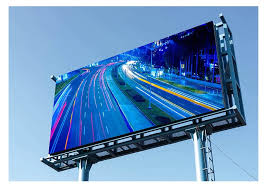
The ‘interactive’ aspect incorporates multi-touch sensor technologies, including Infrared (IR) touch frames, Capacitive touch layers, and Infrared Optical imaging systems, each with unique benefits tailored to different environments. Capacitive touch technology, for instance, excels in accuracy and sensitivity, supporting up to 10 simultaneous touch points, essential for collaborative applications. IR touch frames are lauded for durability and responsiveness, working flawlessly even with gloved hands or stylus input.
Integration of LED Display and Touch Modules
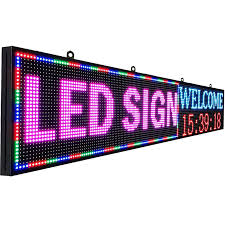
Seamless integration between the LED display panel and interactive sensors is pivotal for performance optimization. High-end interactive LED displays employ embedded controllers supporting low-latency communication protocols such as USB 3.0 or proprietary RS-485 interfaces, ensuring touch response times under 10 milliseconds. This immediacy is critical in demanding scenarios like control rooms or retail kiosks, where user experience hinges on prompt feedback.
Further, modern LED interactive displays utilize algorithmic noise filtering and calibration processes aligned to IEC 62368-1 safety standards and ISO 9241-411 ergonomic criteria. Adaptive brightness and color calibration systems adjust in real-time based on ambient lighting, preserving image fidelity and reducing eye strain.
Manufacturing and Quality Control
In manufacturing, precision assembly techniques such as Surface Mounted Device (SMD) placement with fine-pitch LEDs (as small as 0.9mm pixel pitch) are imperative for high-resolution interactive panels. Pixel pitch directly impacts image clarity; displays with a 1.2mm pixel pitch allow for resolutions exceeding 4K in standard 55-inch form factors, accommodating detailed graphical content and text.
Rigorous testing for color uniformity, brightness consistency, and touch accuracy is conducted throughout production, adhering to standards like DisplayHDR 1000 for brightness certification and MIL-STD-810G for environmental robustness. These protocols ensure durable operation across a wide temperature range (-20°C to 50°C) and resistance to humidity or dust, critical for outdoor or semi-outdoor installations.
Applications and Case Studies
Globally, LED interactive displays find versatile applications across retail, education, corporate, and public infrastructure sectors. For example, international airports deploy large-format interactive LED walls to aid passenger navigation, integrating multi-language touch interfaces with real-time information updates. Leading retail brands use indoor interactive displays to enhance customer engagement via dynamic product showcases and virtual try-on capabilities.
A notable case is the deployment of an LED interactive video wall in a multinational corporate office, where the display supports up to 20 simultaneous touch inputs, aiding collaborative meetings and data visualization. The system employs 1.5mm fine-pitch LEDs combined with capacitive touch sensors, achieving 120Hz refresh rate and vivid color reproduction (covering 99% DCI-P3 color gamut), enhancing both interactivity and visual performance.
Future Trends and Innovations
Encouraged by recent advancements, the industry is witnessing the convergence of AI-driven interaction models—such as gesture recognition and voice commands—with LED interactive technology. Enhanced integration with IoT networks is enabling smart environment adaptations, including automatic brightness control and user behavior analytics.
Moreover, emerging miniLED and microLED technologies promise to drastically improve energy efficiency and display contrast, while shrinking pixel pitches below 0.5mm, opening doors for ultra-high definition interactivity in compact formats.
In summary, LED interactive displays represent a sophisticated fusion of high-performance LED visual systems and advanced human-machine interface technologies. Their adoption is set to expand significantly, supported by ongoing innovations in precision manufacturing, sensor integration, and adaptive software algorithms, fulfilling diverse operational demands across industries worldwide.













