

Comprehensive Guide to LED Display Manufacturing: Expertise, Technical Insights, and Industry Standards
In the rapidly evolving landscape of display technology, LED (Light Emitting Diode) displays have become the cornerstone of digital visual communication worldwide. With applications ranging from large outdoor billboards to high-resolution indoor video walls and wearable devices, the technology’s growth reflects substantial advancements in efficiency, brightness, longevity, and versatility. As professional LED display engineers, we must understand the intricate manufacturing process, critical technical parameters, and industry standards to ensure top-tier product performance and reliability. This article offers a comprehensive and authoritative overview of the LED display manufacturing process, technical considerations, and practical insights grounded in industry best practices.
Fundamentals of LED Displays
At the core, LED displays operate by using small semiconductor devices known as LEDs to emit light when electrically energized. Each LED—often red, green, or blue—combines to form pixels, which constitute the visible image. The crucial difference between LED and traditional LCD (Liquid Crystal Display) panels is that LED displays are self-emissive, meaning each pixel emits light directly, unlike LCDs which require external backlighting. This self-emissive nature ensures superior contrast ratios, better energy efficiency, and improved viewing angles.
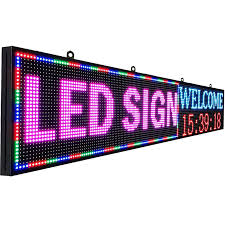
Types of LED Displays
LED displays vary considerably, primarily classified as:
- Indoor LED Displays: Designed for close-range viewing, these displays typically have refresh rates exceeding 1920 Hz, pixel pitches between 0.6mm to 4mm, and brightness levels around 800 to 1500 nits to ensure clarity under controlled lighting conditions.
- Outdoor LED Displays: Optimized for visibility under direct sunlight, these feature higher brightness (up to 6000 nits or more), greater waterproofing (IP65 or higher ratings), and pixel pitches ranging from 4mm to 20mm depending on viewing distance.
- LED Video Walls: Modular systems that combine multiple LED panels into expansive seamless displays, specialized for events, advertising, and control rooms.
- Transparent and Flexible LED Displays: Cutting-edge solutions using transparent substrates or bendable materials expanding use cases in retail, architecture, and wearable technology.
LED Manufacturing Process
Manufacturing LED displays requires meticulous attention at each stage, combining semiconductor fabrication, circuit design, and mechanical assembly:
1. LED Chip Fabrication: Starting from substrates like sapphire or silicon carbide, epitaxial growth forms gallium nitride (GaN) or related compounds for blue and green LEDs and aluminum gallium arsenide (AlGaAs) for red LEDs. Precision photolithography defines the chip structure, enabling high-brightness and longevity.
2. LED Packaging: Once fabricated, chips undergo packaging for protection and electrical interfacing. Packaging types influence heat dissipation and optical characteristics. Common types include surface-mount device (SMD) LEDs, known for compact size and integration, and discrete LED lamps used in large pitch displays.
3. PCB and Module Assembly: LED packages are mounted on printed circuit boards (PCBs) which feature power distribution and driving circuits. High-quality PCBs use materials like FR-4 or metal-core PCBs to enhance thermal management. Modular construction enables ease of maintenance and scalability.
4. Driving System and Control Units: The driving ICs convert digital signals into analog currents that control LED brightness and color accuracy. Industry-grade driver chips implement features like grayscale processing (often 14-16 bits per channel), error correction, and dynamic refresh rate optimization. Synchronization with video sources via HDMI, DVI, or fiber interfaces ensure seamless content display.
5. Calibration and Testing: After assembly, each module undergoes rigorous calibration to harmonize brightness and chromaticity across the entire display. Automated photometric systems measure luminance uniformity, color coordinates (x,y in CIE 1931 color space), and grey-scale response. Testing to standards like IEC 60068 ensures mechanical robustness and environmental resilience.
Key Technical Parameters
A few critical parameters define LED display quality and suitability:
- Pixel Pitch: The center-to-center distance between adjacent LEDs, fundamental in determining resolution and optimal viewing distance. Smaller pitch (e.g., 0.8mm) enables fine detail for close viewers; larger pitch suits billboards.
- Brightness: Measured in nits (cd/m²), brightness dictates visibility. Indoor displays range from ~800 to 1500 nits; outdoor displays may exceed 6000 nits for sunlight readability.
- Refresh Rate and Scan Mode: Higher refresh rates (around 3840 Hz or greater) prevent flickering, crucial for broadcast grade applications. Scan modes (1/4, 1/8, 1/16) balance power usage and display resolution.
- Viewing Angle: Measured horizontally and vertically, viewing angles exceeding 120° ensure wide audience visibility without color distortion.
- Color Gamut and Accuracy: Superior LED displays cover up to 95% NTSC color gamut, offering vibrant and lifelike images. Color calibration uses reference standards like D65 white point and ICC profiles.
- Ingress Protection (IP) Rating: Critical for outdoor installations, IP65 or higher ensures dust tightness and water resistance.
Industry Standards and Certifications
Adhering to industry standards secures safety, interoperability, and reliability:
- ISO 9241-307: Ergonomic requirements for electronic visual displays, including luminance, glare, and color.
- IEC 60068: Environmental testing for resistance to temperature, vibration, and humidity.
- RoHS & REACH Compliance: Ensures environmental and health safety by restricting hazardous substances in materials.
- UL and CE Certifications: Guarantee electrical safety and electromagnetic compatibility.
Practical Engineering Considerations
From an engineering perspective, besides raw technical specs, practical aspects influence manufacturing success:
- Thermal Management: LEDs generate heat that reduces lifespan and brightness. Employing metal-core PCBs, heat sinks, and active or passive cooling measures is vital.
- Power Efficiency: Selecting high-efficiency driver ICs and optimizing driving currents minimizes power consumption, reducing operational costs and thermal loads.
- Module Reliability and Serviceability: Designing modular LED panels facilitates swift maintenance and parts replacement, integral for large-scale installations.
- Content Management Software: Robust software platforms with remote diagnostics enhance operational control, enabling color calibration and diagnostics in situ.
Case Studies and Industry Trends
Recent deployments illustrate these engineering principles well.
- In 2023, a 5000m² outdoor LED façade for a landmark skyscraper in Dubai utilized 10mm pixel pitch modules with 8000 nits peak brightness and IP67 rating, powered by advanced thermal management to operate efficiently in extreme desert climates, demonstrating durability and outstanding visibility.
- Flexible LED panels have been integrated into automotive interiors to enable customizable dashboards, necessitating bendable substrates combined with ultra-fine pitch LEDs (~1.2mm), made possible by advancements in flexible PCB technology and encapsulation innovations.
Industry trends also emphasize mini-LED and microLED technologies, which embed thousands to millions of ultra-small LEDs to achieve unparalleled contrast and power efficiency while pushing display resolutions beyond 8K UHD.
Conclusion
Mastering LED display manufacturing demands an in-depth understanding of semiconductor technology, electronics, optical engineering, and environmental considerations. Manufacturers must focus on stringent quality control, comprehensive testing, and adherence to international standards to develop reliable products suited for diverse applications worldwide.
With continued innovation—such as high refresh rate driver ICs, novel materials for flexible displays, and AI-driven calibration systems—the future of LED display technology promises even more impressive visual experiences that marry brilliance, efficiency, and durability.
Professionals engaged in LED display manufacturing must consistently refine expertise and leverage cutting-edge industry data and standards, ensuring that their products meet both technical excellence and real-world demands in an increasingly competitive market.
Sources:
- IEC 60068 Environmental Testing Standards, International Electrotechnical Commission
- ISO 9241-307 Ergonomic Requirements for Displays, International Organization for Standardization
- “LED Display Technology and Design”, Journal of Display Technology, IEEE, 2023
- Energy Star LED Display Energy Specification, U.S. Environmental Protection Agency
- Case Study: LED Façade in Dubai, Sign Research Institute, 2023













