

Advanced Technologies and Quality Standards in LED LCD Screen Manufacturing
In the dynamic landscape of modern display technology, LED LCD screens have surged ahead as a leading solution for delivering high-quality visuals across a broad range of applications, from consumer electronics to industrial displays. As a professional engineer specializing in LED LCD screen manufacturing, this article delves into the critical aspects of design, production processes, technical parameters, and industry standards to provide an authoritative and practical overview.
Understanding LED LCD Screen Technology
LED LCD screens essentially combine two distinct but complementary technologies: the liquid crystal display (LCD) and the backlighting system based on light-emitting diodes (LEDs). Unlike traditional cold cathode fluorescent lamp (CCFL) backlighting, LED backlights allow for thinner panels, higher energy efficiency, and improved color rendering.
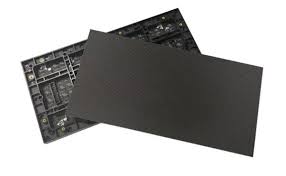
The LCD component uses liquid crystals to modulate light, controlling the image display pixel by pixel, while the LED backlight provides the necessary illumination to deliver vibrant and bright images. This combination results in displays with superior contrast ratios, higher brightness levels, and enhanced color accuracy.
Key Technical Parameters
When manufacturing LED LCD screens, several technical parameters must be precisely controlled:
- Resolution: Ranges from Full HD (1920×1080) to 4K UHD (3840×2160) for consumer products, and beyond 8K for specialized commercial displays.
- Brightness: Typically measured in nits (cd/m²), with standard display brightness between 250-350 nits and high-end professional screens reaching over 1000 nits for outdoor visibility.
- Contrast Ratio: A critical factor, with typical LED LCD screens achieving ratios exceeding 1000:1, ensuring deep blacks and vivid image depth.
- Response Time: Ideally below 8ms to reduce motion blur, important for gaming and high-speed video applications.
- Color Gamut: Measured in terms of coverage of standards like sRGB, Adobe RGB, and DCI-P3. Premium LED LCDs can cover up to 99% of Adobe RGB or 100% DCI-P3.
- Viewing Angle: IPS (In-Plane Switching) panels are widely favored for their wide viewing angles exceeding 178°, guaranteeing consistent image quality from different perspectives.
- Backlight Uniformity: Essential for stable brightness without spots or shadows, commonly controlled within ±10%.
Manufacturing Processes and Quality Controls
The manufacturing workflow of LED LCD screens involves precise layering and assembly steps:
1. Substrate preparation: High-quality glass or flexible substrates must be free of defects and contaminants.
2. Thin Film Transistor (TFT) fabrication: TFT arrays serve as the pixel-driving circuitry and are made with semiconductor processing techniques such as photolithography.
3. Liquid crystal application: The liquid crystal layer is deposited between two glass substrates and sealed to maintain cell gap, which directly affects optical performance.
4. Alignment layer coating: Ensures liquid crystals are oriented correctly to modulate light effectively.
5. Backlight assembly: LED arrays or edge light modules are integrated with light guides, diffusers, and reflectors to produce a uniformly lit display.
6. Color filter integration: Red, green, and blue color filters are precisely aligned to form each pixel’s color.
7. Final assembly and testing: Robust in-line and end-of-line testing are conducted, including burn-in tests, color calibration, and uniformity checks.
ISO 9241-307 outlines ergonomic requirements for electronic visual displays, emphasizing luminance uniformity and flicker specifications that manufacturers adhere to. Additionally, industry-leading brands comply with IEC 62368-1 for product safety and RoHS directives to limit hazardous substances.
Emerging Trends and Innovations
Advancements are ongoing in mini-LED and micro-LED backlighting technology, offering improved local dimming, higher dynamic contrast ratios, and greater power efficiency. Mini-LEDs feature thousands of tiny LEDs as opposed to traditional arrays, enabling more precise backlight control and deeper blacks akin to OLED displays, but with greater longevity and brightness.
Flexible and foldable LED LCD displays are also gaining traction, particularly in mobile devices and vehicular dashboards. Material science innovations, including quantum dot enhancement films (QDEF), further boost color volume and energy efficiency.
Application-Specific Optimization
LED LCD screens are tailored according to their application environment:
- Outdoor digital signage demands ultra-high brightness (>2500 nits), robust waterproofing, and thermal management systems.
- Medical imaging displays require stringent color accuracy and calibration consistency, often aligned with DICOM standards.
- Gaming monitors prioritize high refresh rates (up to 240Hz) and low input lag combined with rapid response times.
- Industrial panels feature enhanced durability, wide temperature operation (-20°C to 70°C), and anti-reflective coatings.
Sustainability and Quality Assurance
Manufacturers are increasingly focused on sustainability, employing recyclable materials and optimizing energy consumption according to Energy Star and EPEAT criteria. Quality control systems incorporate Six Sigma methodologies to reduce defect rates and enhance yield.
In summary, LED LCD screen technology embodies a synergy of precise engineering, rigorous quality standards, and continuous innovation. Through detailed control of physical and optical parameters, coupled with adherence to international standards, manufacturers deliver high-performance displays suited for diverse, demanding applications worldwide.
For professionals and enterprises investing in LED LCD technology, an understanding of these fundamental and advanced principles ensures informed procurement, optimal product lifecycle, and future-proofed deployment.
References:
- International Electrotechnical Commission (IEC) 62368-1: Audio/video, information and communication technology equipment – Safety requirements.
- ISO 9241-307: Ergonomics of human-system interaction – Electronic visual displays.
- Semiconductor Equipment and Materials International (SEMI) Standards.
- Energy Star Program Requirements for Displays.
- "Advances in LED Backlighting for LCD," Journal of Display Technology, IEEE, 2023.
- Case study: Samsung Display’s implementation of mini-LED technology for premium TVs, 2024.













