

Advanced Insights into LED Display Technology: Applications, Advantages, Challenges, and Emerging Trends
LED display technology has revolutionized the visual communication landscape, offering unparalleled brightness, energy efficiency, and versatility across diverse applications. Drawing on extensive expertise in LED manufacturing and industry standards, this article delves into the practical applications, inherent advantages, prevailing challenges, and the latest innovations in LED displays, providing an authoritative resource for engineers, designers, and industry professionals.
Practical Applications of LED Displays
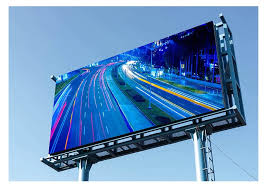
LED displays serve numerous sectors including advertising, sports arenas, transportation hubs, retail, and control rooms. Outdoor digital billboards capitalize on LED’s high luminance — up to 8,000 to 12,000 nits — enabling visibility even under direct sunlight, conforming to IEC 62471 photobiological safety standards. In sports arenas and concert venues, LED screens provide large-scale, dynamic content with seamless video playback at refresh rates exceeding 3840 Hz, critical for flicker-free broadcast quality. Retail environments utilize fine-pitch LED panels, with pixel pitches as low as 0.9mm, to deliver high-resolution imagery aimed at customer engagement. Furthermore, command and control centers demand reliability and precise color calibration, where LED LCD hybrid systems offer superior color gamut coverage (>95% DCI-P3) and low latency.
Advantages of LED Displays
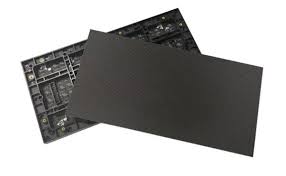
The primary advantages of LED displays include exceptional brightness, enhanced color accuracy, energy efficiency, and modular scalability. Modern LED displays employ SMD (Surface-Mounted Device) technology, enhancing pixel density and reducing bezel size to approximately 0.5mm, resulting in near-seamless video walls. Energy consumption is notably lower compared to traditional LCD or projection systems; for example, energy usage often measures between 100 to 180 W/m², dependent on screen brightness and size. LED technology also endures harsh environmental conditions better than alternatives, with IP65-rated cabinets that withstand dust, moisture, and temperature extremes up to 50°C, ensuring longevity in outdoor deployments.
Common Challenges in LED Display Manufacturing and Operation
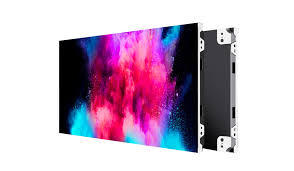
Despite numerous benefits, LED displays face challenges such as heat dissipation, color uniformity, and pixel failure. Efficient thermal management, often realized via aluminum heat sinks and advanced convection designs, is essential to maintain LED junction temperature below 85°C, greatly extending lifespan beyond 100,000 hours under typical use. Color uniformity issues, particularly in large video walls, are frequently mitigated using sophisticated calibration software adhering to Rec. 709 and Rec. 2020 standards. Pixel defects, caused by manufacturing inconsistencies or environmental stress, require robust quality control protocols supported by standards like JEDEC JESD22. Additionally, cabling and synchronization issues in large LED arrays demand precise timing control, often implemented through FPGA-based controllers with refresh rates over 3000 Hz to avoid flicker artifacts.
Emerging Trends and Future Directions
The LED display industry is rapidly evolving with innovations focusing on miniaturization, AI integration, and enhanced interactivity. Micro LED technology, combining the brightness and efficiency of traditional LEDs with ultra-fine pixel pitches (down to 0.5mm and below), promises superior resolution for smartphones, augmented reality (AR) devices, and ultra-high-definition displays. Another trend is the integration of AI-powered content management systems that optimize brightness, contrast, and color based on ambient light conditions in real-time, improving energy efficiency and viewer comfort. Flexible and transparent LED panels are gaining traction in architectural and automotive industries, opening up new design possibilities. Additionally, 5G connectivity enables high-bandwidth content streaming to LED displays in smart cities and digital signage ecosystems, supporting dynamic, location-specific information delivery.
Conclusion
The LED display market continues to expand driven by its versatility, superior performance, and ongoing technological breakthroughs. Successful deployment hinges on a thorough understanding of application-specific requirements, adherence to international standards (such as IEC 60598 for lighting and IEC 62031 for LED modules), and effective management of manufacturing and operational challenges. By embracing emerging technologies like Micro LED and AI integration, industry professionals can anticipate a future where LED displays are more immersive, energy-efficient, and adaptable than ever before.
References:
- International Electrotechnical Commission (IEC) 62471: Photobiological Safety of Lamps and Lamp Systems
- Society of Motion Picture and Television Engineers (SMPTE) Standards for Color and Refresh Rate
- JEDEC Solid State Technology Association: JESD22 Reliability Standards
- Display Supply Chain Consultants (DSCC) Reports on Micro LED Market Trends (2023-2024)
- Energy Star Program for Display Efficiency Guidelines













