

Advanced LED Display Technologies in Modern Applications: Performance, Challenges, and Future Trends
The LED display industry has witnessed remarkable growth over the past decade, driven by rapid technological advancements and expanding application domains. As a professional engineer specializing in LED and LCD screen manufacturing, it is essential to explore the technical fundamentals, practical applications, advantages, prevalent challenges, and emerging trends that define contemporary LED displays. This comprehensive understanding enables stakeholders to optimize performance, durability, and user experience across diverse sectors.
Technical Parameters and Core Innovations
At the heart of LED display technology lies the use of Light Emitting Diodes as individual pixels, arranged in matrix configurations to deliver images with high brightness, excellent color fidelity, and energy efficiency. Critical technical parameters include:
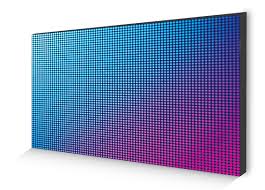
- Pixel Pitch: The center-to-center distance between adjacent LEDs, typically ranging from 0.8mm for micro-LED to over 10mm for large outdoor screens. Pixel pitch directly impacts resolution and viewing distance.
- Brightness: Measured in nits (cd/m²), LED displays achieve brightness levels from 600 nits for indoor applications to over 5,000 nits in outdoor environments, ensuring visibility even under direct sunlight (IEC 62717 standard).
- Refresh Rate: Standard refresh rates range from 60Hz to 3840Hz in professional displays, reducing flicker and enhancing video playback smoothness.
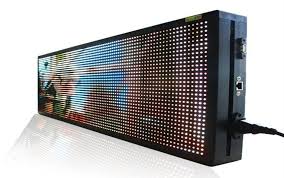
- Color Gamut: Modern LED displays cover up to 99% of the NTSC color space, leveraging advanced phosphor technology and quantum dots to offer vivid and accurate colors.
- Lifetime and Reliability: Typical lifespan ranges between 50,000 to 100,000 hours, depending on the LED quality and environmental protection measures.
Practical Applications Across Industries
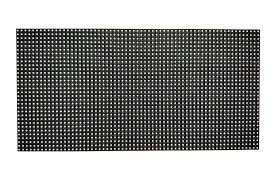
LED displays have penetrated myriad sectors, underscoring their versatility:
1. Commercial Advertising: Outdoor billboards and indoor promotional panels capitalize on ultra-high brightness, wide viewing angles, and dynamic content presentation. Fine pixel pitch models enable crisp visuals even at close proximity.
2. Sports and Entertainment: Large-scale stadium displays and concert backdrops utilize modular LED panels for scalable screen sizes, enabling seamless video playback and real-time graphics integration.
3. Transportation Hubs: Airports and train stations employ LED displays for real-time information dissemination due to their reliability and excellent visibility.
4. Retail and Corporate Environments: Digital signage enhances customer engagement and branding through interactive and adaptable content.
5. Medical Imaging and Control Rooms: High-resolution micro-LED and OLED technologies facilitate critical visualization tasks requiring color accuracy and low latency.
Advantages of LED Displays
LED technology offers several pronounced advantages compared to conventional display systems such as LCD or projection:
- High Brightness and Contrast: Superior luminance levels allow visibility across diverse lighting environments.
- Energy Efficiency: LEDs consume less power relative to plasma or incandescent alternatives, reducing operational costs.
- Flexibility & Scalability: Modular design permits custom screen sizes and shapes, including curved and transparent displays.
- Durability: Robust casing and weatherproofing (often rated IP65 or higher) enable long-lasting outdoor deployments.
- Fast Response Times: Critical for video and interactive applications with latency often below 1ms.
Common Challenges and Solutions
While LED displays present numerous benefits, they are not without challenges:
- Thermal Management: Excess heat adversely affects LED lifespan and color consistency. Implementing efficient heat sinks, active cooling, or novel materials like graphene-based thermal interfaces helps mitigate this.
- Calibration and Uniformity: Variations in LED brightness and color over time require sophisticated calibration tools and software to maintain image uniformity.
- Power Supply Stability: Fluctuations can degrade performance; hence high-quality, regulated power supplies conforming to standards such as EN 62368-1 are critical.
- Maintenance and Repair: Modular panel designs simplify replacements but require trained technicians to avoid downtime.
- Cost Factors: Cutting-edge technologies like micro-LED and quantum dot LEDs currently entail higher manufacturing expenses, though volume production is driving costs down.
Latest Trends Shaping the LED Display Industry
Emerging innovations continue to expand the capabilities and applications of LED displays:
- Micro-LED and Mini-LED Technologies: Offering unparalleled pixel density, these advances support ultra-high-definition screens suitable for televisions, augmented reality headsets, and large video walls.
- Quantum Dot Integration: Enhances color accuracy and brightness, supporting HDR content with wider color gamuts and better energy efficiency.
- Flexibility and Transparency: Development of flexible and transparent LED panels enables integration into architecture, automobiles, and wearable devices.
- AI-Driven Content Optimization: Intelligent algorithms tailor display settings dynamically based on ambient conditions and content type, maximizing visual impact and power savings.
- Sustainability: Manufacturers emphasize recyclable materials and low-power designs, aligning with global environmental directives.
Conclusion
As LED display technology evolves, it continues to redefine digital visualization across industries. Engineers must focus not only on optimizing fundamental parameters like pixel pitch and brightness but also on addressing real-world operational challenges such as thermal management and system reliability. Keeping pace with innovations like micro-LED and quantum dots is critical for future-proofing design and production. Through rigorous standards adherence and strategic application, LED displays will remain a cornerstone of visual communication worldwide.
References
- IEC 62717: LED Modules for General Lighting - Performance Requirements
- EN 62368-1: Audio/video, information and communication technology equipment - Safety Requirements
- International Electron Devices Meeting (IEDM) 2023 Proceedings – Micro-LED Innovations
- Display Week 2024 Technical Papers – Advances in Quantum Dot LED Displays
- Industry White Papers from Samsung, LG Display, and Cree, Inc.













