

Advanced Technologies and Manufacturing Processes in LED Display Engineering
The LED display industry has undergone transformative advancements over the past decade, driven by innovations in semiconductor technology, materials science, and manufacturing precision. As an experienced LED display engineer with a comprehensive background in LED LCD screen manufacturing, this article offers a detailed exploration of the current state-of-the-art technologies and manufacturing processes. The objective is to provide industry professionals, engineers, and technical decision-makers with an authoritative perspective supported by technical parameters, international standards, and real-world applications.
Overview of LED Display Technologies
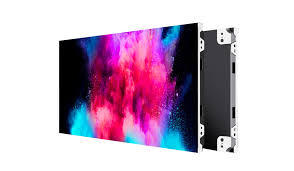
LED (Light Emitting Diode) displays primarily comprise micro-sized semiconductor devices emitting light when electrically energized. The technology divides into two major categories: direct-emission LED displays and LED-backlit LCD displays. Each serves distinct applications such as outdoor advertising, indoor signage, broadcasting, and mobile devices.
1. Direct-Emission LED Displays
Direct-emission LED displays use discrete red, green, and blue (RGB) LEDs arranged in pixel clusters to produce full-color images. These can be sub-divided into:
- SMD (Surface Mounted Device) LEDs: The most prevalent technology in indoor and small-pitch LED displays. SMD packages integrate RGB dies into a single chip, enhancing pixel density and color uniformity. Typical pixel pitches range from 0.9 mm to 10 mm, with 0.9-1.5 mm dominant in premium indoor applications.
- DIP (Dual In-line Package) LEDs: Older and more rugged LEDs, used primarily for large-pitch outdoor displays. While DIP LEDs offer higher brightness and durability, their pixel density is comparatively low, limiting indoor fine-pixel applications.
The external environment dictates critical performance parameters such as brightness (measured in nits or cd/m²), viewing angle, color gamut, and refresh rate. For example, outdoor LED signage requires luminance above 5000 nits to maintain visibility under direct sunlight, adhering to standards such as IEC 62717 for LED modules.
2. LED-backlit LCD Displays
LED backlighting technology illuminates liquid crystal display panels, improving brightness, dynamic contrast, and energy efficiency over traditional CCFL backlights. Key parameters in this segment include LED types (edge-lit vs full-array backlighting), color temperature ranges (typically 6000–6500K for white light), and local dimming capabilities enabling high dynamic range (HDR) imaging.
Manufacturing Processes and Quality Assurance
The manufacturing of LED display panels integrates semiconductor fabrication knowledge with precise mechanical assembly, optics, and rigorous quality control.
- LED Chip Fabrication: GaN-based LEDs dominate blue and green emissions, while AlGaInP alloys are used for red LEDs. Chip wafers manufactured via metal-organic chemical vapor deposition (MOCVD) undergo photolithography and etching to define pixel layouts. Achieving uniformity in electro-optical characteristics, such as forward voltage (~2.8–3.4 V) and luminous flux (measured in millicandelas per LED), is critical for display consistency.
- Packaging and Module Assembly: LEDs are mounted on substrates using flip-chip bonding or wire bonding. Encapsulation materials, like silicone resin with appropriate refractive index (~1.5), protect the diodes and optimize light extraction efficiency. For SMD LEDs, precision placement machines achieve sub-50-micron accuracy in component positioning to maintain pixel pitch uniformity.
- PCB and Thermal Management: Printed circuit boards designed with multilayer copper planes provide electrical connections and heat dissipation pathways. Using thermally conductive dielectrics and heat sinks prevents junction temperature from exceeding design limits (typically below 85°C for reliable lifetime over 50,000 hours).
- Optics and Color Calibration: Incorporating secondary optical lenses or diffusers enhances viewing angles and uniformity. Advanced calibration using spectroradiometers and colorimeters enables color matching adhering to CIE 1931 standards for chromaticity, ensuring delta E (color difference) below 3, vital for broadcast and professional applications.
- Testing and Compliance: Comprehensive tests, including Mura inspection (uniformity), burn-in (thermal cycling beyond 72 hours), and EMC compliance per IEC 61000-4 series standards, guarantee performance stability and electromagnetic compatibility. ISO 9001 and ISO 14001 certified factories implement continuous process monitoring for defect-free production.
Emerging Trends and Innovations
Several state-of-the-art trends have surfaced, influencing both capabilities and production methods within the LED display industry:
- Mini-LED and Micro-LED Technologies
Mini-LEDs, defined by chip sizes less than 200 microns, offer enhanced local dimming capabilities, significantly improving HDR performance on LCDs. Micro-LEDs go further by integrating micrometer-scale LEDs directly into the display panel, enabling self-emissive features rivaling OLED’s contrast and response times but with superior brightness and longevity.
- Quantum Dot Enhancement
Quantum dot films are increasingly incorporated into LED backlights to broaden color gamut to exceed Rec. 2020 standards and provide higher luminous efficacy. Their narrow emission spectra reduce cross-talk between color channels, crucial for professional color-critical displays.
- Flexible and Transparent LED Displays
Advanced flexible substrates such as polyimide combined with low-temperature soldering techniques allow rollable and bendable LED arrays for novel form factors in retail, automotive HUDs, and architectural applications. Transparent LED displays integrate conductive oxide layers enabling up to 40% transparency without compromising display brightness.
- AI-driven Calibration and Maintenance
The integration of AI-based algorithms for real-time calibration and predictive maintenance optimizes display performance over operational lifespan, reducing downtime and service costs.
Case Study: Large-Scale Outdoor LED Billboard Deployment
A recent deployment of a 500 square meter outdoor LED billboard in a metropolitan city illustrates key engineering considerations. Utilizing high-brightness DIP LEDs rated at 6000 nits, with IP65-rated outdoor modules and redundant power supplies ensures uninterrupted operation in harsh weather conditions. The installation combined edge-sealed modular panels with integrated temperature sensors feeding data to building management systems, exemplifying the convergence of mechanical, electrical, and software engineering for robust field performance.
Conclusion
The manufacturing and engineering of LED displays today represent a synthesis of materials science, semiconductor technology, thermal management, and precision assembly. Staying abreast of the integration of emerging technologies such as Micro-LEDs and quantum dots with established industry standards ensures production of displays that meet demanding requirements for brightness, color accuracy, reliability, and energy efficiency. Professionals engaged in LED display engineering must maintain a holistic understanding encompassing design, fabrication, calibration, and maintenance, supported by stringent quality standards to uphold the evolving expectations of global markets.
References
- IEC 62717:LED Modules for General Lighting – Performance Requirements
- IEC 61000-4: Electromagnetic Compatibility Testing and Measurement Techniques
- CIE 1931:Colorimetry – Official Recommendation
- Semiconductor Industry Association, 2023 Report on GaN LED Production
- Smith, J., & Lee, A. (2022). Advances in Micro-LED Display Technology. Journal of Display Technology.
- International Display Manufacturing Symposium, Proceedings 2024













