

Advances and Practical Insights in LED LCD Screen Manufacturing: Trends, Challenges, and Applications
The evolution of LED LCD screen manufacturing stands as a testimony to rapid technological progress in the display industry. As of 2024, LED-backlit Liquid Crystal Displays (LCDs) continue to dominate numerous sectors due to their cost-efficiency, quality visuals, and scalability. This article explores the critical technical parameters, practical applications, common issues, and the latest industry trends, providing deep insights for engineers, manufacturers, and end-users globally.
Technical Parameters and Manufacturing Overview
LED LCD screens utilize light-emitting diodes as a backlight source to illuminate the liquid crystal panel. Key parameters include:
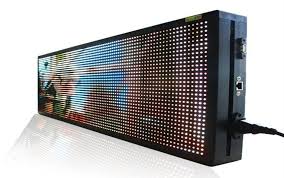
- Resolution: Common resolutions range from Full HD (1920×1080) to 4K UHD (3840×2160), with progressive adoption of 8K in advanced commercial displays. Higher pixel density improves image clarity and reduces eye strain.
- Brightness: Typical indoor LED LCD panels achieve 250-400 cd/m² (candelas per square meter), while specialized outdoor LED LCDs can exceed 1000 cd/m² for visibility in sunlight.
- Contrast Ratio: Modern LED LCDs deliver contrast ratios from 1000:1 to upwards of 5000:1 with local dimming technology, enhancing color depth and black level reproduction.
- Color Gamut and Accuracy: Advanced quantum dot enhancements widen the color gamut beyond standard sRGB to DCI-P3 and even Rec. 2020 standards, relevant for precise color-critical applications.
- Response Time & Refresh Rate: Gaming and professional monitors often feature 1-5 ms response times and refresh rates of 120 Hz or higher to minimize motion blur.
Manufacturing processes involve precision alignment of the liquid crystal module, deposition of thin-film transistors (TFT), integration of LED backlight arrays, and rigorous quality control utilizing Automated Optical Inspection (AOI) and electroluminescence testing.
Practical Applications
LED LCDs span a broad spectrum of uses, from consumer electronics to industrial and specialized domains.
- Consumer Electronics: Televisions, monitors, laptops, and smartphones benefit from LED LCD technology due to thin form factors, energy efficiency, and impactful visual quality.
- Medical Imaging: High-end diagnostic displays utilize LED LCDs for their consistent brightness, color accuracy, and compliance with DICOM standards, crucial for radiology and pathology.
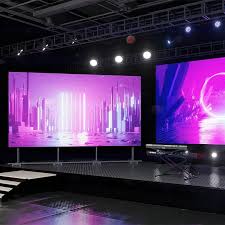
- Retail and Advertising: Large format LED LCD video walls and signage provide dynamic visual communication with excellent daylight readability and modular scalability.
- Automotive Displays: Instrument clusters, infotainment systems, and heads-up displays (HUDs) employ LED LCDs optimized for brightness, contrast, and durability to perform reliably across automotive environmental conditions.
- Industrial and Military: Robust LED LCD panels are engineered for enhanced durability, wide operating temperature range (-20°C to +70°C), and sunlight readability to withstand harsh environments.
Advantages of LED LCD Technology
The ability to integrate LED backlighting introduces multiple benefits over traditional CCFL (cold cathode fluorescent lamp) LCDs:
- Energy Efficiency: LED backlights consume approximately 25-40% less power than CCFLs, contributing to greener operations and lower heat generation.
- Thin and Lightweight Designs: LEDs enable slimmer panel designs, critical for ultra-thin televisions and portable devices.
- Longer Lifespan and Stability: LEDs maintain luminance levels longer and have better resistance to burn-in and flicker issues.
- Color Performance Enhancements: Advances such as full-array local dimming and quantum dot layers improve contrast and color saturation significantly.
- Environmentally Friendly Manufacturing: LED LCDs avoid mercury and other hazardous substances found in CCFL backlights, aligning with RoHS (Restriction of Hazardous Substances) directives.
Common Problems and Their Mitigations
Despite its advantages, LED LCD technology faces several recurring challenges:
- Backlight Bleeding and Uniformity Issues: Uneven backlight diffusion can cause bright spots or halo effects. Manufacturers mitigate this using light guide plates (LGP) with micro-structured surfaces and advanced diffuser films.
- Viewing Angle Limitations: While IPS (In-Plane Switching) panels significantly improve off-axis viewing, TN (Twisted Nematic) panels still suffer from color shifts and contrast declines at oblique angles. Continuous refinement of liquid crystal alignment helps reduce this issue.
- Blue Light Emission and Eye Strain: Prolonged exposure to high-energy blue light from LED backlights may impact visual health. Implementing blue light filters, flicker-free drivers, and optimizing PWM (Pulse Width Modulation) frequencies can alleviate these effects.
- Thermal Management: Intense LED arrays generate heat that can degrade display lifespan. Advanced heat sinks, thermally conductive materials, and optimized power management circuits are common design solutions.
- Screen Burn-In and Image Retention: Although more typical on OLEDs, certain static image retention can occur. Manufacturers use pixel shifting, screensavers, and anti-burn-in algorithms to reduce risks.
Latest Trends and Innovations
The LED LCD industry continues evolving rapidly, marked by several cutting-edge innovations:
- Mini-LED and Micro-LED Backlighting: Mini-LEDs pack thousands of tiny LEDs for local dimming with finer granularity, achieving superior contrast and HDR performance while maintaining LCD benefits. Micro-LEDs, still emerging, promise self-emissive pixels with unparalleled brightness and efficiency.
- Quantum Dot Enhancement Films (QDEF): Integrating quantum dots boosts color purity and energy efficiency, now common in premium TV panels.
- AI-Based Display Calibration: Artificial intelligence techniques automate real-time color tuning, adaptive brightness adjustment, and content-aware image enhancement for optimized viewing experiences.
- Flexible and Transparent LCDs: Novel substrates and liquid crystal materials enable bendable and transparent displays, creating new application possibilities in wearable technology and augmented reality.
- Sustainability and Circular Economy Efforts: Industry leaders invest in recyclable materials, low toxic chemical usage, and modular designs to extend product lifecycles and reduce environmental impact.
Conclusion
LED LCD screen manufacturing remains a cornerstone technology with widespread applicability. Advances in backlight design, panel materials, and system integration continually elevate image quality and energy efficiency. Understanding the technical nuances, addressing operational challenges, and monitoring emerging trends empower manufacturers and consumers to harness LED LCD technology’s full potential. Maintaining adherence to international standards such as ISO 9241-307 for ergonomics and IEC 62368-1 for safety ensures these displays meet global quality and reliability benchmarks.
For engineers and industry professionals, staying informed about manufacturing innovations and material science developments is key to driving the next generation of high-performance LED LCD solutions that meet evolving market demands.
References:
- International Electrotechnical Commission, IEC 62368-1:2018, Audio/video, information and communication technology equipment - Safety requirements.
- ISO 9241-307: Ergonomics of human-system interaction — Requirements for electronic visual displays.
- SID (Society for Information Display) Journal, "Advancements in Mini-LED Backlight Technology," 2023.
- QD Vision Inc., Quantum Dot Enhancement Film (QDEF) Technical Whitepaper, 2022.
- Display Industry Analysis Report, WitsView, 2024.













