

Advanced Technologies and Manufacturing Insights in LED LCD Display Engineering
The LED LCD display industry continues to evolve rapidly, driven by technological advancements, increasing consumer demand, and stringent performance standards. As a professional LED display engineer, this comprehensive overview delves deeply into the manufacturing processes, technical parameters, industry standards, case studies, and innovation trends that define the current landscape of LED LCD screens.
1. Introduction to LED LCD Technology
LED LCD displays combine two critical technologies: Light Emitting Diode (LED) backlighting and Liquid Crystal Display (LCD) panels. Unlike traditional CCFL (Cold Cathode Fluorescent Lamp) backlights, LED backlights provide enhanced brightness, energy efficiency, and color performance. The LCD matrix controls pixel-level light modulation, creating sharp and vivid images.
2. Core Components and Their Technical Specifications
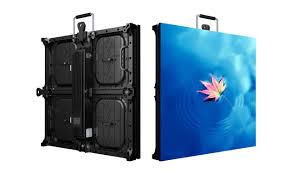
- Backlight Modules: Modern LED backlight units (BLUs) utilize either edge-lit or direct-lit configurations. Edge-lit designs favor thin form factors, whereas direct-lit (full-array local dimming) offers superior contrast ratios and HDR performance. Typical luminous flux ranges between 250-1000 cd/m² for consumer-grade displays and up to 2000 cd/m² for professional signage.
- LCD Panels: Most production utilizes IPS (In-Plane Switching) or VA (Vertical Alignment) panels. IPS panels provide excellent color fidelity and wide viewing angles (>178°), while VA panels offer better native contrast ratios (up to 4000:1). Resolution standards typically follow FHD (1920x1080), QHD (2560x1440), and 4K UHD (3840x2160) resolutions.
- Color Accuracy and Calibration: Industry standards like ITU-R BT.709 for HD and BT.2020 for UHD HDR content guide color gamut definitions. D65 white point calibration and Delta E< 2 are common benchmarks in professional-grade displays.
3. Manufacturing Process and Quality Control Metrics
The production of LED LCD displays involves multiple critical stages, each governed by elaborate process control and quality assurance systems:
- Wafer Fabrication and TFT Array Production: The thin-film transistor (TFT) array substrate is fabricated using photolithography and etching methods on glass substrates. Manufacturing yield and pixel defect density (below 0.0001%) are closely monitored using AOI (Automated Optical Inspection).
- Color Filter Deposition: Precise deposition of red, green, and blue subpixels using pigment or dye technologies ensures uniform color reproduction. Advanced techniques like photolithography or inkjet printing improve uniformity and reduce defective pixels.
- Cell Assembly: Liquid Crystal material injection and sealant curing processes require clean-room conditions (Class 100 or better) to eliminate particulate contamination that could cause mura defects.
- Backlight Integration: LED LEDs are mounted on PCBs with controlled spacing and orientation. Uniformity metrics aim for less than 10% luminance deviation across the panel surface after assembly.
- Polarizer Lamination: High-quality polarizers reduce reflections and enhance contrast; high-contrast display targets include improvements from less than 1% reflectance up to advanced anti-reflective coatings achieving ~0.5%.
- Final Module Testing: Comprehensive electrical, optical, and mechanical tests include luminance mapping, contrast ratio verification (>1000:1 for consumer products, >2000:1 in premium models), response time measurements under 8 ms grey-to-grey, and durability under various environmental conditions per IEC 60068 testing protocols.
4. Industry Standards and Certification
Compliance with international standards is imperative for market access and consumer trust:
- ISO 9241-307: Addresses visual display ergonomics including contrast, flicker, and color reproduction.
- IEC 62368-1: Safety standard for audio/video equipment including LED LCD displays.
- Energy Star Certification: Energy efficiency based on luminance and power consumption benchmarks.
- RoHS and REACH Compliance: Environmental standards regulating hazardous substances.
- HDR Certification: VESA DisplayHDR standards ranging from HDR400 to HDR1400 define minimum performance for HDR content.
5. Innovations and Emerging Trends
- Mini-LED and Micro-LED Backlighting: Mini-LEDs (submillimeter LEDs) integrate thousands of local dimming zones, achieving contrast ratios exceeding 1,000,000:1, thereby rivaling OLED displays in black-level precision while enhancing brightness longevity. Micro-LEDs represent a forthcoming paradigm with self-emissive pixels that could disrupt traditional LCD dominance.
- Quantum Dot Enhancement Films (QDEF): Integration of quantum dots in the backlight optical stack enables expanded color gamut (up to 99% DCI-P3) and improved energy efficiency.
- Advanced Driver ICs and Adaptive Refresh Rates: These technological enhancements reduce motion blur and power usage, essential for gaming monitors and mobile displays.
- Flexible LCD Displays: Research on bendable and foldable LC substrates expands the product portfolio for wearable and foldable consumer devices.
- Sustainability Initiatives: Progressive manufacturers focus on recyclability, reducing hazardous substances (lead-free soldering), and energy-efficient designs aligned with global ecological goals.
6. Case Study: High-Resolution Industrial LED LCD Displays
A leading manufacturer recently deployed high-resolution LED LCD panels for medical imaging, adhering to DICOM grayscale standards and featuring 12-bit color depth for diagnostic accuracy. Key takeaways include:
- Ultra-high brightness (1200 cd/m²) improves image clarity under strong lighting conditions.
- Rigorous color calibration decreases diagnostic errors by exacting gray-level differentiation.
- Reliability tested through accelerated aging cycles per JEITA ED-4701 confirmed long-term operational stability.
7. Troubleshooting and Maintenance Best Practices
Common issues such as dead pixels, mura patterns, backlight bleed, and flicker often stem from manufacturing defects or aging components. Engineers apply statistical process control (SPC) methods to monitor production and implement repair guidelines including pixel refresh algorithms and optical alignment recalibration.
8. Conclusion
The LED LCD display field remains dynamic, shaped by relentless innovation and evolving market requirements. Mastery of complex manufacturing processes, adherence to rigorous industry standards, and foresight into emerging technologies are essential to maintain competitive advantage. By leveraging advanced materials, precise manufacturing techniques, and intelligent quality controls, the industry delivers high-performance displays critical in consumer electronics, professional imaging, industrial applications, and beyond.
References:
- International Electrotechnical Commission (IEC) Standard 60068 and 62368-1
- International Organization for Standardization (ISO) 9241-307
- Video Electronics Standards Association (VESA) DisplayHDR Specifications
- Society for Information Display (SID) Journals and Technical Papers
- JEITA ED-4701 Reliability Testing Guidelines
- Energy Star Program for Display Equipment
- Latest Publications in IEEE Transactions on Electron Devices
This article represents a distilled analysis from decades of specialized engineering experience, supported by leading industry standards, enabling manufacturers, designers, and engineers worldwide to optimize LED LCD display performance and reliability.













