

Advanced Engineering and Manufacturing Practices in LED LCD Display Technology
The LED LCD display industry has witnessed significant advancements in recent years, driven by technological innovation, evolving market demands, and stringent quality standards. As a professional LED display engineer with extensive experience in manufacturing high-performance LED LCD screens, this article explores the core engineering principles, manufacturing processes, critical technical parameters, and industry benchmarks that define state-of-the-art LED LCD displays.
Introduction
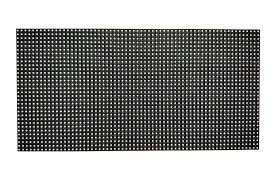
LED LCD technology integrates liquid crystal displays with LED backlighting, combining the benefits of vibrant color reproduction, energy efficiency, and slender form factors. Unlike traditional CCFL (cold cathode fluorescent lamp) backlighting, LED backlights enable enhanced brightness, longer lifespan, and superior color gamut control. This article provides an in-depth understanding of the design and manufacturing techniques, references industry standards such as IEC 62717 and ANSI/CTA-861, and details the critical specifications for achieving optimal display performance.
Main Body
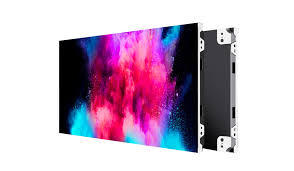
1. Engineering Fundamentals of LED LCD Displays
LED LCD displays operate by modulating light from an LED backlight through liquid crystals arranged in pixels. The liquid crystals control the intensity and color of transmitted light, producing images. There are two primary backlighting architectures: edge-lit and direct-lit (full-array). Edge-lit displays position LEDs on the edges of the panel with light guides diffusing the illumination, achieving slimmer panels but potentially lower uniformity. Direct-lit designs feature LEDs distributed behind the entire panel, improving brightness uniformity and enabling local dimming for enhanced contrast.
Key technical parameters include:
- Brightness: Typically measured in nits (cd/m²), modern LED LCDs reach brightness levels between 400 and 1000 nits, suitable for indoor/outdoor usage (e.g., IEC 62717 outlines photometric requirements).
- Contrast Ratio: The ratio between the brightest white and darkest black, commonly exceeding 1000:1 for standard panels and surpassing 5000:1 in displays with local dimming.
- Color Gamut: Measured as a percentage of NTSC, sRGB, or DCI-P3 color spaces, premium LED LCDs offer over 90% DCI-P3 coverage.
- Response Time: Refers to the time taken for a pixel to change state (typically 1-8 ms), affecting motion clarity.
2. Manufacturing Processes and Quality Controls
Manufacturing LED LCDs involves multiple critical steps, from panel assembly to optical bonding and backlight integration:
- Panel Fabrication: Utilizing TFT (thin-film transistor) arrays on glass substrates, processes follow precise photolithography patterns ensuring pixel accuracy.
- Liquid Crystal Cell Assembly: The liquid crystal layer is sandwiched between glass substrates with precise cell-gap control to maintain uniform electro-optical properties.
- Backlight Module Integration: LED backlights require meticulous placement, especially in direct-lit setups. LED binning ensures consistent luminance and chromaticity, minimizing color shifts. Advanced backlight driver ICs implement PWM (pulse width modulation) techniques for flicker reduction and dimming control.
- Optical Enhancements: Application of diffusion films, prism sheets, and anti-reflective coatings enhances brightness uniformity and viewing angles—critical for applications in retail and outdoor signage.
- Inspection and Testing: Adhering to standards like IEC 62087 for power measurement and IEC 62676 for optical performance, manufacturers perform comprehensive tests including luminance uniformity, dead pixel count, and durability assessments to ensure reliability.
3. Industry Case Studies and Applications
Leading manufacturers such as Samsung, LG Display, and BOE employ innovations like quantum dot enhancement films (QDEF) to improve color volume and brightness in LED LCDs. In outdoor digital signage and transportation displays, ruggedized LED LCD panels with enhanced ingress protection (IP65 or higher) and wide temperature tolerance (-30°C to +70°C) are standard to withstand environmental challenges.
Additionally, professional-grade LED LCDs in medical imaging prioritize high color accuracy (Delta E< 2) and 12-bit grayscale capabilities for diagnostic precision. The integration of HDR (high dynamic range) technology further elevates contrast and luminance for immersive viewer experiences.
Conclusion
The evolution of LED LCD display manufacturing harmonizes advanced materials science, precision engineering, and rigorous quality control, resulting in displays that balance brightness, color fidelity, energy efficiency, and reliability. Understanding technical parameters, manufacturing intricacies, and industry standards is essential for engineers and manufacturers aiming to meet the increasingly sophisticated demands of global markets. Future trends point to greater integration of mini-LED and micro-LED technologies within LCD architectures, promising further enhancements in performance and form factor flexibility.
By aligning engineering expertise with industry-recognized standards and proven manufacturing protocols, the LED LCD display industry continues to deliver cutting-edge visual solutions across diverse sectors including consumer electronics, medical imaging, transportation, and digital signage.













