

Advances and Best Practices in LED Display Manufacturing: Technical Insights and Industry Standards
In the rapidly evolving landscape of display technology, LED displays have emerged as the forefront solution for a broad range of applications, from large-scale outdoor advertising to indoor high-resolution screens. As a professional LED display engineer with extensive experience, this article delves into the intricate details of LED manufacturing, underscoring key technical parameters, industry standards, and practical considerations that define quality and performance.
Understanding LED Display Technology
An LED display operates by illuminating light-emitting diodes arranged in a matrix. Each pixel is composed of red, green, and blue LEDs, enabling vibrant and dynamic image reproduction. The fundamental parameters defining a display's quality include pixel pitch, brightness, refresh rate, contrast ratio, and power consumption.
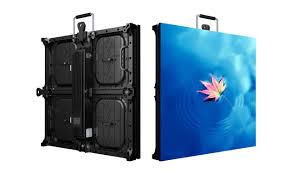
- Pixel Pitch: This is the distance between the center of one LED pixel to the next and directly impacts resolution and viewing distance. Typical indoor LED displays have a pitch ranging from 0.9 mm to 4 mm, while outdoor displays often have a pitch between 6 mm and 20 mm. Smaller pixel pitch yields higher resolution but increases manufacturing complexity and cost.
- Brightness: Measured in nits (cd/m²), brightness is critical particularly for outdoor displays to remain visible in direct sunlight. High-quality outdoor LED displays can achieve brightness levels of 5,000 to 10,000 nits, conforming to standards such as ANSI/IES RP-27.
- Refresh Rate: To ensure smooth and flicker-free images, especially in video applications, an optimal refresh rate above 3840 Hz is recommended. Higher refresh rates reduce visible flickers on cameras, essential for broadcast environments.
- Contrast Ratio: While LED displays inherently produce high contrast through individual pixel illumination, enhancements like local dimming and advanced control circuitry further improve the ratio, resulting in deeper blacks and vivid colors.
Manufacturing Process and Quality Control
Producing LED displays involves precision assembly and rigorous quality assurance protocols. Key steps include:
- LED Chip Selection and Binning: Manufacturers select LEDs based on luminance, wavelength consistency, and bin classification to ensure uniform color and brightness across the module.
- Module Assembly: LEDs are mounted onto printed circuit boards (PCBs) with solder reflow or surface mount technology (SMT). Proper thermal management is critical here, involving heat sinks and thermal interface materials to dissipate heat efficiently, prolonging LED lifespan.
- Calibration and Testing: Post-assembly, each module undergoes calibration for color uniformity, brightness, and gamma correction. Industry standards such as ISO 9001 and IEC 62717 outline testing procedures that ensure reliability and performance under operational stresses.
- Environmental and Durability Standards: Outdoor LED displays must comply with IP65 or higher ratings for dust and moisture resistance. Additionally, compliance with RoHS and REACH regulations ensures environmental safety and sustainability.
Technological Innovations Driving the Industry
Recent advancements have transformed LED manufacturing:
- Mini-LED and Micro-LED Technologies: These utilize smaller diode sizes to achieve ultra-high resolution with better energy efficiency. Micro-LED, for instance, boasts pixel sizes under 100 microns, enabling displays with exceptional brightness and lifespan.
- AI-Based Calibration: Leveraging artificial intelligence for automated calibration and predictive maintenance optimizes performance and reduces downtime.
- Flexible and Transparent LED Displays: Enabled by innovative substrate materials, these displays open new frontiers in design, integrating seamlessly into architectural elements without compromising display quality.
Industry Case Studies and Applications
Notable implementations illustrate best practices:
- Times Square LED Installations: Utilizing robust outdoor LED panels with 10 mm pixel pitch and 8,000 nits brightness, engineered for 24/7 operation and harsh weather conditions with modular serviceability.
- Broadcast Studios: Employ 2 mm pixel pitch indoor LED walls featuring 3840 Hz refresh rates to ensure flicker-free camera capture, adhering to SMPTE standards.
- Retail Facades: Flexible LED films integrated behind glass facades employ sophisticated thermal controls and IP68 sealing, achieving seamless advertising integration.
Conclusion
Mastering LED display manufacturing requires a multidisciplinary approach combining optical engineering, electronics, materials science, and strict quality assurance practices. Adhering to industry standards such as ANSI/IES for luminance, IEC standards for electrical and environmental performance, alongside innovative techniques, ensures production of durable, vibrant, and energy-efficient LED displays.
By continuously integrating technological advancements like Micro-LED and AI calibration into manufacturing lines, producers can meet the growing demand for higher resolution, better reliability, and novel form factors worldwide.
For professionals and enterprises invested in LED displays, understanding these technical fundamentals and leveraging best practices is vital to delivering superior products that meet both market and regulatory expectations.













